Category Archives: wellness

Background picture of candy canes and pine tree branches dusted with snow.

Hello December!

Hello festive friends!

You may know that I’ve had a private nutrition practice. If not, I do. Well, I did. The business is called Keeping Healthy Simple Club® and it has been partnering with people to help them live a heart-healthy lifestyle since 2021. And things are changing in 2025.

We are no longer accepting private practice or worksite wellness clients. In other words, the doors are closing after four amazing years. You can get more information here, and individuals can still work with me through Nourish.

I have loved every minute of working with my clients – individuals and businesses – to help people live healthier lives. Now, I’m ready to focus on more personal endeavors. 

But wait – that still includes sending you health and wellness tips. YAY! I mean, you know I love to write, right? 

So, let’s get on with it!

It’s been busy! Hubs and I moved to a new town in October and have been settling in during November. So, we have been leaning in to pre-made meals. And I’ve got tips for how to make these pre-made meals healthier so you can fit these in on your busy evenings. 

Plus I’m sharing 4 holiday tips that I’ve been sharing with my coaching clients. 

Yours in good health, 
Alexia Lewis, RD 
No longer Keeping Healthy Simple Club ®
Now just Alexia Lewis Health and Wellness

Ever wondered what a dietitian eats? Surprise! It is not only super-healthy foods. This dietitian eats for nutrition and for pleasure. You can too. 

Pre-Made Meals

Did I mention we moved and I’ve been super busy? Yeah, so, I have been on a search for the best pre-made meals. You know, the ones that get delivered and are marketed for bulking up or losing weight?

I’m not super concerned with calories or macros right now, but I do want to get a dinner on the table without much work.

And to be clear, by “without much work” I mean I just want to throw something in the microwave.

And to be clear, by “best” I mean meals that don’t get mushy, taste bland or way too salty, and have meats I can recognize. I am super picky about meats and get to the gross-factor easily. 
Picture of an empty plate, fork, and knife with the caption:

I have tried Clean Eatz, Modify Health Meals, and Super Fit Foods. I am not in any way affiliated with these companies and they don’t even know I’m writing about them. 

My favorite by far is Clean Eatz. I also did like that I was near a store so could pick the weekly meal plan meals up instead of having them delivered. Check to see if there’s a store near you. I’m guessing that helped with the meal quality. These meals are the best tasting and look the most like what I would make on my own. I can’t speak to their delivery meals, but they look very similar.

I did not like Modify Health Meals or Super Fit Foods as much. If you are considering these and want more info, hit reply and ask. 

No matter which meal company you choose, plan to microwave one thing to make these meals healthier.

That one thing depends on what you have in front of you. I like to balance my meals with this visual method.
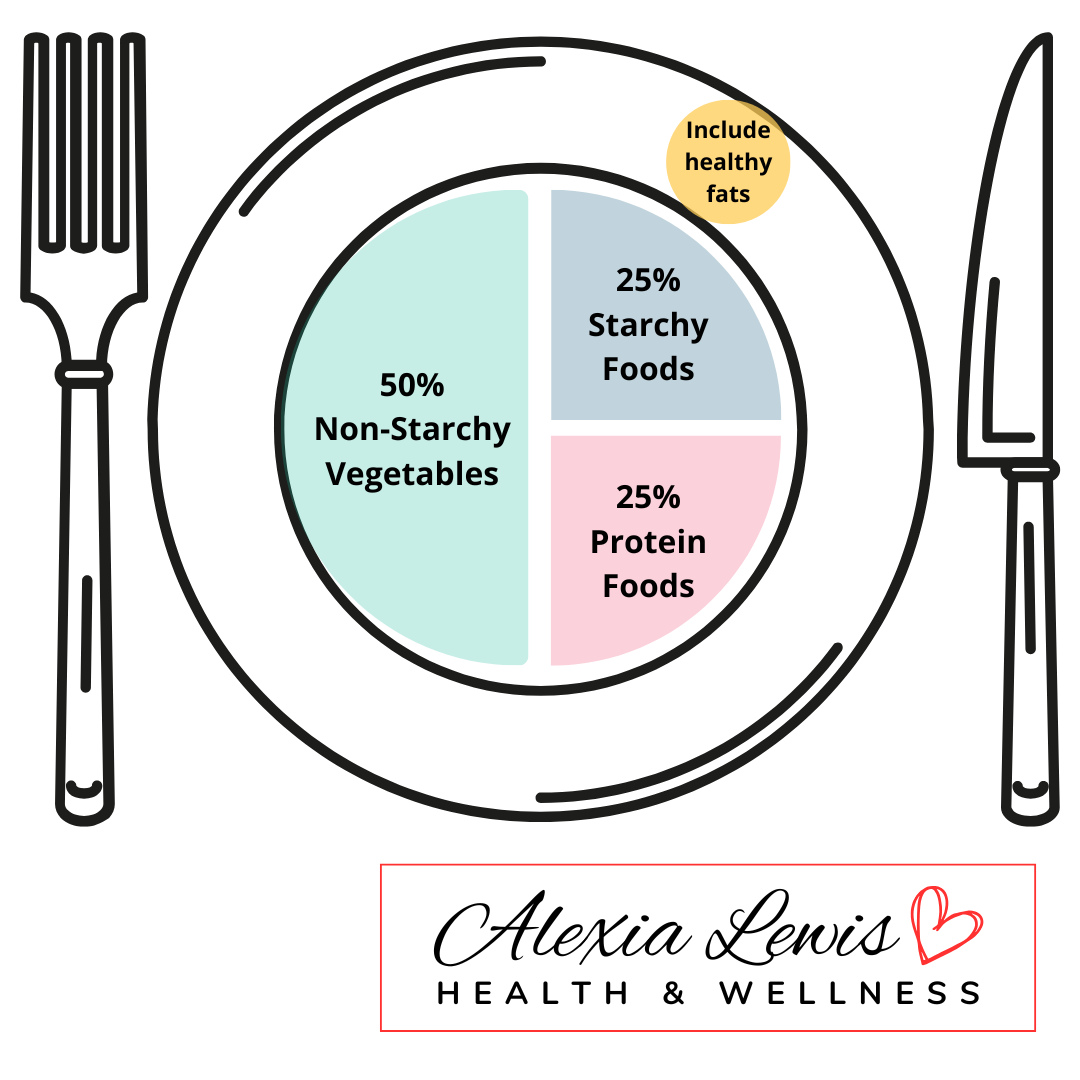
Graphic image of a plate with labeled sections: 50% non-starchy veggies, 25% protein foods, 25% starchy foods, and a small circle representing healthy fats.

If it’s a low-carb meal, then it’s heavy on the meats and the veggies. To get my plate balanced, I would add a grain. A microwavable rice or quinoa cup is fast and easy. 

If it’s not a low-carb meal, then you are likely looking at some meat, grains, and veggies. I like lots of veggies, like half my plate lots, so I would add some more vegetables. A microwaveable steamer bag is fast and easy. 

Throw a couple things in the microwave and there ya go. Fast, healthy, and easy meal for those busy nights!

I  looked at some other meal plan options but didn’t try them. If you have a meal plan company you enjoy, I would LOVE to know, so feel free to drop a comment or use the Contact form to let me know.

You can catch a glimpse of what my coaching style is like in this section, where I share some of what I’m working with my clients on. 

Holiday Meal and Party Tips

Tis the season! Let me just run down these tips.

First, enjoy your food

If you don’t turn a few holiday meals into a holiday eating season, then eat whatever you want. For real. Eating 2-6 meals without worrying about what’s on your plate is not going to *poof* make you unhealthy and give you all sorts of chronic health conditions that make your doctor tsk-tsk you. Now, if it’s a season, meaning weeks, of meals like this, we will have a different conversation. And if you need to monitor what you eat closely due to existing health conditions, then this will not apply for you. 

Second, survey the buffet. 

I don’t have a lot of food rules that I promote. I prefer to help people break food rules and recover from diet/wellness culture. But, one of the few rules I have is don’t eat food you don’t enjoy. Which means that before you put anything on your plate at a meal or party, take a gander down the table to see what your options are. Save space on your plate for things you love (and some veggies, please, just a few!) so you don’t end up with a mountain of food on your plate from taking some of everything. And, if you want some of everything, surveying the buffet let’s you know this and allows you to take a small portion of all the things. 

Third, hold something in both hands. 

Mindless eating is real. If you are at a party and find yourself standing near the food and munching because it’s there. Then pick up a drink with one hand and your phone or clutch with the other. Now you can’t eat mindlessly. You have to pause to find somewhere to put something down, and this pause is often enough to allow you to make a conscious decision about eating. 

Finally, take a walk, or do some form of activity, after eating. 

Getting moving activates a secondary system in your muscles that helps take up blood sugar. It also can help you to not feel so full if you overfilled your stomach. And some fresh air does wonders for your mental health (possibly by separating you from people that you love, but totally need a break from!). 

Hopefully, these tips can help you enjoy the rest of the holiday season. And that includes the pie!

If you want to work one-on-one with me on your health and wellness, keep reading below…

Click right here to get to Alexia’s provider page, choose a date/time and and start the scheduling process.

  • One of the first screens when you start will let know if your health insurance is accepted by Nourish.
  • Before you finish the booking process, you will enter your insurance information and get an estimate of the expected costs.

And, of course, you can reply to this email if you have questions or want to be hooked up with another amazing RD at Nourish. I’m happy to help! 

Photo of Alexia with her kitchen in the background.

I believe in science, humor, and delicious food.

Heart health is my jam. I love to write and speak publicly on this topic and all aspects of living a heart-healthy lifestyle.

I believe you shouldn’t sacrifice your mental health chasing better physical health. You deserve to be both happy and healthy. You don’t have to choose just one.

I am a registered and licensed dietitian in multiple states in the USA, a certified personal trainer, and certified health coach. I also investing in becoming a culinary nutritionist and weight management specialist. In other words, I got you boo.
Banner with words "Hello October" and a row of pumpkins on the bottom border.

Hello October 2024

On the table for October is a meal-prep Breakfast Burrito Bowl and the top 5 nutrition recommendations I make for most patients.

Hello beauti-fall people!

I love fall! I love the crispness in the air, the vibrant colors on the trees, and the winter squashes on my table! (I have no idea why I live in Florida where we don’t have much of an autumn season).

Butternut is better than pumpkin.

I said it, I meant it, and I’m bringing you one of my favorite meal prep breakfasts this month. People rave about this Breakfast Burrito Bowl because it is so flavorful and filling. And it features butternut squash, which is why you butternut miss this recipe! 

Lately, my work with patients has focused on revisiting the basics of nutrition. What to eat can be incredibly complex when you dive into all the little details about food. What to eat can also be incredibly simple when you focus on the big picture. 

Many patients come to me with lots of questions about the details – and for good reason – there is so much nutrition and food noise out there! Those details can absolutely matter and are worth talking about. But… only after the big picture changes have been made. 

In this edition, I am sharing my Nutrition 101 spiel, along with the 5 things I usually ask my patients to focus on first.

My hope is these tips can help you too – especially as you start to navigate the holiday season. 

PS – If you want to get this goodness delivered right to your inbox, you can subscribe to my newsletter!

Yours in good health, 
Alexia Lewis, RD 
Keeping Healthy Simple Club ®
Alexia Lewis Health and Wellness

Ever wondered what a dietitian eats? Surprise! It is not only super-healthy foods. This dietitian eats for nutrition and for pleasure. You can too

Breakfast Burrito Bowls

Picture of 3 meal prep containers filled with breakfast burrito bowls.

My morning routine is: coffee first, exercise second, breakfast third. 

It’s usually around 9:00, when I am ready for breakfast. The time makes it tempting to go straight into work without eating, so I need something that is grab-and-go but also homemade, healthy, and delicious. Meal prep to the rescue!

This recipe is also a winner for those who don’t like breakfast foods. 

To make, open up 3 meal-prep or other storage containers and start building your burrito bowl by adding these ingredients to each container: 

  • 1/3 cup sliced and cooked Vidalia (or other sweet) onion
  • 1/4 cup chopped Roma (or plum) tomatoes
  • 1/2 cup rinsed and drained low-sodium black beans
  • 1/2 cup cubed and roasted butternut squash
  • 1/3 of a medium ripe avocado, diced
  • 1 teaspoon fresh lime juice
  • 1/8 teaspoon each of garlic powder, cumin, paprika, chili powder (use less if you don’t like spicy), and a dash of salt.

Mix the ingredients within the container to distribute the seasonings.

Top with a cooked egg. Boiled and sliced works well or if you have time you can cook an egg before you eat. 

TIP! Butternut is a pain to chop. Consider splurging on the pre-chopped squash!

This recipe can be adapted in so many ways. Change the protein, change the beans, change the veggies. It will all work and transform this recipe into a lunch or dinner!

The nutrition info will vary based on the brands you choose, but one serving (one bowl) comes to about 325 calories, 16g protein, 39g carbs, 13g fat, 3g saturated fat, 139mg sodium, and 13g fiber. 

Post a comment with a picture if you make this!

PS – I am not perfect! I don’t always do morning routing step 2: exercise. It’s totally a new habit in the process of being built!

You can catch a glimpse of what my coaching style is like in this section, where I share some of what I’m working with my clients on. 

Going back to the basics has been the focus for many of my patients recently.

So, here are the first 5 big picture nutrition recommendations I make for many of my patients. Below it is information that covers some basics about food and nutrition to help you understand the recommendations, which are:  

  • Meals: Include all three macronutrients and a bunch of non-starchy vegetables.
  • Snacks: Include a protein and a carb.
  • Water: Drink it. 
  • Alcohol: Limit or avoid it.
  • Fiber and Fermented Foods: Eat daily. 

Nutrition Basics. 
What and when we eat can be driven by many reasons: hunger cues to fuel our bodies, social events, cultural norms, and even to soothe emotions. You are allowed to eat any food for any reason, but you must realize that the foods you choose impacts your health and wellness.

Macronutrients are nutrients your body needs in large amounts. They provide energy (calories) and maintain your body’s structure and systems. 

  • Proteins build your body’s muscles and other tissues, enzymes, hormones, and more. 
  • Carbohydrates provide energy to your body and brain, protect your muscle, and more.
  • Fats store energy, build hormones, and are needed to absorb some vitamins, and more. 

Micronutrients are nutrients your body needs in smaller amounts. These vitamins and minerals play a role in your body’s processes and promote improved health. 


Nutrition to Promote Health. 

Eat fiber and fermented foods. These help with gut health, regularity, and more. 

Drink water. It is needed in large amounts and plays a vital role in your body. 

Avoid or limit alcohol. Not only does this provide extra calories, but it often has a negative impact on health.

Hopefully, these tips can help you stay focused on the big picture as you navigate nutrition and food changes, especially over the upcoming holiday season. If this sounds good to you and you want to work with me on your health and wellness, keep reading below…

You can work one-on-one with me through Nourish and your health insurance may even cover the cost!

Click the button below to start the scheduling process:

  • One of the first screens when you start will let know if your health insurance is accepted by Nourish.
  • Before you finish the booking process, you will enter your insurance information and get an estimate of the expected costs.

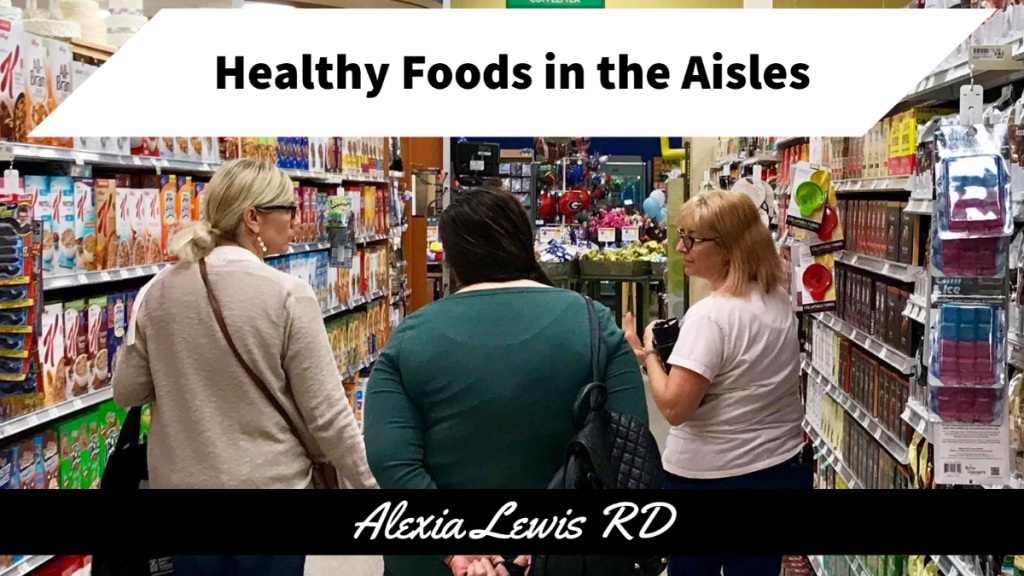
Walking the Aisles Talking about Food

It is Okay to Shop in the Middle of the Grocery Store

Have you heard that you must shop the perimeter of the grocery store to be eat healthy? The idea is that all the healthy foods are on the outer circle of the store. Following that logic, the foods in the center aisles must be horrible for your health. I call bullshit.

I’m writing to you today from my home in Florida where “hurricane season” has come up on the 2020 Jumanji dice. In planning for the potential for a power-blip from the incoming storm, I ordered some shelf stable foods from Instacart for delivery today. Shelf-stable foods get a bad rap from health-promoters. While some deserve the unhealthy reputation, there are many health-promoting foods to be found in the aisles.

Besides, fearmongering about foods and the “health halo” judgment from those with food privilege pisses me off.

You can find plenty of articles on healthy-foods in the aisles, so let me share just a few of the shelf-stable foods that are typically a part of my heart-healthy, nom-focused eating style.

Walking the Aisles Talking about Food

Dried beans… every week.

Hubs and I have been enjoying chickpeas (garbanzo beans) in our salads for the past few months. Extra delicious when you toss in some feta cheese, sliced almonds, and top with a spicy vinaigrette! Black beans are another family favorite. Last weekend, I cooked up a pound of dried black beans, then portioned them into baggies in 1-cup servings and froze them. Now, I just grab a bag from the freezer each time I use one up and they are ready the next day.

I wrote about how amazing beans are a while ago. And for the cost – mon dieu – dried beans are the way to go! A 16-ounce can of beans has about 1 1/2 cups of beans. You can buy a store brand can for around $1.00. Dried beans though, that 16-ounce bag makes about 6 cups for the same price. I can do that math. Four times as much if you take the time to cook your own beans.

If we lose power, the beans will need to get eaten first since they’ve been cooked. Roll up black beans mashed with avocado from the countertop and some shelf-stable salsa in a thin flatbread and you have a tasty wrap.

Peanut Butter.

Not only do the dogs enjoy the natural peanut butter to get their daily pills down, hubs and I are huge peanut butter fans. I add some to my protein shakes for thickness and flavor, stir it into yogurt, mix it with salsa for a spicy sauce, top rice cakes with it (plus banana and a sprinkle of cinnamon), and eat it right off the spoon. If we lose power, we can just spread some peanut butter on a rice cake or banana and have a nice, filling snack.

Any nut butter will be a heart-healthy delicious choice so don’t get stuck wondering which nut or seed is the most nutritious, just choose what you enjoy. And check the label to make sure there is no sugar added or sugar alcohols (xylitol is toxic for dogs). It’s a winner if you see just the nut/seed and salt on the ingredients list.

Fruit Cups.

I’m on a mandarin oranges jag. These little beauties are great in yogurt, cottage cheese, tossed in those salads, or just straight out of the cup while leaning over the sink. I’m a macro-counter and when I need more carbs in my day, these work great. My hubs adds them to some bourbon drink he likes too. Look for the ones packed in their own juice or with no sugar added.

While these are found in the perimeter of the store (so I’m a little off topic), I am talking about foods to eat if you lose power. So, I will throw in that many fruits can be kept on the counter like bananas, apples, and peaches oranges as well as tomatoes and avocados.

Soup and Canned Chicken.

Not weekly staples but great if we lose power. Soup is easy to heat up on the propane grill. Canned chicken can be mixed with mayo and mustard packets and spread on a slice of bread with a tomato from the kitchen counter.

I hear you groaning “but the sodium, so much salt!” I would agree.

We choose the lower-sodium versions. You could also rinse of the chicken if sodium is a concern (but we don’t). And remember, if you eat a high sodium lunch, that will balance out if you eat a low sodium dinner. Your health isn’t broken by the healthfulness of one meal. Nutrition gives us the grace of time and cumulative effects.

Via Packs & Shelf-Stable Almond Milk.

A storm is coming and I won’t be without coffee. Enough said.

Plus for protein, I use the almond milk as a base for a protein shake – made with some shelf-stable protein powder – and grab a handful of walnuts to keep my macros balanced.

I could go on and on because I love food. Why else would I do what I do for a living? But I will stop here and instead ask, what are your favorite healthy finds in the aisles?

Share in the comments and let’s all help each other find those shelf-stable foods so we can get rid of the food fear and just start enjoying the fact that we have safe, readily available, and healthy options for everyone.

Yours in good health,

-Coach Alexia Lewis RD

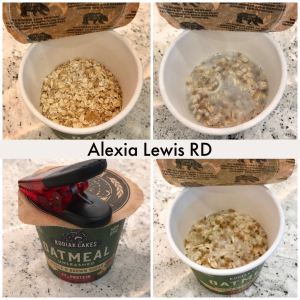
Are Kodiak Cups Good For A Quick Breakfast?

Updated 03/04/2025. If you need a healthy on-the-go breakfast, you may be wondering… are Kodiak Cups good for a quick breakfast? When I first saw these breakfast cups back in 2020, this kind of convenience food was still fairly new. Add water, microwave, and eat! Why, yes, I think maybe these Kodiak Cups are good for a quick breakfast!

I do want to say thank you to Kodiak Cakes for the RD Kit containing these free products for me to sample. I have not been paid or encouraged to post any kind of information in exchange for these samples. You can see on my disclosure page that I give honest reviews of products and would never let receiving a free product influence my review.

I encourage a balanced breakfast to get the day started – protein, carbs, fats, alla them. But mornings can be hectic. I hear from my patients that fitting in a healthy, balanced breakfast can be a challenge. They don’t have time in the morning to eat breakfast, let alone make one! Life is busy. I get it.

If you like to meal prep, then the problem is solved. But what about those who just aren’t into meal prepping? (No shame!). More and more products like this are hitting the shelves because food manufacturers know we want convenience.

So, let’s put on our nutrition detective hats and explore.

If you have heard of the brand, Kodiak, then you know that higher protein is kinda their jam. And higher protein in grains gets my interest as I’m an occasional macro-tracker. Protein has been having its moment for a long minute now, as it should because protein is important for so many reasons. (Get my take about The Beef on Protein).

I tried the Kodiak oatmeal first and was happy to see they sent the best flavor: maple and brown sugar. (Fight me).

In terms of ease of breakfast, this is a big winner.

I used my electric tea kettle to heat water, added it to the Kodiak Cup, and let it sit covered for the recommended two minutes. You can also add water and microwave. It doesn’t get much easier – or quick – than that.

Straight up. I was super concerned about the very small portion, especially since it has about half of the calories of my typical breakfast. But this little cup of oatmeal kept me full until lunchtime. Totally surprised!

This has 230 calories, 14 grams protein, 38 grams carbs, and 3 grams of fat. It has 4 grams of fiber, 12 grams of added sugar, and 200 milligrams of sodium.

I wouldn’t expect a lot of protein from oatmeal and that tracks here. I often recommend adding protein when oats are for breakfast. This can be done with protein powders, as in this product where protein was increased with pea and milk proteins, or with whole foods, such as an egg/egg whites. PS: I have a great pina colada overnight oats recipe.

This also may seem like a lot of carbs to some; but it is oatmeal, soooooo… and 38 grams if completely appropriate for many people. When it comes to grains, always look for a product that has a whole grain as the first ingredient – which this one does.

I’m not one who is afraid of long complicated words on an ingredients list but this one keeps it very simple and I’m sure many “clean eaters” would give this product a thumbs up.

Btw, my definition of clean eating is not eating food that’s fallen on the floor. Just sayin’.

Pros:

  • First ingredient is 100% whole grain oats.
  • Very low in saturated fat (0.5 grams).
  • Super convenient.
  • Good flavor and good consistency, and no aftertaste.
  • Staying power.

Cons:

  • Low in protein (for a meal).
  • High in added sugars.

American Heart Association recommendations for added sugars is set at 25 grams for women and 36 grams for men. At 12 grams, this is 1/2 to 1/3 of the total recommended. I like to find ways to make convenient food fit if it can help people eat in a way they want to. So, this absolutely can fit into a heart-healthy diet as long as you are mindful about added sugars for the rest of the day.

And, personal preference here, I’m not a big fan of pea protein due to a not-too-fun experience involving veganism and pea protein in oatmeal. I’m sure it’s come a long way since then.

Overall thoughts?

Two Forks up! This is delicious, filling, and is heart healthy.

Next, I tried the Cinnamon Maple Flapjack Kodiak Cup.

This serving size made my eyes much happier as it filled up more of the container. But it wasn’t as filling as the oats. Go figure.

It smells amazing and has a good crumb; but I do recommend a spoon instead of a fork as it ends up getting very crumbly as it is eaten. Per my husband, this tastes like smushed up pancakes (count me in!) and it is true the finished product was a little bit dense.

This has 260 calories, 19 grams protein, 39 grams carbs, and 7 grams of fat. It has 3 grams of fiber, 14 grams of added sugar, and 340 milligrams of sodium.

This one is also lower in calories than my typical breakfast, so I added some butter, which made it taste even better. If you’re looking to add calories, you could also add some syrup (but it totally isn’t needed) or top it with an egg.

As with the oats, this is a bit low in protein and high in carbs and this is to be expected from pancakes. Same advice applies here as did with the oats – more protein!

The ingredients list is longer, and the first two ingredients are whole grains. This would likely pass the “clean eating” test for some.

The pancakes do have eight times as much saturated fat as the oatmeal, coming in at 4 grams. The saturated fat here comes from the palm, palm kernel, and palm oil. My guess is that since unsaturated fats are less stable and go rancid more quickly, they balanced out the need for shelf stability with the desire for a nice nutrition profile and landed on saturated oils instead of others.

American Heart Association recommendations for saturated fats puts the maximum intake at 6% of total calories. Using the reference standard on nutrition facts panels of 2,000 calories a day, that comes to 13 grams a day. That puts this product at 1/3 of your saturated fat for the day.

Just like added sugars (btw this one has more than the oats), this can fit into a heart-healthy diet as long as you are mindful about how you eat the rest of the day. I would encourage plant-based eating to keep saturated fats low. Get my suggestions for three plant-based whole foods to boost the protein in a plant-based diet.  

Pros:

  • First two ingredients are whole grains.
  • Tastes good and has a nice crumb like a pancake should
  • Super convenient.

Cons:

  • Low in protein.
  • Higher in saturated fat and added sugars that I would like.
  • Didn’t hold me as long.

Overall thoughts?

One Fork up! Just one because it didn’t hold me until lunchtime.

I will also say a big pro for both of these is the portability, which means you can eat them when you first get up or bring them into the office or when you’re out on the go.

Yes, this dietitian Kodiak Cups are good for a quick breakfast! Just add an egg, okay?

Give these a try and let me know what you think!

Curious about balanced breakfasts that will work for you? Want some help with finding recipes or strategies to meal prep your breakfast? (PS – you don’t have to a whole week at a time!).

Let’s do it!

Click right here to get to Alexia’s provider page with Nourish, choose a date/time and start the scheduling process.

One of the first screens when you start will let you know if your health insurance is accepted by Nourish. Before you finish the booking process, you will enter your insurance information into the Insurance Calculator to get an estimate of the expected costs. If you don’t like the number, just cancel out and you won’t be scheduled.

And, of course, you can reply to this email if you have questions or want to be hooked up with another amazing RD at Nourish. I’m happy to help! 

Graphic with image of Alexia.

Hi there! I’m Alexia and I believe in science, humor, and delicious food.

Heart health is my jam. I love to write and speak publicly on this topic and all aspects of living a heart-healthy lifestyle.

I believe you shouldn’t sacrifice your mental health in pursuit of better physical health. You deserve to be both happy and healthy. You don’t have to choose just one.

I am a master’s level nutritionist who is also a registered and licensed dietitian in multiple states in the USA, a certified personal trainer, and certified health coach. I also invested in becoming a culinary nutritionist and weight management specialist. In other words, I got you.

What I Learned from the 10 Holiday Survival Tips Workshop

Do you wish there was a way to have all of your favorite foods of the holiday season. Well, sit down and brace yourself – it IS possible!

Welcome Vanessa, NMC’s nutrition student and mentee, who  shares below what she learned from attending the live event showcasing the 10 Holiday Survival Tips from the “Love Yourself Healthy through the Holidays” Plan.

The holidays are fast approaching and I’ve already been daydreaming about the rich, indulgent foods that only are made at this time of year. They are calling my name! How do I choose what to eat? Do I go all in with my favorites, like green bean casserole or pumpkin pie, at every party… or do I not indulge in my favorite foods because I know how many more parties I will have to go to?

After seeing Coach Alexia talk about her 10 holiday tips to enjoy a guilt-free holiday, I walked away with three new ideas for how to enjoy everything about the holidays this year.

First, it is important to take the time to catch up with my family and friends. This is the only time of year that I get to see my aunt and uncle that live out west. I always say that I will plan a trip and I never do. If I take this time to catch up with them then I take the focus off the food and can reconnect with my family. As a bonus, while I’m chatting away, my mouth is too busy to chew!

Second, keeping my hands full will help keep me from eating too much. This year at the holiday party, I’m going to keep a drink in one hand and my phone in the other hand to have ready for taking pictures. With both hands full there is no space for me to hold a plate of snacks and mindlessly eat during the party.

Third, and most importantly, I gained new confidence for going into the holidays. With these 10 new strategies, I know can get through the season worry free (maybe even a little lighter!). The holidays are a time of family, friends, laughter and tons of food and this year I can now make my plan so I can eat, drink and be merry!

Happy Holidays from Vanessa!

Check out the entire Love Yourself Healthy through the Holidays Plan so you can make a plan and not be so uncomfortable after your holiday meals that you have to reach under the table and try to unbutton your pants while hoping no one notices!


What To Expect on a Grocery Store Tour

Are you curious about what actually happens on an interactive grocery store tour? Many people are unsure what to expect if they tour a grocery store with a nutritionist. Wonder no more – here is what you can expect on a grocery store tour with N.E.W. Motivation Coaching.

what to expect grocery tour blog imageA grocery store is an excellent resource for learning about food and food marketing in general, discovering which foods and products will work best for you and your family, and getting answers to your health and food questions.
In short, it is the best place to learn which foods can help you with your food goals because you have direct access to all the foods!

Expect a Mini Nutrition Education Class

Spend the first 15-20 minutes in a mini-class where you will learn the big-picture guidelines about the nutrition or health topic, how to read food labels, and what to look for on food packaging. You also get recommendations from 1-3 different agencies that make dietary recommendations so you can decide which guidelines fit your goals and food preferences the best.

Examples of tour topics include:

  • Heart Healthy Proteins
  • Healthy Grab-and-Go Grocery Store Meals
  • Fat, Sugar, and Salt
  • Keto Dieting – All about Dietary Fats
  • Low Carb Diets – Focus on Healthy Proteins & Fats

Expect to Walk the Store

This is where the fun really begins! After the mini nutrition education class, you will put Food-Label-Detectiveon your (imaginary) detective hat, go into the store, and put our hands on food packages. You get to put what you just learned into action to make better-for-you food choices.

You can go to the foods and brands you typically choose to take a good look at the packaging and compare it to other options. While brands may be recommended by your nutritionist based on your food preferences, budget, and health goals, you will not get any blanket brand recommendations during these tours. No kickbacks or bias here!

You will check out the package claims, nutrition facts, and ingredients to ensure the foods you choose fit into your food guidelines, you may learn about some hard-to-pronounce ingredients including what they are made of and how safe – or not – they are, and you may pick up some new tricks and tips to get the most out of your food choices. You also learn a little about how grocery store layout and food packaging can affect your buying choices without you even realizing it.

Expect Each Tour to be Different

Each tour has a focus but your questions determine where we go in the store and which foods we investigate.

Aisle by aisle, the nutritionist will help you make better food choices by pointing out marketing strategies and misleading packaging, showing you resources in the store that you probably haven’t ever noticed, introducing new foods and ingredients, and answering your food and nutrition questions.

Expect to Get Goodies

You always receive recipes related to the tour topic. You may also get samples of foods or coupons or other goodies like fabric grocery bags or shopping lists.

Expect to Become Empowered about Food

By the end of the tour, the confusion and anxiety around which foods to put in your grocery cart with will have been whisked away by the experience and insight you gained from having a dietitian at your side in the store.

You+RDYou will walk away empowered knowing you can choose healthier-for-you foods on your very next shopping trip. After this fun and interactive experience, you will be so much closer to knowing exactly how use food and nutrition to reach your health goals. You will also be well prepared to handle life’s curveballs because you know how to critically evaluate food packaging – instead of just getting brand recommendations. You will now have the skills to change your food choices as your health, needs and schedule changes.

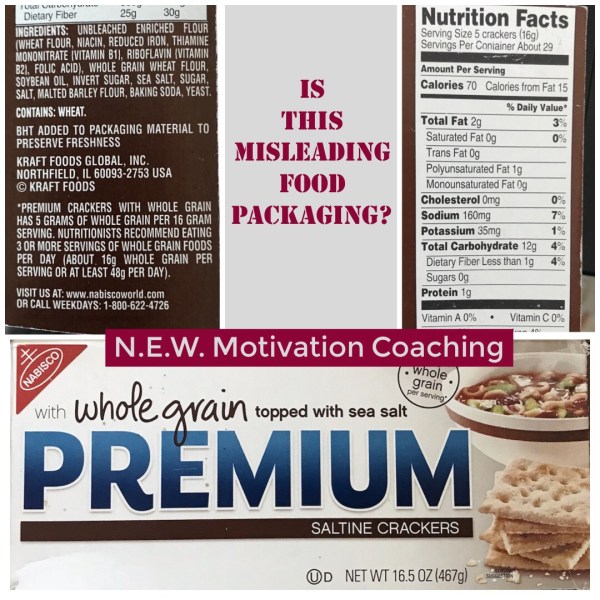
In short, you will become an bonafide food label detective.

This is a guest blog by Vanessa Tarbell, University of North Florida Undergraduate Nutrition Student. 

5 Reasons to Go On a Grocery Store Tour

Do you dread going to the grocery store? Are you overwhelmed and confused with all the food choices you have? Do you wish you had a nutritionist by your side to help you to fill your up cart healthfully?

Grocery shopping should be a fun and easy task to check off your to-do list. And it can be when you become a savvy shopper and know how to make better, healthier choices!

Let’s review the 5 reasons you should join a grocery store tour!

5-Reasons-Grocery-Store-Tour

#1: Don’t get tricked by the food packaging

Did you know that a food manufacturer can label food as having ZERO TRANS FAT even if there IS trans fat in the food? It’s true!

Just because a package claims to be fat-free or sugar-free doesn’t mean that the claim is true or that the food is healthy for you. This applies even if the food is in a green package misleading-food-packagingwith the word “Natural” in big type on the front of the package and there are pictures of farms or hearts on it.

On a grocery tour, you can grab your go-to foods and take a good look at the packaging. Learning to understand and use the nutrition label, ingredients listings, and health claims on packaging will help you make informed food choices.

Food producers can make health claims about certain nutrients (such as fiber, fats, and sodium) and while these claims must be based on scientific studies and approved by the U.S. Food and Drug Administration, that doesn’t mean the food is a good choice overall. That “heart-health approved” food may be low in sodium to earn that claim… but it still may be high in sugar and not so heart-healthy after all.

A grocery tour can show you how to dig deeper into the packaging and compare products with a nutritionist at your side. You will leave confident that you can choose the healthiest foods for you and your family

#2. Learn about food processing, food marketing, and how food impacts your health and weight

How do they make chickens lay eggs with omega-3 fats in them?

How in the world do they add fiber to yogurt?

What is the difference between Sugar In the Raw, Table Sugar, Stevia, and Splenda – and which one is the best choice for your health concerns and preferences?

How do they make FairLife Milk have more 50% more protein and 50% less sugar than traditional milk?

almonds-and-milkWhat actually happens if antibiotics end up in dairy milk when it’s being transported?

And… how many almonds are really in that glass of almond milk you drink?

A dietitian is your go-to for this kind of information. You will learn not only about how food impacts your health, but how it is produced, changed, fortified, stripped, shipped, and marketed with the hopes of grabbing your food dollars.

#3. Navigate the grocery store like a pro

When you first enter your grocery store you are greeted by all the bargain bins and the smell of freshly baked bread, or maybe fried chicken.

Deals! Deliciousness! Let us in!!

Grocery stores are doing this on purpose with the hopes that you will make more impulse buys while in the store. Those bargain bins at the door entice you to not miss a good deal – even if it isn’t something on your list.

Those delicious smells are there to turn on your appetite.

Have you noticed the music yet? Listen next time you go… it’s there to make the experience more relaxing in hopes you will slow down and stay longer.

The store’s layout is also designed to increase your impulse purchases.

  • cerealThe aisles are long and sometimes hard to maneuver. Ever run your cart into a bin in the aisle with a sale item?
  • The end caps are also a main driver for impulse shopping as they are prime real estate and food manufacturers pay a hefty fee to have their items placed there.
  • Even the real estate on the shelves is “for sale” to food manufacturers. Why do you think the brightly colored sugary children’s cereals are at their eye level?
  • How much space a product gets on the shelves? You guessed it. Paid for. Notice a pattern yet?
  • Products are displayed beautifully, shelves are fully stocked, and there are big, bold numbers on those bargain priced sales signs at the top saying “buy me!” Sometimes these items are not a bargain, so go for it! But sometimes they are just new or seasonal items.

You may have heard that you should shop the perimeter and outside areas of the grocery store. Well, sure but you may be missing out.

Healthy foods are hidden in some inside aisles if you know where to look and how to read the packaging. Grocery stores group like items together to help make your buying decision easier. So check out the aisles! Frozen, canned, boxed, or dried – look for fruits and vegetables, nuts, beans, whole grains, herbs, spices, shelf stable meats, dairy foods, and those wonderful bulk bins – they are all waiting for you to find them in the middle of the store.

#4. Make better-for-you food decisions with a nutritionist

Aisle by aisle, a licensed nutritionist will help you make healthier food choices by showing you how to read labels, introducing new ingredients, answering your food and nutrition questions, and providing grocery shopping and meal planning tips and tricks.

grocery-tour-exampleIf you have been wondering about that new cold brew coffee or the pre-made overnight oats or egg cups, a grocery tour is a great chance to figure out if those products are worth a try.
Or if you know that there is too much salt in the soup that has been your go-to for lunches, you can compare different brands and types of soups with a nutritionist pointing out how to choose the best option for your health concerns – or budget!

You will walk away empowered to choose the best brands and foods to use nutrition to reach your health goals.

#5. It’s fun!

Grocery tours give you a chance to get together with a few friends – or make new friends – in a hands-on practical way. The goal is to raise your awareness of healthful food choices and teach you how to eat more healthfully.

Grocery-Tour-Got-QuestionsGrocery tours are interactive – each one is different! Your questions guide what the tour covers so you can be sure to get what you need from the tour.

Who knows? You may even discover new foods and try something that you have never had before!

Ready To Go?

If you’re convinced that you need to hop on board for a grocery store tour then come out and join N.E.W. Motivation Coaching!

Our tours are focused on making the healthy choice the easy choice – while still helping you put delicious food on your table. One of our coaches will lead the tour and be available to answer any questions as well as give you tips and suggestions – and some recipes!

A grocery store tour can be one of the best learning experiences you can have to understand and improve your nutrition to reach your goals and live a healthy lifestyle.

Check our Calendar of Events or follow our FaceBook page for information or go to Eventbrite to register for our next tour. Next up is Heart Healthy Proteins on October 23 at 9:00 and 10:30 or on October 27 at 9:00 at the Nocatee Town Center Publix.

This is a guest blog by Vanessa Tarbell, University of North Florida Undergraduate Nutrition Student. 

References:

Building a Healthy Diet with Smart Shopping.  nutrition.gov.  website https://www.nutrition.gov/subject/shopping-cooking-meal-planning/food-shopping-and-meal-planning/build-healthy-diet-smart-shopping.  Accessed September 28, 2018

Label Claims for Conventional Foods and Dietary Supplements.  U.S. Food and Drug Administration.  website https://www.fda.gov/Food/LabelingNutrition/ucm111447.htm.  Accessed September 29, 2018

Choose MyPlate.gov.  United Stated Department of Agriculture.  website https://www.choosemyplate.gov.  Accessed September 28,

Does An Apple A Day Really Keep The Doctor Away?

In honor of American Heart Month, we are celebrating apples for heart health! Check out our newest recipe (Cinnamon Roasted Apples) and read on to learn why affordable, delicious apples are a great choice for your health and how to always pick the best apple from the bunch.

First, where did this “apple a day” idea come from?  The expression originated in the United Kingdom, specifically, Pembrokeshire in Southern Wales. The original proverb was “To eat an apple before going to bed, will make the doctor beg his bread.” We found record of it first being published in the February 1866 edition of Notes and Queries magazine.

apple-a-day

While there wasn’t really research done on apples way back then, they got it right about the possible health benefits of apples. Research shows many possible health benefits associated with apples due to some of the wonderful little phytochemicals (plant compounds) that are found in apples. For example, apples have:

  • Phenolic Compounds which may have antimicrobial properties and are associated with reduced risk of tooth decay
  • Flavonoids (specifically quercetin) which is associated with reduced risk of lung and colorectal cancer
  • Pectin, phytosterols and polyphenols which are associated lowering cholesterol levels which can reduce risk of cardiovascular disease
  • Flavonoids which may improve endothelial function (basically the ability of your blood vessels to expand and contract when they are supposed to) in people who are at risk for cardiovascular disease – which may reduce their risk for cardiovascular disease

So, yeah. apples, which happen to be the 2nd most eaten fruit (yay!) pack a powerhouse of nutrition-rich, health-promoting goodies!

All this being said. Please don’t rely on apples when you need to visit the doctor! 

Good news – apples are available year-round and believe it or not, every single state in the USA grows apples. This could be thanks in part to Johnny Appleseed (remember him?) who planted apple trees on his trek as the United States were settled. And we are happy he did as the crabapple is the only apple native to North America.

Let’s talk real life here. You’re in the grocery store and looking at a huge selection of different types of apples. How do you know which apple to choose?

Well, we always say the best choice is the one you enjoy the most, so feel free to grab your favorite type of apple and call it a day!

After that, look to your food budget… which brings more good news: apples are affordable. If your food budget is your main concern, choose the least expensive type of apple.

If you want more details though…

In terms of picking out a good-quality apple, select ones that are firm, show no signs of bruising or decay, and don’t have broken or shriveled skin.

Great tasting apples should be ripe when picked, to maintain consistent flavor, texture, and make them last longer. You can speed up ripening by leaving them at room temperature, then store in the refrigerator when they are ripe.

There are many varieties of apples, each variety with its own distinct characteristics. For example, the Red Delicious, is excellent eaten fresh or in a salad, but does not do well in roasting. Some apples that are good for baking and/or roasting are the Fuji, Gala, Golden, Granny Smith, and the Rome Beauty. Click for more information on the different types of apple varieties and what they are best suited for.

Nutritionally:

One medium apple has just under 100 calories, 25 grams of carbohydrates, 4.5 grams fiber, and 14% of the daily value for Vitamin C. It has no fat, very little protein (1/2 gram), no cholesterol, and only 2 mg of sodium (yes, natural foods have sodium – check out our series of videos on salt!).

Don’t peel your apples! Pectin and about 2/3 of the nutritional goodness (fiber and antioxidants) are in the skin. Also, be careful when juicing. There are approximately 2 1/4 apples in an 8-ounce glass of juice so you can really get a lot of calories and natural sugars by juicing and won’t register fullness the same way you would if you ate 2 apples.

The N.E.W. Motivation Coaching criteria for heart healthy foods includes (1) has fiber, (2) low saturated/trans fat, (3) low sodium, (4) low added sugars, and (5) not too high in calories. Apples are a perfectly heart-healthy choice!

Post a comment and let us know your favorite type apple or apple recipe! We are partial to the Honeycrisp variety and love us some good apple pie… and our Recipes Page has our Cinnamon Roasted Apple recipe which mimics the flavor of apple pie! YUM!

This blog was researched and written by Millie Yeamans, UNF Nutrition Student and edited by Alexia Lewis RD. We support RD2BE students!

Have-you-had-an-apple-today

References:

  1. The Meaning And Origin Of The Expression: An Apple A Day Keeps The Doctor Away. Phrases.org.uk. https://www.phrases.org.uk/meanings/an-apple-a-day.html. Accessed February 13, 2018.
  2. Kalinowska M, Bielawska A, Lewandowska-Siwkiewicz H, et al. Apples: Content of phenolic compounds vs. variety, part of apple and cultivation model, extraction of phenolic compounds, biological properties. Plant Physiol Biochem. 84 (2014) 169-188. http://dx.doi.org/10.1016/j.plaphy.2014.09.006
  3. Boyer J, Liu RH. Apple phytochemicals and their health benefits. Nutr J. 2004;3:5. https://nutritionj.biomedcentral.com/articles/10.1186/1475-2891-3-5/.
  4. Bondonno N, Bondonno C, Croft K, et al. Flavonoid-rich apple improves endothelial function in individuals at risk for cardiovascular disease: a randomized controlled clinical trial. Mol Nutr Food Res. 2018 Feb;62(3).  https://www.pubfacts.com/detail/29086478/Flavonoid-Rich-Apple-Improves-Endothelial-Function-in-Individuals-at-Risk-for-Cardiovascular-Disease
  5. Drake BH, Shertzer JK. Selecting, Storing, and Serving Ohio Apples. https://ohioline.osu.edu/factsheet/HYG-5507. Published February 25, 2010. Accessed February 13, 2018
  6. McWilliams M. Fruits. Food Fundamentals. 10th ed. Pearson Education; 2014:120.
  7. Commodity Apples. https://www.agmrc.org/commodities-products/fruits/apples/commodity-apples. Accessed February 14, 2018.
  8. Apple Facts. https://extension.illinois.edu/apples/facts.cfm. Accessed February 14, 2018.
  9. Apples, raw, with skin. http://nutritiondata.self.com/facts/fruits-and-fruit-juices/1809/2. Accessed February 14, 2018.


Salt: Where Does the Salt in Your Diet Come From?

This is Video/Blog # 2 in our Series: All About Salt.

Myth or Fact? I don’t have to worry about my sodium because I don’t use the salt shaker at meals or when cooking?

When my clients want to reduce sodium in their diets, they typically focus on the salt shaker. They believe if they don’t add salt to their food at the table or when they are cooking, it is enough to keep their salt intake low.

Is it enough?

This is a MYTH!

Wait. What? Why???

Most of the salt in the average American diet – a whopping 71% according to the Centers for Disease Control and Prevention – comes from processed foods and restaurant foods – not from the salt we add during cooking or sprinkle on to our cooked steaks or vegetables!

In fact, the foods with hidden sources of salt are the biggest offenders since many do not realize they are so high in salt. The American Heart Association has dubbed these foods the “Salty Six.”

The Salty Six includes:

  • Breads
  • Deli lunch meats
  • Sandwiches
  • Pizza
  • Soups
  • Processed chicken products.

And, if they asked me, I would make it the Salty Seven and added

  • Sauces and condiments

Can you Trust the Food Packaging Claims?

You can always look at the nutrition information label to find the milligrams (mg) per serving – just be sure to notice how much is considered one serving of the food per the label.

Those nutrition claims on food packages are a little trickier. Let’s quickly go over what those nutrition claims really mean.

First, realize that some of the claims are based off comparing the lower sodium version to the regular version.

If you see “reduced sodium” on the label, that means there is at least 25% less salt than the regular version. So, if your food is a salty one – like soup that can have 2000 mg in one can, then reduced sodium may still have 1500 mg which is not what I would consider low in sodium at all.

Claims that mean low sodium include “low sodium” with 140 mg or less per serving, “very low sodium” with 35 mg or less per serving, and “salt / sodium free” which means less than 5 mg per serving.

Finally, “no salt added” means just that – salt was not added during the food processing. The food may or may not be high in salt naturally.

Check out the video where I review some food packages and talk about the salt in some common foods – including what you just might be eating for lunch today!

So getting rid of the salt shaker may not be enough to get you to your salt intake goals.

Which may make you wonder… just how much salt should I actually eating? I will answer that question with our next video!

To get these when they are released – subscribe to my YouTube Channel

Slide7

All About Salt: Sodium

I just finished sharing some information over on the N.E.W. Motivation Coaching Facebook page about salt and decided to post the information and links to the videos here.

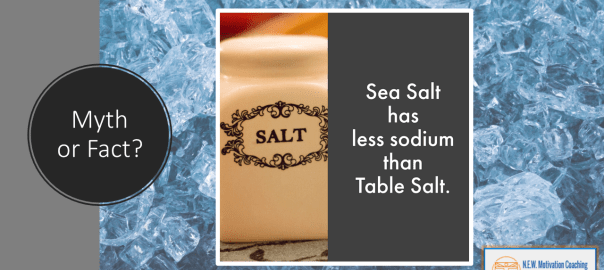
Myth or Fact? Sea Salt has less sodium than Table Salt?

First up, we addressed a great question we hear from our clients a lot – does sea salt have less sodium than table salt.

This is such a confusing topic and I’ll share with you why this is so confusing.

One reason is there are nutritional differences in the different types of salts which is due to the source of the salt and how it is processed.

Sea salt comes, of course, from the sea and is typically processed through evaporation, meaning the food manufacturer takes the water away and what is left is your sea salt. Because of this processing, it has different minerals than table salt and may contain potassium, magnesium, phosphorus, and other trace minerals.

Table salt typically comes from salt mines and is stripped of minerals during processing but… typically it comes with added iodine since we used to have a pretty big goiter problem back in 1920s and this is how the powers that be decided to fix the problem. Nutritionally, 1 teaspoon of table salt has no calories and has very small traces of minerals found in sea salt. If you look at the label for table salt, you may see additives. Typically, calcium silicate is in there to prevent clumping and potassium iodide is the vehicle to get the iodine in salt.

But the big question is: DOES SEA SALT HAVE LESS SODIUM?

Slide1-less-sodium

And the answer is YES… and NO!

Oh, don’t you hate that! Well, this will help. Here’s why:

By weight, sea salt does NOT have less sodium than table salt!

However… by volume (when you grab a pinch or use a measuring spoon), sea salt HAS less sodium!

This is because sea salt – and kosher salt – usually has larger crystals so less fits in a spoon due to how the crystals fall against each other leaving little pockets of air in between them. Table salt is very fine and so there are no little pockets of air as the granules nest next to each other.

To compare:

  • 1 teaspoon of table salt has 2325 mg of sodium
  • 1 tsp of sea salt has between 1200 – 2360 mg
  • 1 tsp of kosher salt has between 2000 – 2360 mg

So it really all depends on how those little salt crystals settle.

Hopefully, now it makes a little more sense to you.

So… which one should you choose?

Well, Salt is a flavor enhancer which means it brings out the flavors and makes food more delicious. So, yeah, use a little salt when you cook!

Salt is also important in baking since baking is pretty much just a delicious form of chemistry so it is important to be precise to get good baked goods. For baking, follow the recipe to decide which type of salt to use.

For other cooking, professional and home chefs tend to prefer larger crystals but if you need the salt to dissolve a smaller crystal would be a better choice.

When it comes down to the nutrition, there is not much difference between the different types of salt and there are no magical health and healing properties in the more expensive or organic salts. However, the trace minerals or other fancy things that may be added to the more expensive salts may change the flavor.

In the end, choose whichever type of salt you prefer that best fits your budget.