Category Archives: Diet

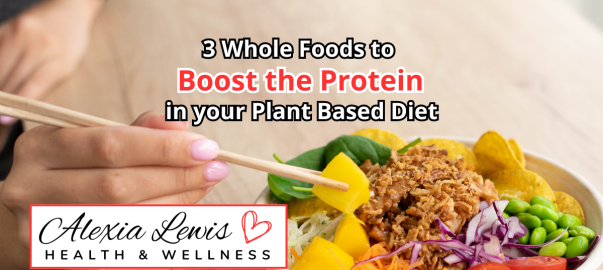
Close up image of hand with chopsticks over bowl of food with overlay text saying: Three Whole Foods to Boost the Protein in your Plant Based Diet.

Three Whole Foods to Boost the Protein in Your Plant-Based Diet

If you are wondering about getting enough protein in your plant-based diet, check out these three healthy, minimally processed plant-based foods that can boost your protein right up. Also get registered dietitian and culinary nutritionist, Alexia Lewis RD’s take on protein supplements and vegan meat alternatives.

When you start following a more plant-based dietary approach, including vegetarian and vegan diets, you might be concerned about eating enough protein. And it’s a valid concern. It can be more difficult to eat enough protein when following a plant-based, vegetarian, or vegan diet.

But… let’s be real. Without proper planning, any kind of dietary approach can be poorly done, even those that include animal-based foods. Just sayin.

Sure, you could easily boost your protein in a plant-based diet by including a plant-based protein powder or supplement. And there is room for these foods in an overall healthy diet – more on that below.

But what if you want to avoid too many highly or ultra-processed foods like these?

It’s too early to draw any sweeping conclusions, but you may have seen that recent studies are starting to show a link between highly processed foods and negative health outcomes.

So, how can you get enough protein in your plant-based diet if you want to start cutting back on these ultra-processed foods?

Protein in Meats Verses Plant-Based Foods

Generally, foods with protein come from meats (including poultry and seafood), eggs, legumes (beans, peas, and lentils, which also includes soy), and nuts or seeds. Even though veggies and grains have protein, they aren’t considered protein-rich foods.

If you are wondering why, it’s because meats generally have the most protein per bite. Sure, all foods have some protein, but plant foods typically have less protein per bite than meats.

Consider that a 3.5 ounce chicken breast, which is about the size of an average palm, has about 31 grams of protein. To get that much protein, you would need to eat 8 cups of broccoli.

Take a look at these foods and their protein content.

FoodGrams in a ServingOr about…Has this much protein
Chicken Breast, cooked100 * 3/4 cup31 grams
Black beans, cooked1001/2 cup9 grams
Quinoa, cooked1001/2 cup7 grams
Broccoli, cooked1001/2 cup2 grams
* 100 grams is the reference size in the USDA Food Data Central Database.

Okay, well I love a good dinner bowl and I chose those foods for a reason. Because I would totally smash a quinoa, black bean, and broccoli bowl with avocado, salsa, and sriracha!

But when I have a bowl like this, I typically use about 1 cup of quinoa and 3/4 cup of black beans plus about 2 cups of veggies. Good news – that actually has the same 31 grams of protein as that chicken breast. (yay!)

And, you may have realized, there’s the rub.

You may have to eat a huge portion of plant-based foods (4 cups!) to equal the protein in a small portion of animal-based foods (about 3/4 cup). For some, this big portion is welcome news; but others may have difficulty eating this amount of food at each meal.

So, let’s get on to the three minimally processed foods that I recommend for boosting the protein in a plant-based diet, so you don’t have to stuff yourself to meet your protein needs.

Food Number One: Tempeh

Tempeh should be at the top of your list if you are a plant-based eater who does not like tofu.

Tempeh is made with soybeans, just like tofu, but the beans are fermented which holds the beans together in a solid layer. It’s kind of like being able to take a slice of soybeans.

You get about 20 grams of protein for each 100-gram serving of tempeh, making it one of the plant-based foods that gets close to the meat-based foods, bite for bite.

Tempeh has a savory and slightly nutty flavor. It needs to be cooked and, well, you may have no idea what to do with it if you haven’t had it before.

You can slice it and pan-sauté it to make a vegan “BLT” with the crispy tempeh replacing the bacon. Fun fact – this breakfast sandwich, which also has avocado, was Alexia Lewis RD’s first Instagram post.

Close up of sandwich on toasted bread with lettuce, tomato, avocado, tempeh, and egg

You can also rough chop tempeh or pulse it in your food processor to break it up then toss it in a pan to use as a replacement for ground beef in tacos, spaghetti sauce, or chili. The extra flavors in these dishes will give more flavor to the tempeh.

Food Number Two: Nut Butters and Pressed Nut Powders

Nuts are a nutritious food, but the calories add up fast. This is great if you are working to gain weight, but not so great if you are on a weight loss journey.

The reason nuts are higher in calories than many other foods is that they have a high percentage of fat, which translates to more dietary fat and calories per bite.
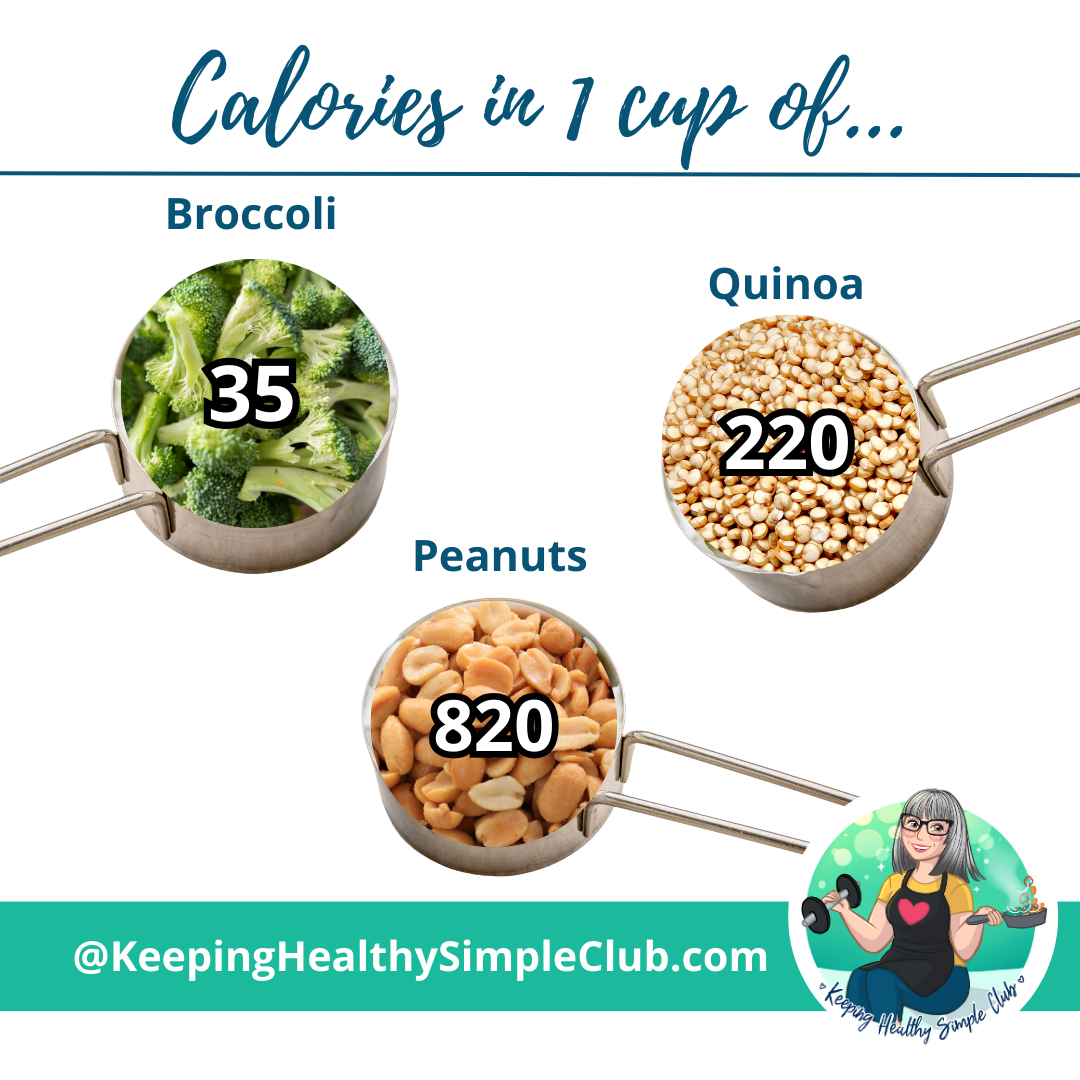
Graphic showing 1 cup of broccoli having 35 calories, 1 cup of quinoa having 220 calories, and 1 cup of peanuts having 820 calories.

Nut butters are considered a minimally processed food, especially if you check the food label to make sure the ingredients are limited to the nut and salt (ex: peanuts, salt). Be wary as some brands add more ingredients to emulsify, stabilize, and sweeten the nut butter.

You may think that nut butter powders are a highly processed food since it’s basically turning peanuts into a powder. But hear me out.

Yes, you are correct that this is a more processed food. However, it’s not heavily modified. The peanuts are roasted, pressed to remove the oils, then ground into powder, reducing the fat and keeping a lot of protein. Again, look for the nuts and salt on the ingredients list.

For each 100-gram serving, you get about 22 grams of protein in peanut butter (and 600 calories) and whopping 48 grams of protein in powdered nut butter (and 460 calories).

But don’t get too excited because you likely won’t eat this much in one sitting. I mean, that would be a 1-cup measuring cup full of peanut butter powder before you even mix it with something.

Use the nut butter powder in smoothies or sprinkle some in any dishes that pair well with the nutty flavor and could use a little protein boost. It would be great in this pineapple curry tofu recipe, which is one of my faves. You can also mix the powder with a little water and stir to mimic the consistency of peanut butter.

Food Number Three: Chia Seeds

Just like nuts, seeds are higher in fat and calories than many other types of foods. You get 17 grams of protein in a 100-gram serving.

WARNING – please do not eat 100-grams of chia seeds. If you do not eat a high-fiber diet, do not go crazy on these because they can lead to GI issues and constipation in large quantities. So, take it slow and drink more water.

Chia seeds can be used as a vegan egg substitute when baking by mixing with water and letting them sit until they form a gel-like consistency. Try using 2-3 tablespoons of water for each tablespoon of seeds.

I love them as a chia seed pudding, which you can meal-prep for a quick, filling snack or dessert. Here is one of my faves – a vanilla chia seed pudding with fresh berries.
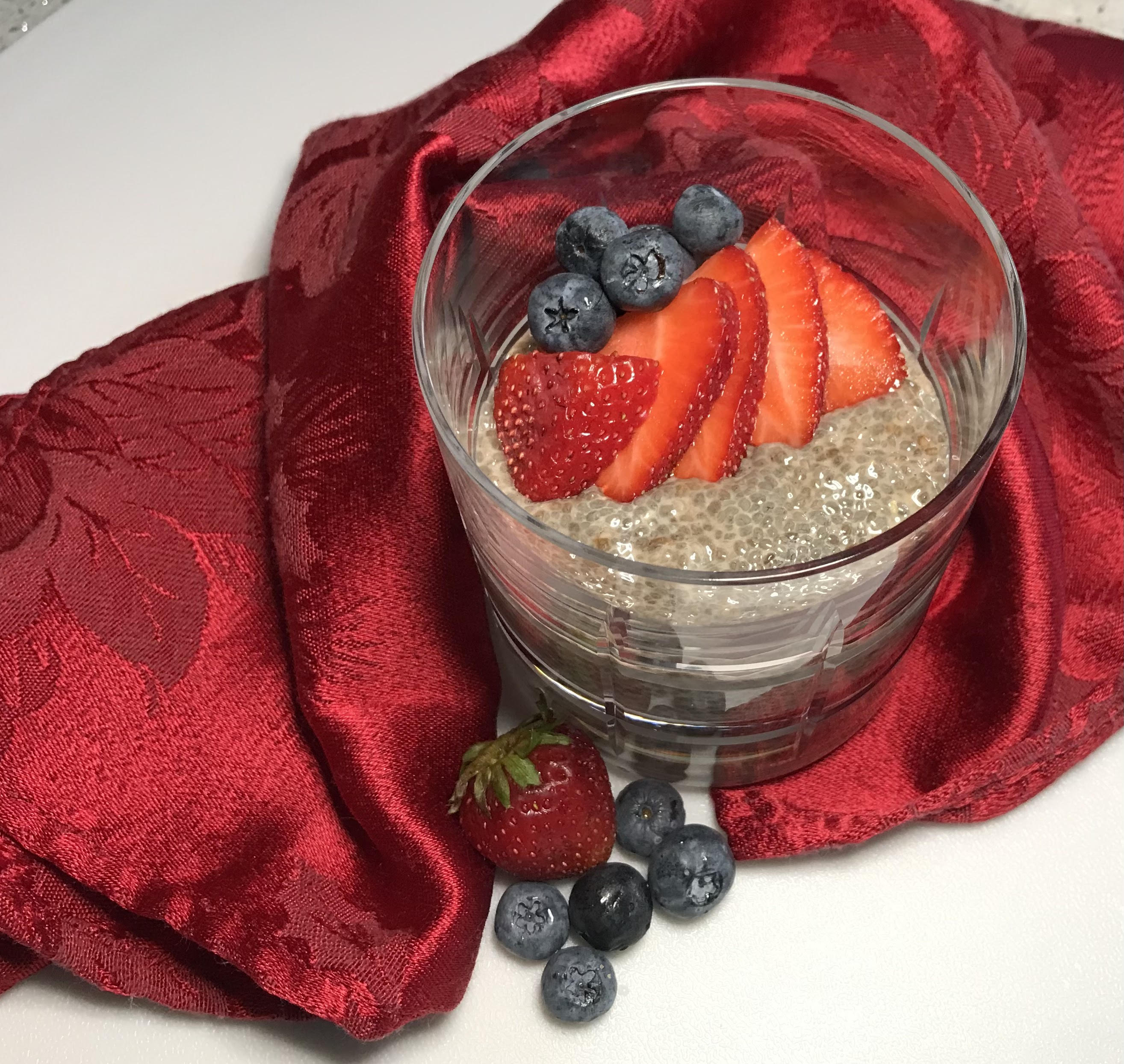
Picture of chia seed pudding topped with berries.

Protein Summary

Here are how these three minimally processed plant-based foods stack up when added to our chart on protein.

FoodGrams in a ServingOr about…Has this much protein
Chicken breast, cooked100 * 3/4 cup31 grams
Powdered nut butter50 **1/2 cup24 grams
Peanut butter1001/3 cup22 grams
Tempeh1001/2 cup20 grams
Chia seeds1001/2 cup17 grams
Black beans, cooked1001/2 cup9 grams
Quinoa, cooked1001/2 cup7 grams
Broccoli, cooked1001/2 cup2 grams
* 100 grams is the reference size in the USDA Food Data Central Database. / ** Serving size reduced to more closely match the volume of the other foods.

As you can clearly see, these plant-based foods pack in more protein than the foods you may typically think of when looking for a plant-based protein.

Protein Supplements

Okay, let’s circle back to the easy way to boost protein – with supplements.

First and foremost, there is no shame – nada, zip, zero, none – in using a protein supplement.

These are a great option if you can’t meet your protein needs with less processed foods, you don’t have time to (or want to) cook or meal prep, or you are in a hurry and need a grab-and-go. Or really, any other reason. You don’t have to justify how you eat to anyone.

In fact, when I have a nighttime craving for something sweet, I love to use the Transform Protein Powder or Meal Replacement Powders in a smoothie or in my Ninja Creamie to make a protein ice cream. And this is where I let you know that I am an affiliate for Transform, which means you can get a deal on these products.

Also, on mornings where I don’t have time for a proper breakfast, I often will add a pre-made caramel protein drink to my coffee for a delicious pick-me-up and protein/calories to start my day.

Vegan Meat Alternatives

And if you are wondering why I didn’t include any vegan “meats,” it’s because I am incredibly wary of these foods. They are very highly processed and I’m putting my money down now that these are going to turn out to not be a healthy approach to plant-based eating in any way.

You heard it here first.

What’s Next?

Switching to a more plant-based diet?

Curious if you are eating enough protein for your body’s needs and health goals?

Talk to Alexia through Nourish. You can even use your health insurance!

References:

  1. Harvard Health: More Evidence That Ultra-Processed Foods Harm Health.
  2. USDA FoodData Central: Legacy Foods Search
  3. PB2: PB2 Original Powdered Peanut Butter
  4. University of Wyoming Extension: Appetite for Knowledge – Powdered Peanut Butter

Are Kodiak Cups Good For A Quick Breakfast?

Updated 03/04/2025. If you need a healthy on-the-go breakfast, you may be wondering… are Kodiak Cups good for a quick breakfast? When I first saw these breakfast cups back in 2020, this kind of convenience food was still fairly new. Add water, microwave, and eat! Why, yes, I think maybe these Kodiak Cups are good for a quick breakfast!

I do want to say thank you to Kodiak Cakes for the RD Kit containing these free products for me to sample. I have not been paid or encouraged to post any kind of information in exchange for these samples. You can see on my disclosure page that I give honest reviews of products and would never let receiving a free product influence my review.

I encourage a balanced breakfast to get the day started – protein, carbs, fats, alla them. But mornings can be hectic. I hear from my patients that fitting in a healthy, balanced breakfast can be a challenge. They don’t have time in the morning to eat breakfast, let alone make one! Life is busy. I get it.

If you like to meal prep, then the problem is solved. But what about those who just aren’t into meal prepping? (No shame!). More and more products like this are hitting the shelves because food manufacturers know we want convenience.

So, let’s put on our nutrition detective hats and explore.

If you have heard of the brand, Kodiak, then you know that higher protein is kinda their jam. And higher protein in grains gets my interest as I’m an occasional macro-tracker. Protein has been having its moment for a long minute now, as it should because protein is important for so many reasons. (Get my take about The Beef on Protein).

I tried the Kodiak oatmeal first and was happy to see they sent the best flavor: maple and brown sugar. (Fight me).

In terms of ease of breakfast, this is a big winner.

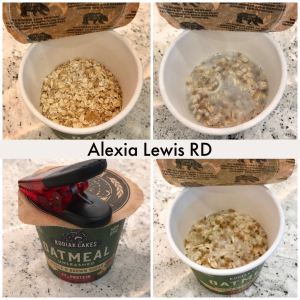
I used my electric tea kettle to heat water, added it to the Kodiak Cup, and let it sit covered for the recommended two minutes. You can also add water and microwave. It doesn’t get much easier – or quick – than that.

Straight up. I was super concerned about the very small portion, especially since it has about half of the calories of my typical breakfast. But this little cup of oatmeal kept me full until lunchtime. Totally surprised!

This has 230 calories, 14 grams protein, 38 grams carbs, and 3 grams of fat. It has 4 grams of fiber, 12 grams of added sugar, and 200 milligrams of sodium.

I wouldn’t expect a lot of protein from oatmeal and that tracks here. I often recommend adding protein when oats are for breakfast. This can be done with protein powders, as in this product where protein was increased with pea and milk proteins, or with whole foods, such as an egg/egg whites. PS: I have a great pina colada overnight oats recipe.

This also may seem like a lot of carbs to some; but it is oatmeal, soooooo… and 38 grams if completely appropriate for many people. When it comes to grains, always look for a product that has a whole grain as the first ingredient – which this one does.

I’m not one who is afraid of long complicated words on an ingredients list but this one keeps it very simple and I’m sure many “clean eaters” would give this product a thumbs up.

Btw, my definition of clean eating is not eating food that’s fallen on the floor. Just sayin’.

Pros:

  • First ingredient is 100% whole grain oats.
  • Very low in saturated fat (0.5 grams).
  • Super convenient.
  • Good flavor and good consistency, and no aftertaste.
  • Staying power.

Cons:

  • Low in protein (for a meal).
  • High in added sugars.

American Heart Association recommendations for added sugars is set at 25 grams for women and 36 grams for men. At 12 grams, this is 1/2 to 1/3 of the total recommended. I like to find ways to make convenient food fit if it can help people eat in a way they want to. So, this absolutely can fit into a heart-healthy diet as long as you are mindful about added sugars for the rest of the day.

And, personal preference here, I’m not a big fan of pea protein due to a not-too-fun experience involving veganism and pea protein in oatmeal. I’m sure it’s come a long way since then.

Overall thoughts?

Two Forks up! This is delicious, filling, and is heart healthy.

Next, I tried the Cinnamon Maple Flapjack Kodiak Cup.

This serving size made my eyes much happier as it filled up more of the container. But it wasn’t as filling as the oats. Go figure.

It smells amazing and has a good crumb; but I do recommend a spoon instead of a fork as it ends up getting very crumbly as it is eaten. Per my husband, this tastes like smushed up pancakes (count me in!) and it is true the finished product was a little bit dense.

This has 260 calories, 19 grams protein, 39 grams carbs, and 7 grams of fat. It has 3 grams of fiber, 14 grams of added sugar, and 340 milligrams of sodium.

This one is also lower in calories than my typical breakfast, so I added some butter, which made it taste even better. If you’re looking to add calories, you could also add some syrup (but it totally isn’t needed) or top it with an egg.

As with the oats, this is a bit low in protein and high in carbs and this is to be expected from pancakes. Same advice applies here as did with the oats – more protein!

The ingredients list is longer, and the first two ingredients are whole grains. This would likely pass the “clean eating” test for some.

The pancakes do have eight times as much saturated fat as the oatmeal, coming in at 4 grams. The saturated fat here comes from the palm, palm kernel, and palm oil. My guess is that since unsaturated fats are less stable and go rancid more quickly, they balanced out the need for shelf stability with the desire for a nice nutrition profile and landed on saturated oils instead of others.

American Heart Association recommendations for saturated fats puts the maximum intake at 6% of total calories. Using the reference standard on nutrition facts panels of 2,000 calories a day, that comes to 13 grams a day. That puts this product at 1/3 of your saturated fat for the day.

Just like added sugars (btw this one has more than the oats), this can fit into a heart-healthy diet as long as you are mindful about how you eat the rest of the day. I would encourage plant-based eating to keep saturated fats low. Get my suggestions for three plant-based whole foods to boost the protein in a plant-based diet.  

Pros:

  • First two ingredients are whole grains.
  • Tastes good and has a nice crumb like a pancake should
  • Super convenient.

Cons:

  • Low in protein.
  • Higher in saturated fat and added sugars that I would like.
  • Didn’t hold me as long.

Overall thoughts?

One Fork up! Just one because it didn’t hold me until lunchtime.

I will also say a big pro for both of these is the portability, which means you can eat them when you first get up or bring them into the office or when you’re out on the go.

Yes, this dietitian Kodiak Cups are good for a quick breakfast! Just add an egg, okay?

Give these a try and let me know what you think!

Curious about balanced breakfasts that will work for you? Want some help with finding recipes or strategies to meal prep your breakfast? (PS – you don’t have to a whole week at a time!).

Let’s do it!

Click right here to get to Alexia’s provider page with Nourish, choose a date/time and start the scheduling process.

One of the first screens when you start will let you know if your health insurance is accepted by Nourish. Before you finish the booking process, you will enter your insurance information into the Insurance Calculator to get an estimate of the expected costs. If you don’t like the number, just cancel out and you won’t be scheduled.

And, of course, you can reply to this email if you have questions or want to be hooked up with another amazing RD at Nourish. I’m happy to help! 

Graphic with image of Alexia.

Hi there! I’m Alexia and I believe in science, humor, and delicious food.

Heart health is my jam. I love to write and speak publicly on this topic and all aspects of living a heart-healthy lifestyle.

I believe you shouldn’t sacrifice your mental health in pursuit of better physical health. You deserve to be both happy and healthy. You don’t have to choose just one.

I am a master’s level nutritionist who is also a registered and licensed dietitian in multiple states in the USA, a certified personal trainer, and certified health coach. I also invested in becoming a culinary nutritionist and weight management specialist. In other words, I got you.

Salt: Where Does the Salt in Your Diet Come From?

This is Video/Blog # 2 in our Series: All About Salt.

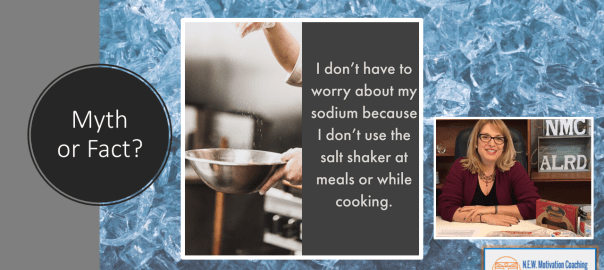
Myth or Fact? I don’t have to worry about my sodium because I don’t use the salt shaker at meals or when cooking?

When my clients want to reduce sodium in their diets, they typically focus on the salt shaker. They believe if they don’t add salt to their food at the table or when they are cooking, it is enough to keep their salt intake low.

Is it enough?

This is a MYTH!

Wait. What? Why???

Most of the salt in the average American diet – a whopping 71% according to the Centers for Disease Control and Prevention – comes from processed foods and restaurant foods – not from the salt we add during cooking or sprinkle on to our cooked steaks or vegetables!

In fact, the foods with hidden sources of salt are the biggest offenders since many do not realize they are so high in salt. The American Heart Association has dubbed these foods the “Salty Six.”

The Salty Six includes:

  • Breads
  • Deli lunch meats
  • Sandwiches
  • Pizza
  • Soups
  • Processed chicken products.

And, if they asked me, I would make it the Salty Seven and added

  • Sauces and condiments

Can you Trust the Food Packaging Claims?

You can always look at the nutrition information label to find the milligrams (mg) per serving – just be sure to notice how much is considered one serving of the food per the label.

Those nutrition claims on food packages are a little trickier. Let’s quickly go over what those nutrition claims really mean.

First, realize that some of the claims are based off comparing the lower sodium version to the regular version.

If you see “reduced sodium” on the label, that means there is at least 25% less salt than the regular version. So, if your food is a salty one – like soup that can have 2000 mg in one can, then reduced sodium may still have 1500 mg which is not what I would consider low in sodium at all.

Claims that mean low sodium include “low sodium” with 140 mg or less per serving, “very low sodium” with 35 mg or less per serving, and “salt / sodium free” which means less than 5 mg per serving.

Finally, “no salt added” means just that – salt was not added during the food processing. The food may or may not be high in salt naturally.

Check out the video where I review some food packages and talk about the salt in some common foods – including what you just might be eating for lunch today!

So getting rid of the salt shaker may not be enough to get you to your salt intake goals.

Which may make you wonder… just how much salt should I actually eating? I will answer that question with our next video!

To get these when they are released – subscribe to my YouTube Channel

Slide7

A Gift: Enjoy the Holidays without Sabotaging Your Health

I am beyond excited to announce a gift to you from me and N.E.W. Motivation Coaching. Because I am so unhappy with the Diet Culture / Weight Loss wheels turning as we come to the end of another year, I am giving away – yes free – both a video course and a booklet this year. 

Survival-Guide-Image

Unfortunately, December is a month when many feel overwhelmed with stress and give up on their health goals believing they will return to healthy habits in January when they make their resolutions.

There is some good in this actually.

If you look at the research on willpower, it indicates that people are not as successful at white-knuckling it / sucking it up / using their willpower to [insert goal here: stick to their meal plan, exercise daily, go to sleep on time, etc] when they are either stressed or depressed.

The trick is to manage the stress or depression first and then re-focus on health goals. If you are stressed in December, then relaxing on your health goals may be 100% appropriate. 

Giving up entirely to eat like a jerk and couch surf for 4-6 weeks, however, can result in a pretty big back-slide on health complete with weight gain and loss of cardiovascular endurance and muscle mass/strength! Oh, and an increase in blood pressure, cholesterol, blood sugars, and those other health concerns that are totally impacted by your daily food and activity choices.

So, what do we do?

I’ve got an idea: Find a way to both enjoy the holidays and keep some focus on your health goals. It is so very possible to do with a few tricks & tips up your sleeve!

Planning

The free course gives you 5 realistic tips to coast through the holidays while staying true to your health – and weight – goals as well as 3 worksheets and a health coach walks you through making your personal strategy in the videos so you can enjoy the holidays without sabotaging your health!

You also get tips for making traditional holiday foods healthier AND a list of which herbs and spices pair best with which foods so you can reduce fat and sodium without sacrificing flavor.

This course is designed for:

Dieters who are tired of the repeated cycles of weight loss and regain who want to find peace with food, activity, and themselves so they can improve health and weight

Adults with – or at risk for – chronic lifestyle diseases who want to find realistic and enjoyable ways to approach lifestyle changes so they can reduce their risk for chronic diseases and live a healthier life.

People who are confused or overwhelmed with all the conflicting rules and information about nutrition and exercise who want to sort it out so they can find a lasting, realistic plan that works in their unique lives.

True-Health-Requires-Balance

I offered this information last year as an in-person class and just didn’t get to share it with enough people! So this year we are giving it away in order to get this good info into the hands of more people who need this type of support and guidance during the season.

Check it out – try some tips before the next big holiday meal in just a few short weeks – and share this with anyone you think may benefit from it! There is no limit on how many freebies we give away so share it as much as you would like to!

Here is the link text: https://new-motivation-coaching.teachable.com/p/our-favorite-5-tips-to-enjoy-the-holidays-without-sabotaging-your-health

So you know, this is only 50% of the tips we share in our Love Yourself Healthy Plan. We will be sharing more on that soon!

Yes, you can eat the pecan pie AND be healthy.

Abracadabra – you’re thin!

I have to share that I’m feeling kind of sad, angry, and disillusioned. It’s that time of year, I know. That time where every crazy idea about weight loss and getting ripped invades every media outlet in our lives.

I should be used to it; but I’m not.

It makes me sad because of all the bullshit out there.

Just this week, I’ve seen very disturbing ads. Disturbing on one hand because they are utter ridiculousness. Disturbing on the other hand because of people’s reactions to them… or should I say blind faith in them being their magic bullet for weight loss. Oh, yeah, without having to do anything except buy and use this magical new product.

Have you seen the ad for lycra pants with some magical compound woven into the fabric that is absorbed by your skin and melts fat away yet?

Really?

I mean really – think for a moment and tell me if you believe this? If this were true, everyone would know about this magical potion that melts body fat – no work required, just rub it on and abracadabra – you’re thin!

I also just saw and ad for exercises no one over 40 should do because hormones.

What the bloody hell?

I couldn’t watch it all but this charlatan has a whopping 4 studies he is using to back up his claim that women over 40 shouldn’t do cardio because it messes up their hormones (again, what the bloody hell?). Oh and I guess cardiovascular health is not as important as your weight even though heart disease remains the #1 killer in the USA?

Ummm. Okay, let’s move on ignoring this major fact.

The next part was that this guy can show you the 12-minute exercise plan that will keep you burning fat and calories for hours after you exercise (spoiler: pretty much all exercise has this impact – Learn more about EPOC.)

Damn you science.

Yes, hormones are a big part of weight loss and metabolism. But the detox metabolism tea or the 12-minutes of exercise a day aren’t going to fix them or abracadabra – we’d all be thin!

But the worst part for me is the comments. This is what makes me angry.

It’s not what I’d expect of people crying BULLSHIT! No, it’s the vulnerable and hopeless pouring out their health problems in a comment and asking if the program will work for them.

People peddling this bullshit to these people should be ashamed of themselves. 

get-pissed-off

Of course, we also have had the supplements and pills around for decades now. Someone is still making money off them (off of you?) or they wouldn’t still be peddling this particular type of snake-oil.

The claim, as always, is just take these pills, no exercise or food changes required and abracadabra – you’re thin!

At least the shakes let you know you have to give up eating twice a day and instead drink their miracle shakes.

Listen, there is some evidence (as in research, not testimonials) for pills and supplements for weight loss but the fine print is usually along the lines of people losing an extra few pounds (not a lot of weight) when they also exercise and/or change their food. It’s not just the pills, people. And there’s not a big difference in weight lost with the pills.

Do you know what you are risking for that extra 5 pounds off loss with a pill or supplement?

Well, if it’s an over the counter supplement, just liver failure or death because these are not regulated.

If it’s a prescribed medication, then it’s just insomnia, damage to liver or heart valves, increased blood pressure, seizures, and diarrhea – fun!

But hey – 5 more pounds! Woo!

Learn more about weight loss prescriptions and supplements and the difference in how these come to market.

At least with the shakes you know you are going to be starving yourself – no matter how “filling” the shakes claim to be, it’s not food and there is no chewing.

But sure, take in a mere 700-1000 calories a day and you will lose weight… and stall out your metabolism so when you stop the shakes (because come on it is not a life-time plan), all that weight you re-gain is going to be fat instead of muscle now because you have wrecked your metabolism.

They should put that in the ads too #truthinadvertising.

Pyramid-Schemes

Actually, one of my favorite studies on an MLM shake product was provided by a seller and touted as proof that their shakes are different. The punchline? After actually reading the journal article, it turns out they gauged their weight loss shakes a success because the shake users regained less weight after one year than other dieters.

WTH? Regained less weight.

Right. Not actually losing weight… but regaining less weight back. Wow.

This all makes me disillusioned because here I am – hello – peddling health and weight loss through exercise and nutrition changes along with lifestyle management for stress and sleep.

Yawn. Boring.

And what? I expect people to do some work?

Yes. Work smarter, not harder; but work nonetheless.

At any rate, these are some random thoughts from a dietitian health coach as the money-making season begins for weight loss.

I have no real point today.

I’ll sit by and bite my tongue… and hope that someday we can see behind the abracadabra curtain and believe that common sense is sexy again.

Cheese and Strangulation by Bedsheets

I say when your press release gets no press, make your own! We will get to the cheese; but first:

FOR IMMEDIATE RELEASE

Dieting is Making You Bigger

Say Hello to Jacksonville’s Only Health at Every Size® Nutritionist

Jacksonville, Florida – July 2017 – There is a movement growing among health professionals called Health at Every Size® which, among other things, rejects the use of weight as an indicator of health and believes that weight is largely unchangeable by individuals. There is only one registered HAES® practitioner in the Jacksonville area. Search the listings here.

Regardless of what the celebrities and infomercials who promote a Diet Culture say, the fact is that the majority of dieters only temporarily lose weight. In the long-term, they regain the lost weight plus more. Many of them will then go back on a diet – and this weight cycling is detrimental to health. Following restrictive diets and intense work-out plans provides temporary weight loss results at the expense of mental health and self-esteem with the result often being an out-of-whack metabolism and eating binges. Social relationships can also suffer as food rules, good food/bad food beliefs, and guilt or shame about food choices become more consuming.

Many people think if someone is overweight, they are not healthy. The truth is that not everyone who has a large body is sick/unhealthy – and not everyone who has a small body is well/healthy. One cannot make judgements about someone’s health based on their body size. Many larger bodied people are healthy in terms of lab values, freedom from chronic conditions, and ability to exercise and live independently. All the diseases and conditions that obesity supposedly causes are nothing more than associations and correlations – things that happen together – not necessarily one thing causing the other.

For some fun correlations to illustrate this point, see Spurious Correlations and you can “prove” that eating cheese leads to death by strangulation by bedsheets… or that eating margarine leads to happier marriages (or at least less divorce filings)…

Beware-the-cheese

You see my point?

(And if you don’t, I’ve got a heckuva deal on some swampland I can sell you down here in Florida… hit me up!)

As a HAES® practitioner, registered dietitian, and certified health coach, I can offer a welcome change of pace for people who choose to reject the diet culture and prefer to work on improving health through mindful eating, enjoyable exercise, self-acceptance, and realistic, flexible lifestyle habits.

Get more information or see our upcoming events.

What Is this No-Diet / Anti-Diet Thing Anyway?

Now that you are exploring the idea that diets don’t work, are you wondering what that leaves you with if you still want to improve your health and lose weight? It is a scary place to be. Many dieters have been dieting for a very long time and not having the structure and those good/bad thoughts about food and eating habits can result in feeling very lost and uncertain. We certainly are not comfortable trusting our bodies since we are not happy with how our bodies look. We certainly cannot trust our bodies because our bodies are always hungry (um, yeah, because we are starving our bodies on diets!).

Life with no diet plan? No food rules? How will we know what to eat? How will we keep from eating way too much food or binge-eating? We will dive in to the deep end with food and just get bigger!

So many times when I start working with a new client, I hear a very familiar story. It goes something like this:

What I ate yesterday? Oh, well, that was a bad day [laughs] but okay. I got up and I had a cup of coffee with a splash unsweetened coconut milk and honey – I know sugar is bad but honey is natural – and I ate 1 packet of instant oatmeal made with water. I was hungry mid-morning but I was good and didn’t eat until lunch time! For lunch, I had a salad and a diet soda. What was on the salad? Oh, it was just lettuce and tomatoes with one of those tuna packs. No, no dressing or croutons – I can’t eat those! By 4:00 I was so hungry but I drank a lot of water to fill up my stomach and I managed to make it home without eating! For dinner, we had grilled chicken and I had a few broccoli florets. My husband had some rice but I know carbs make me fat so I skipped that. To drink, I had a couple glasses of red wine – I’ve heard that’s good for my heart, right? I was so good yesterday and was so proud of myself but then, I was so bad. I just could not stop eating after dinner. I know I’m not supposed to eat after 6pm… are you sure you want to hear this? Okay, well, first I had some crackers with cheese… and then I had a lo-calorie popsicle… and then I had a big bowl of chopped pineapple… and I was still hungry and well, I knew I blew it at that point and was being bad so I went ahead and ate one of those big microwave bags of popcorn and before bed I had some ice cream! So far today though, I’m being good again and eating right.

It is a way-too-familiar story because it is the pattern of most of the people I talk to who are trying to diet. If you read that again and look for food rules and good/bad language, it will jump out at you. If you total up those calories (sorry, dietitian-brain took over) – or think about how much food was eaten before the after-dinner snacking began  – you know it is not enough to fuel a body! Of course you are hungry. You are starving your body. Yes, I know it’s on purpose because you want to lose weight but it backfires every single time, doesn’t it?

And no, it’s not because you aren’t good enough; aren’t strong enough; didn’t try hard enough. It’s because: physiology. Undereat… undereat…. Ignore hunger… undereat… binge! See you again tomorrow diet!

But without a diet plan, we now are staring into a void. Without the rules, what is left?

break-free-from-dieting

There is a new buzzword out there: anti-diet (or reverse dieting). It has been around for a while but maybe you just haven’t seen it before. Other names you may have heard are no-diet, non-diet, mindful eating, intuitive eating, and some others. It is about listening to your body – and yes, you can trust your body – once it has learned it can trust you not to starve it again… although that may take a little time. Your body has learned that starvation is always coming if you are a repeat dieter. But with time, you can get past that point and get back in sync with your body.

What does a non-diet approach look like? It may be different for different people but here are some ideas – and I’m sure you could add your own ideas to this list once you get the hang of it:

  • Eating foods you like in amounts you desire, which means
    • Eating when you are hungry instead of ignoring your body when it is crying out for fuel and energy
    • Stop eating when you are satisfied from a meal. Yes, this takes practice and it is hard work; but doesn’t that make more sense than eating a set number of calories or points or only green foods?
  • Consider what you want for your health and choose foods that move you in that direction
    • For example, if you are working on lowering cholesterol then eat more foods with fiber and unsaturated fats
  • Focus on quality nutrition by swapping out nutrition-poor foods for more nutrition-rich foods
  • Allow yourself to eat what you really crave and enjoy – have those treats and other foods you love and told yourself you would never eat again
  • Following that, only eat foods that you enjoy. I do have one pretty big food rule that I recommend we all follow: Never eat something you don’t like. Seems elementary but a lot of people choke down “healthy” foods and drinks that they hate
  • Find activity that you truly enjoy regardless of the intensity or “calorie burn” and then do it consistently (and joyfully!)

Answer a question for me: Are these positive guidelines or negative ones?

The diet industry has made people hate themselves into desiring to change by following rigid and ridiculous rules. This approach is all about loving ourselves into change with flexible and enjoyable guidelines!

Think about it. The diet culture banks on you hating your body. You hate your body and so you diet and exercise because your body is wrong, it can’t be trusted, it’s signals must be ignored, and you are not worthy. You must eat a certain way (diet), obsess about food, power through the physical and emotional pain of hunger, and don’t forget to exercise to as a penance for eating. And maybe one day, after you suffer the consequences of “getting yourself back” after having “let yourself go,” you finally can be deserving of love and worthy and valuable.

The no-diet approach is based on loving yourself and realizing that your body is worthy and beautiful, you can trust it and listen to its signals, and if it never changes, you are enough, you are valuable, and you are worthy. You eat because food is nourishing – and delicious – and you get to exercise and move your body in ways that feel good. These things are rewards, not punishments!

And listen, you can still seek to improve your health. There is nothing wrong with that. Do you think those who strive to be millionaires shrug their shoulders and stop trying because the majority of people don’t make it? Heck no. If that were the case, then millionaires would only be born, not self-made. Self-made millionaires seek to improve on their weaknesses and put in the hard work. They read, meditate, get up earlier, work harder, and improve themselves. Do you think they hate themselves until they make their first million? Heck no! (So why do you hate your body until you lose weight?). They believe in themselves, they love themselves, and they know they are worthy of achieving their dreams.

Breaking the diet mindset is not easy work.

A funny thing happens with weight when many people stop dieting… not right away; but over time, people’s weights settle at the weight that is best for their bodies. You may lose weight if your body has a lot of weight on it because you are treating yourself poorly with food and not being active and then you start treating yourself better by eating nutrition-rich food and getting more active; but weight is not the focus. You may gain weight if you’ve been dieting forever and now you break all your “diet rules;” but the research doesn’t indicate that weight is gained with a non-diet approach and weight is not the focus. If you lose weight, great! If you don’t lose weight, great! If your weight doesn’t change, great! Once you can embrace that, you will have flipped off diet culture and be on your way to living a happier, healthier life!

Do you want to learn more? Please join our upcoming Redefining Healthy Book Club: Readings to Break the Diet Cycle and Live the Good Life. We will meet virtually and in-person if you are in the Ponte Vedra, Jacksonville, St. Augustine area of Florida.

Yours in Good Health,

-Alexia Lewis RD

This article is Part 4 of 4 in “Health versus Weight as a Focus for Wellness” which will be published during the month of June 2017.

Part 1: The Continuum of Approaches to Health: Thoughts from a Curvy & Healthy Dietitian Health Coach

Part 2: Who is the Best Health Professional to Help with Creating New Lifestyle Habits?

Part 3: If Diets Don’t Work, How Can a Health Coach Help Me?

References & Resources

T.L.Tylka, R.A. Annunziato, D. Burgard, et al, “The weight-inclusive versus weight-normative approach to health: Evaluating the evidence for prioritizing well-being over weight loss,” Journal of Obesity, vol 2014, article ID 983495, 2014. View at: https://www.hindawi.com/journals/jobe/2014/983495/.

A. Bombak, “Obesity, Health at Every Size, and Public Health Policy,” American Journal of Public Health, vol. 104, no.2, pp. e60-e67, 2014. View at: https://www.ncbi.nlm.nih.gov/pmc/articles/PMC3935663/

If Diets Don’t Work, How Can a Health Coach Help Me?

Have you heard that diets don’t work?

Actually, all diets work. Any way you can dream up to cut calories will usually result in weight loss (assuming no underlying health conditions, sleep and stress are in check, you have a healthy gut microbiome, have not screwed up your metabolism from a history of chronic dieting, etc. etc. etc.). So go for it – paleo, atkins, intermittent fasting, no white foods, whatever – they all work until you stop following them.

Ah, there’s the catch. Who could follow any of them for a lifetime? So, diets only work short term. Health is not a short term proposition. Diets don’t work.

The ugly truth is that an overwhelming majority of dieters regain the lost weight (plus more!). Many others have knocked their metabolism and hormones out of whack (making it easier to gain weight) and may have jeopardized their health physically and emotionally by going on a diet. What’s worse is that weight cycling (the on/off diet lose-and-regain weight cycle) is not at all good for your health.

It’s all doom and gloom for dieting when you look past the initial honeymoon phase when your weight is dropping. Need to have that gall bladder taken out after a low-fat diet? Obsessing about food all the time after calorie counting? Feeling like a failure, unworthy, unlovable after losing and regaining weight again? These are the promises diets should make. #truthinadvertising. You must be crazy if you want to go on a diet. Who wants results like that?

dietsdontwork

Well, a lot of people do. We are all bombarded by diet culture and fitspo and it is natural to want to lose weight, to model what you see, to want to fit in with current societal norms. We live in a shake-pushing weight-shaming world and large-bodied people face discrimination every day. Our beliefs about dieting and weight are so very skewed from media outlets and celebrities and fitness bloggers.  Many blame themselves for not being able to lose weight on a diet (wrong answer) instead of blaming the multi-million dollar industry that is banking on the fact that you will blame yourself instead of the diet plan and spend your money in the diet industry again and again and again.

But, check it. If the majority of diets fail, then at least some dieters are successful, right? I hear the optimist in you. I get it. That next diet, well, it’s so alluring and promising and well, maybe you are in that Miracle Minority who can diet and keep weight off for life! Maybe.  Maybe not.  I’m not a fortune teller. Even though I know the research about diet outcomes, it is not my job to force that on you. So, go ahead if you want to try just one (or three or five) more diets. I’ll still be here when you are ready to try out something different.

How Can I Help You?

If you want to work on your health and wellness, then I want to work with you. This is where the education part of my job is. Let’s talk about why you believe that the next diet is “the one” and let’s work through how you are thinking about dieting – the process and results and struggles – and see where you end up. It is better to for you to explore your options and for me to give you a safe place to unload and investigate some new ideas.

My hope is that you will move towards the anti-diet/non-diet approach. In fact, many people I work do relax their food rules and find a happy place with food and exercise. If you partner with me then you get a coach to educate, explore, discuss, trouble-shoot, brainstorm, encourage, motivate, and challenge you. You get someone on your side working right there next to you until we find what works for you to reach your health goals.

When you are ready to break the diet cycle and focus on your health, I will still be here.

Yours in Good Health,

-Alexia Lewis RD

This article is Part 1 of 4 in “Health versus Weight as a Focus for Wellness” which will be published during the month of June 2017.

Part 1: The Continuum of Approaches to Health: Thoughts from a Curvy & Healthy Dietitian Health Coach

Part 2: Who Is The Best Health Professional to Help with Creating New Lifestyle Habits?

Part 4: What Is This No-Diet / Anti-Diet Thing Anyway?

References

T.L.Tylka, R.A. Annunziato, D. Burgard, et al, “The weight-inclusive versus weight-normative approach to health: Evaluating the evidence for prioritizing well-being over weight loss,” Journal of Obesity, vol 2014, article ID 983495, 2014. View at: https://www.hindawi.com/journals/jobe/2014/983495/.

A. Bombak, “Obesity, Health at Every Size, and Public Health Policy,” American Journal of Public Health, vol. 104, no.2, pp. e60-e67, 2014. View at: https://www.ncbi.nlm.nih.gov/pmc/articles/PMC3935663/

P. Sumithran and J. Proietto, “The defence of body weight: A physiological basis for weigh regain after loss,” Clinical Science, vol. 124, no. 4, pp. 231-241, 2013. View at: http://www.clinsci.org/content/124/4/231.

S. Wolport, “Dieting does not work, UCLA researchers report,” UCLA Newsroom, 2007. View at: http://newsroom.ucla.edu/releases/Dieting-Does-Not-Work-UCLA-Researchers-7832 or the study that was the basis for the article here: https://www.ncbi.nlm.nih.gov/pubmed/17469900.

R.R. Wing and S. Phelan, “Long-term weight loss maintenance,” American Journal of Clinical Nutrition, vol. 82, no. 1, pp. 222S-225S, 2005. View at: http://ajcn.nutrition.org/content/82/1/222S.short.

R. Chastain, “Do 95% of dieters really fail?” Dances with Fat, 2011. View at: https://danceswithfat.wordpress.com/2011/06/28/do-95-of-dieters-really-fail/ (a nice summation with links to more information).

The Continuum of Approaches to Health: Thoughts from a Curvy & Healthy Dietitian Health Coach

Health is a field overwhelmed with experts and more who claim to be experts.

On one end of the spectrum are those offering quick, easy ways to get skinny and ripped for no effort and a few bucks. And boy, do those “experts” ever look the part – slim, muscular, portraying a “healthy” body – and they want you to know that they have the 30-day challenge, the magic shake, the recipe book, the 15-minute a day work-out, and the supplements that – this time – they promise – can make you be look just like them! Wooo! Hold on a minute though. They are also genetically blessed to fit the current “ideal body” type, they are most likely malnourished and dehydrated from the pre-photo-shoot dieting phase, they are contoured with make-up magic and lighting, and then, finally, because all that is still not “good enough,” they are photo-shopped into “perfection.” You’ve seen all the “before and after” pictures. This can make the even most self-confident people reconsider themselves and hold their bodies up for comparison. Welcome to the Diet Culture.

Then there’s me. I choose not to belong in the diet culture. I do not look the part. I do not promise you fast results or sell you weight-loss, muscle-burning, metabolism-boosting products because no matter how many times you buy the plan, the shake, the pills – in the end, the diet will fail you.

At the other end of the spectrum are the weight-neutral, anti-diet, non-diet, Health at Every Size®, body-positive, and No Body Shame approaches. I embrace these values and know that health can have nothing to do with weight. Yes, I know it is difficult to believe but it is supported by research and my personal clinical experience. Not only have I worked with many clients who have great health by all measures regardless of their body size (larger, smaller, and in between); I also have pretty good health (see blog) regardless of my body size. Weight does not cause poor health; weight is associated with some health conditions. This is not at all the same thing. And – these associations disappear when confounding factors are controlled. And as far as obesity leading to increased mortality (earlier death), that also goes away when metabolic health (good labs) and physical fitness come into the picture. No one has any obligation to (attempt to) control their body size; all bodies are worthy and you are, in fact, “good enough” and deserving of all you want in the body you have right now. Assuming you are not a jerk, in which case I take that back.

Then there’s me. As I started this article series, I was admiring these principles yet clinging to weight loss because (1) that is what people want, and (2) it is difficult to let go of weight-focus after living in diet culture. The more I researched weight loss sustainability and weight’s actual influence on health, the easier the shift to a weight-neutral focus became. I walked into this blog believing there was still some value in including weight as one of many – not the only or the most important – parameters to measure change.  The research flies in the face of that belief so I have changed my professional opinion.

And – oh happy day! Through this process, I have realized that I am not alone. There is a community of health professionals who also believe this. There is an alternative to the diet culture – a safe, evidence-based, real-life, flexible, option to focus on health over weight through a weight-neutral approach.

So, where does this leave me?

When I started writing – confused. Now that I am on the end of the research and writing – angry. I am angry that there is so much pressure, misunderstanding, and stigma surrounding something that we should celebrate – our bodies. I am angry that this was not more of a factor in my education, training, and continuing education. I am angry that such a lie (weight loss is easy and sustainable and oh so important for your health) has been perpetuated and ingrained into every aspect of our American culture.

I am breaking free of the diet culture personally and in my practice. This is not easy because “Hello, my name is Alexia and I am a chronic dieter” since my first week-long fast at the age of 13 who is sitting firmly in the “overweight” category by all measures you could make. I understand wanting to lose weight because I have that desire due to a lifetime of cultural pressure. I do not know what to do now with the pride that has been my friend since I have been tracking my calories (on and off) for the past 10 years. I am not sure where I put all of that right now. But that’s okay.

I am more and more firmly planted in the non-diet culture. I also understand this approach because, regardless of my weight, I am healthy, active, and happy. I have worked with my clients to help them relax their food rules and enjoy delicious food without guilt. I love the freedom and flexibility of a non-diet approach. Now I get to walk the walk – instead of just talk the talk then go home and count my calories (which I have not done since I started this blog series a few days ago so that is a start!).

All I know, and you may have noticed by now, is that I am a (beautiful, messy) work in progress just like you. I know I have passion for helping others with their goals. This is absolutely the right field for me because I am so fulfilled when I get to see people reach goals or when that “something” clicks for them. I get to be their partner in literally changing the path of their lives. It is an honor to be a part of this type of transformation for people and I am grateful for it every day.

I guess that’s bigger than any label I could put on myself.

Yours in Good Health,

-Alexia Lewis RD

This article is Part 1 of 4 in “Health versus Weight as a Focus for Wellness” which will be published during the month of June 2017.

Part 2: Who is Best Health Professional to Help you With Creating New Lifestyle Habits?

Part 3: If Diets Don’t Work, How Can a Health Coach Help Me?

Part 4: What Is This No-Diet / Anti-Diet Thing Anyway?

References:

A. Bombak, “Obesity, Health at Every Size, and Public Health Policy,” American Journal of Public Health, vol. 104, no.2, pp. e60-e67, 2014. View at: https://www.ncbi.nlm.nih.gov/pmc/articles/PMC3935663/

K. M. Flegal, B. K. Kit, H. Orpana, and B. I. Graubard, “Association of all-cause mortality with overweight and obesity using standard body mass index categories a systematic review and meta-analysis,” Journal of the American Medical Association, vol. 309, no. 1, pp. 71–82, 2013. View at http://jamanetwork.com/journals/jama/fullarticle/1555137.

L. Bacon and L. Aphramor, “Weight Science: Evaluating the evidence for a paradigm shift,” Nutrition Journal, 2011. View at https://nutritionj.biomedcentral.com/articles/10.1186/1475-2891-10-9.

If Hunger is the Problem, Food is the Solution

Yesterday I was so hungry. I wanted to snack my way through my afternoon. I am working on weight loss so how much I eat is a factor. I try to eat enough food to fuel my body without eating more than I need at any one time.

Here’s the question – a person is working on weight loss and is hungry in the afternoon, what should they do?

Some common answers might be:

  • Ignore it, the hunger will pass
  • Drink a huge amount of water to fill up your stomach
  • Eat a snack pack bag of carrots (low calorie) or a boiled egg (protein) and then stop
  • Give up, go off the diet, feel bad, pledge to start again tomorrow

I’ve heard all these answers in practice and they don’t address the problem in a realistic way. There is a mindful eating saying that if hunger isn’t the problem, food isn’t the solution. (Read that again). So true and if I were bored or pissed off, then food wouldn’t be what I needed. However… I was hungry!

Isn’t the flip side of that saying: If hunger is the problem, then food is the solution?

Here’s the thing, our bodies are not steady-state machines in terms of how much energy (calories) they need each day because we don’t ask our bodies to do the same things every day AND all those inside workings are different day-to-day (immune responses, stress, etc.).

Some days, I may not need much food; my hunger will be low and I should take advantage and eat less if weight loss is my goal. As long as I ensure adequate nutrition that is – please don’t eat less than your BMR!

Other days, I may need more food (energy) and my body will let me know it’s hungry and so I should… well, according to the answers above… I should ignore that and eat by my plan. I should deprive myself, tell myself I’m a failure if I eat in response to hunger, fight through it because weight loss is hard and this is expected. I should basically spend the afternoon fighting a mental war between my body and mind.

Um, no. Why be so unkind to yourself?

Here’s the question again – a person is working on weight loss and is hungry in the afternoon, what should they do?

Eat.

Simple. Easy. Honoring your body and loving yourself.

First, check in and make sure the hunger physiological. If it is, then FEED YOUR BODY!

Here’s how this dietitian handled a ravenous appetite:

  • A handful of fresh cherries and about a cup of fresh blackberries. Wait. Still hungry.
  • Add protein. A fresh apple with a little tub (3/4 oz. or a heaping Tbsp.) of peanut butter. Wait. Still hungry.
  • Add protein / healthy fat. Pecans, Just under an ounce. Wait Still hungry. Are you kidding me body???
  • Bring out those carbohydrates. A Flatout with 1 Tbsp. of light olive oil butter, a sprinkle of Splenda, cinnamon. Wait. Finally satiation! No more hunger!

I added nearly 600 calories in snacks yesterday and that put my total calories up a little higher than usual. So what? I ate to satisfy my hunger! Nutritious choices = more food! Choosing a convenience crispy-crunchy or chocolately snack would not have satisfied my hunger. I instead made nutritious choices and got to eat a whole lot until I felt satisfied.

Are you shaking your head at me and saying: I bet you put on weight by giving in to your cravings and eating all that food. Nope. I weigh in every morning and I’m up 0.2 lbs this morning, which is 100% water-not-weight variation. If in doubt, see my last post: Weight Loss: A Long and Winding Road.

The moral of my story is – feed yourself when you are hungry and do it with healthful choices.

(Image for blog from: https://memegenerator.net/)