Tag Archives: vegetable

For the Love of Pumpkin!

Why do we have such a fascination with pumpkin every autumn? Could it be the childhood memories of pumpkin carving, roasting pumpkin seeds, and the fun of dressing up for Halloween to go trick-or-treating? Or could it be the bombardment of some delicious pumpkin goodies being brought back on the market – hello PSL and Pumpkin Spice Cheerios – I see you!


I am firmly in the pro-pumpkin camp and will share some tidbits from an article I wrote way back in 2012:

Choose a pumpkin that is firm and has no visible damage or soft spots. The whole vegetable can be stored for months in a cool, dark, dry place. There is no need to refrigerate your pumpkins; they keep best around 55 Fahrenheit. Once you cut the pumpkin, however, it begins to deteriorate and only lasts a couple of days.

Pumpkin is a low calorie, fiber-rich, and nutrient-rich starchy vegetable. (Sorry my low-carb friends – pumpkin does not fall into the non-starchy veg category!) Pumpkin rates as a nutrition rock-star due to its vitamin A content. This is from the pigment, beta-carotene, which is a precursor to vitamin A and gives pumpkin its orange color. Vitamin A promotes healthy eyes and vision and is involved with immune function and reproduction. It appears that vitamin A reduces risk of certain cancers in non-smokers and may slow vision loss associated with age-related macular degeneration. While there are concerns with too much vitamin A from supplements, beta-carotene has no adverse health effects except for a change in skin tone to an orange hue. This could be an advantage if you find yourself without a costume for Halloween…

Seeds are typically packed with vitamins and minerals and pumpkin seeds do not disappoint. If you have the calories to spare, you will also get a hefty amount of magnesium, phosphorus, copper, and zinc (all over 50% DV) as well as 25% DV of iron. Only 5 of the 28 grams of fat is saturated fat and there is no trans fat.

My company – N.E.W. Motivation Coaching – is hosting a Pumpkin Love Make & Take Workshop next week and I would love to have you join us if you are local!

Whatever the reason, pumpkin is a delicious and versatile addition to your meals and snacks. And I’m not just talking baked pumpkin deliciousness like pumpkin pie or pumpkin breads… I’m talking some new ways to add pumpkin to your plate with a Pumpkin Vinaigrette, a Pumpkin-Nilla Chai Smoothie, and Pumpkin Power Bites!
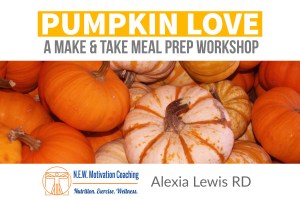
Pumpkin-Love

Rhubarb

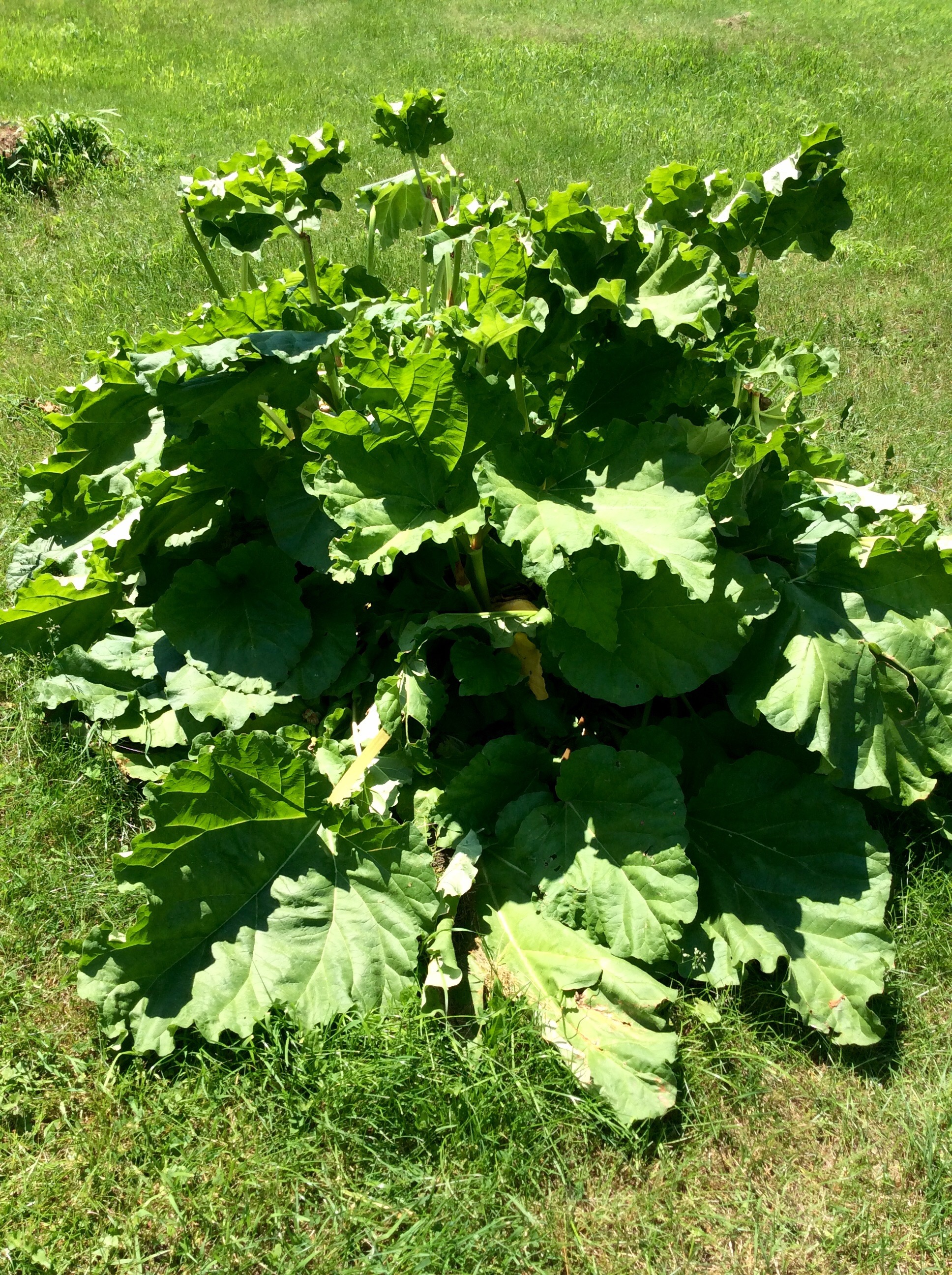
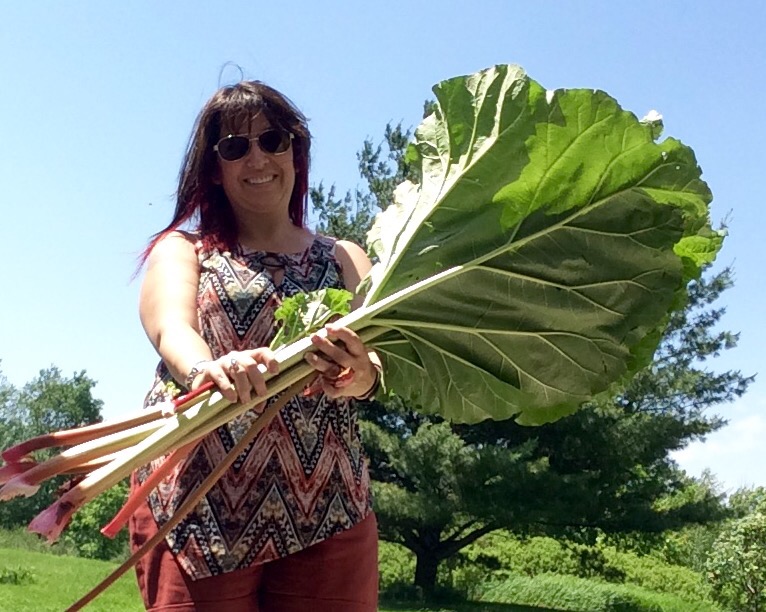
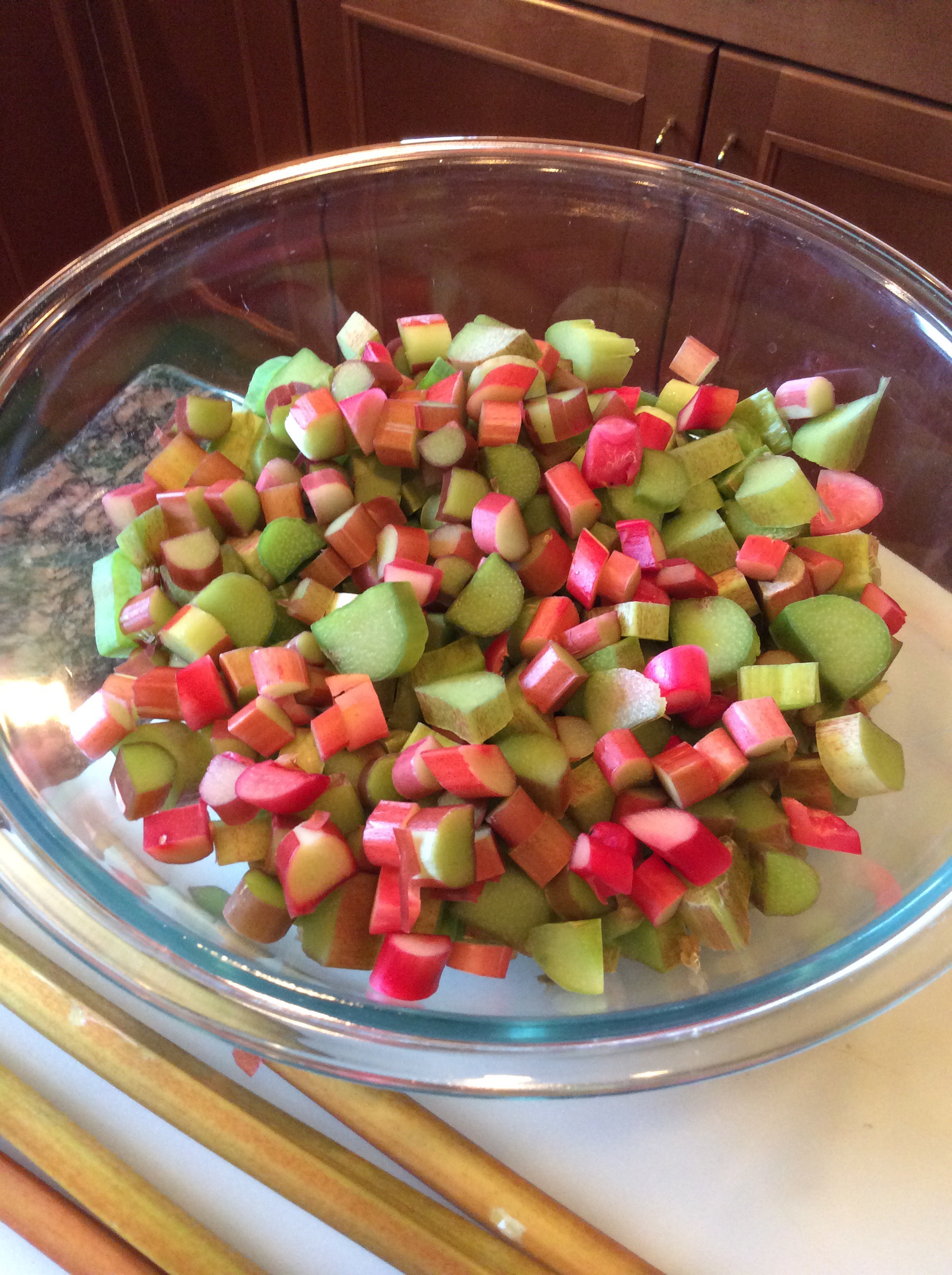
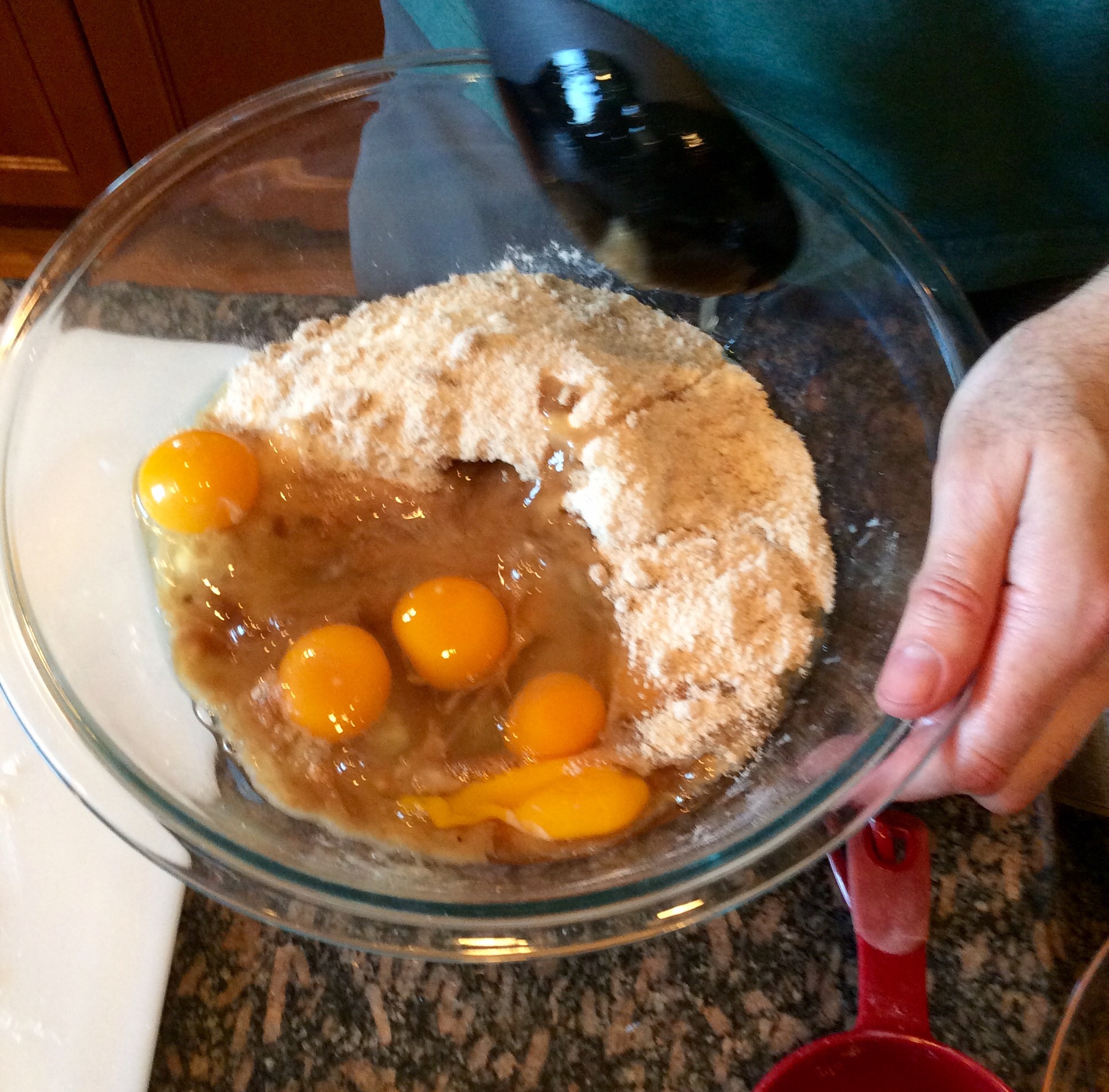
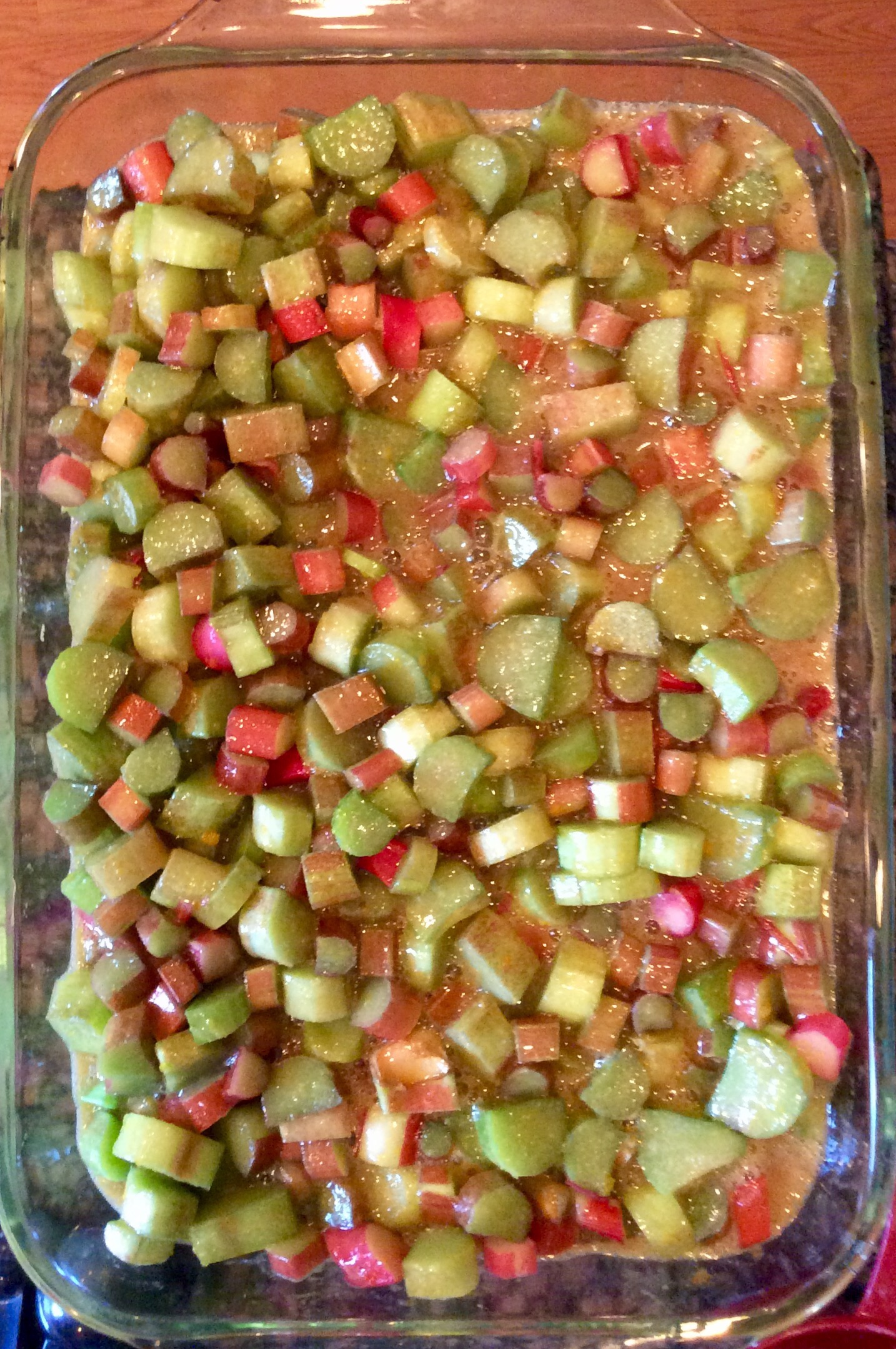
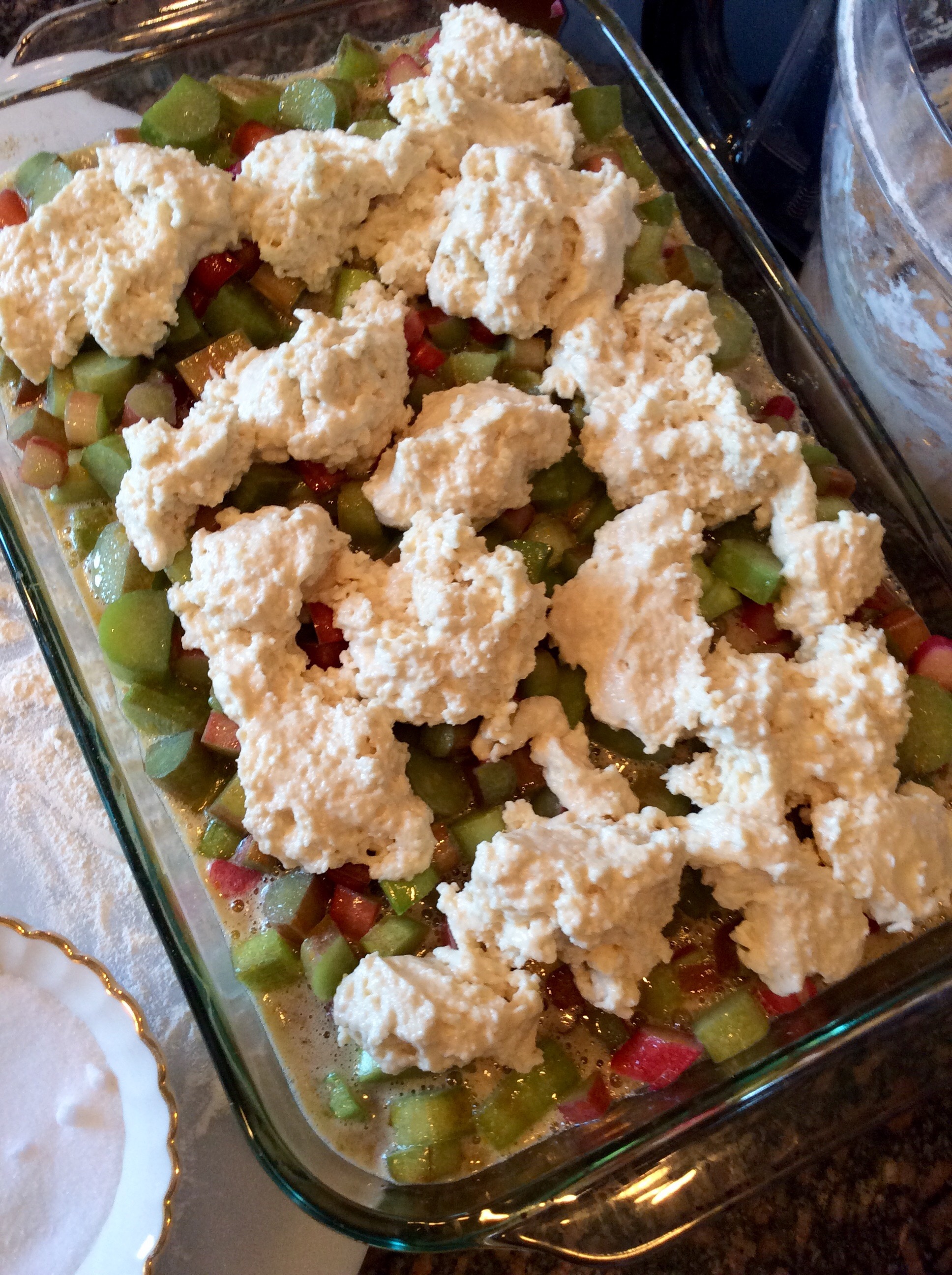
I am on my way home from NY State and had my very first experience with rhubarb this past weekend. It is ah-mah-zing! It is a vegetable that is used for a pie, which is typically a fruit’s job. I’ve heard of it (cue Prairie Home Companion Rhubarb Pie Song) but had never had an opportunity to try it before. When my family said they had a rhubarb plant in their garden that needed harvesting, my little dietitian brain lit up at getting to experience a brand-new-to-me vegetable experience from farm to table. This veggie is an exquisite combination of sweet and tangy sour and it is my newest love. Raw to cooked – delicious! Here is the journey in pictures. Enjoy!

Kale Rolls with brown rice

We’ve Got Greens!

It’s kale cooking demonstration time! Tis the season to harvest greens and we have a lot of them from our organic Ogier Garden where I work so I decided to do a cooking demonstration showcasing our beautiful greens. Recipes included kale quinoa rolls and autumn vegetable soup.I found both of the recipes I used online (credit given with the recipes below) and I adapted them. Give these a try and let me know what you think!

Organic Greens
Organic Greens

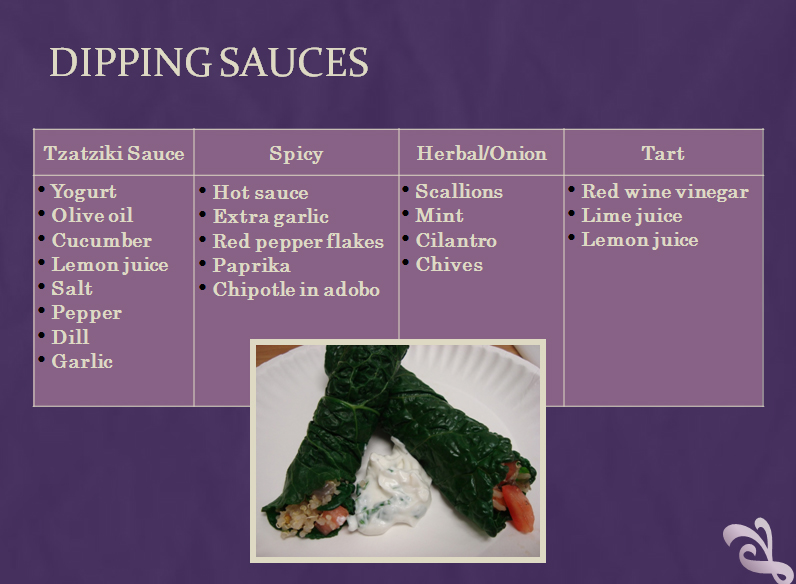
Both of these recipes are vegan. If you are a vegetarian, I do recommend a low-fat Greek yogurt dip for the rolls to increase the protein and calorie content of this meal. Here are some suggestions for flavoring the yogurt to make a yummy dipping sauce. Click to see the image larger in a new window.

Ideas for Greek yogurt dipping sauces

To begin, find some big kale leaves (dinosaur, lacinato or Tuscan varieties) or use collard greens which typically have large leaves. The curly kale will not give you enough leaf to roll with. Here in Jacksonville, Florida, I had no luck at the conventional grocery stores; but found a nice large bunch of organic lacinato kale at Fresh Market for only $2.50!

Preparing the greens is important and for the best results, you’ll want to blanche and devein the leaves. Blanching involves cooking the leaves in boiling water for a very brief time (~2 minutes) and then plunging them into an ice bath. I’ve used both a large bowl and my sink filled with ice-water with success. Blanching will make the leaves flexible enough to roll and brighten up their color. Wait until after blanching to devein the kale so you can preserve as many nutrients as possible, then take a small knife and simply cut out the thick part of the stalk, leaving the top of the leaf intact.

Kale Rolls with brown rice

I will also be packaging the complete cooking demonstration lesson plan, recipes, hand-outs, and evaluation forms into a package that will be available for purchase so you can take the work out of preparing for a cooking demonstration and just do the fun parts! Details will be posted soon.

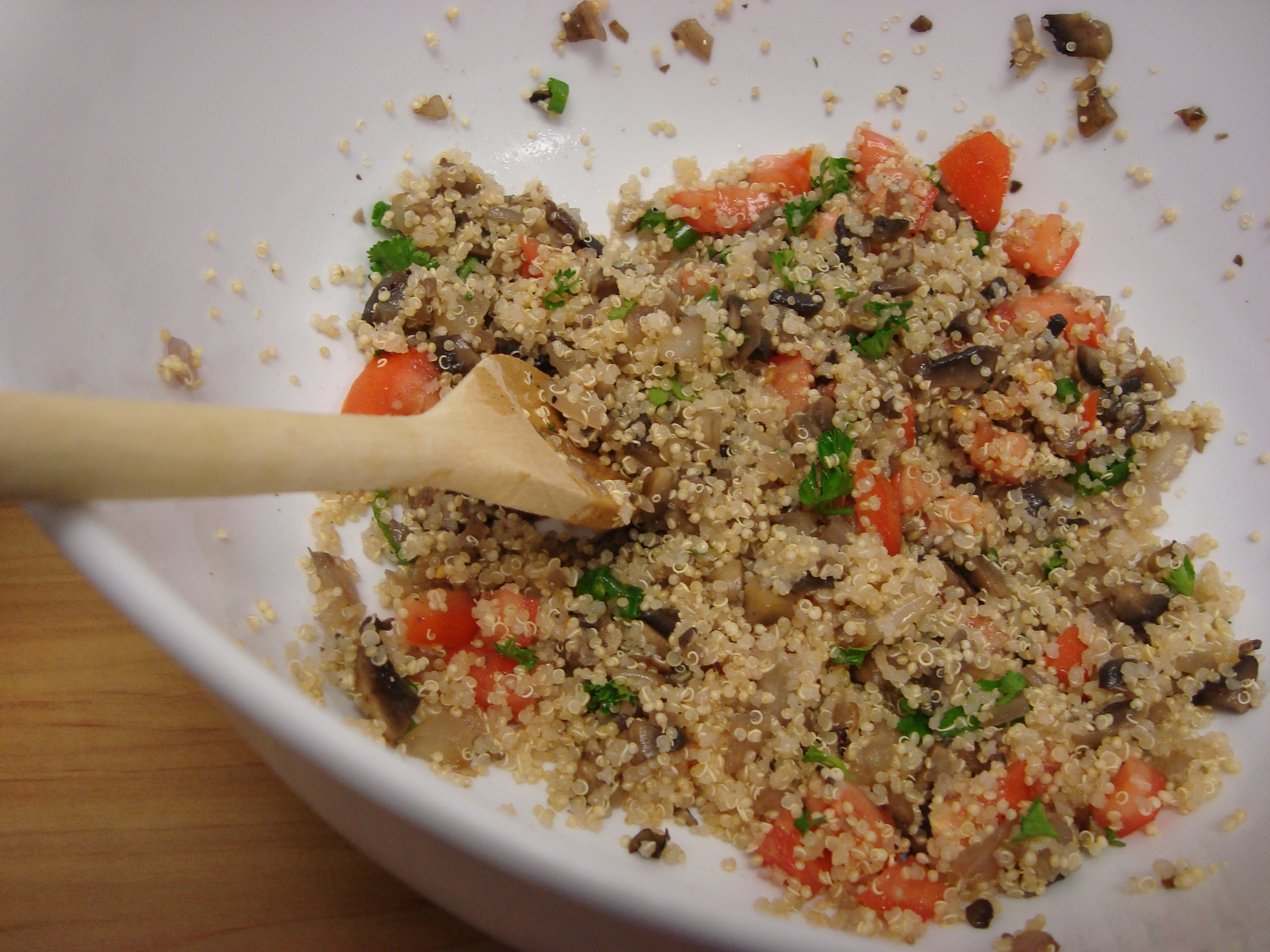
Quinoa Filling
Quinoa Filling

                      Kale Roll Ups

Recipe adapted from Gooseberry Mooseberry

http://www.gooseberrymooseberry.com/2012/07/stuffed-kale-rolls-dolma.html

By Alexia Lewis, RD, Wellness Dietitian

Ingredients

  • 25 kale leaves, preferably dinosaur kale (large leaves)
  • 1 1/2 cup cooked quinoa
  • 1/2 cup red onion, finely chopped
  • 8 oz white button mushrooms, finely chopped
  • 1 tomato, chopped
  • 2 Tbsp parsley, chopped
  • 1 Tbsp chives or scallions, chopped
  • 1 Tbsp lemon juice
  • 2 Tbsp canola oil, divided
  • salt and pepper to taste

Directions

Prepare Kale

  1. Bring a large pot of water to a boil
  2. Wash kale leaves thoroughly
  3. Add leaves to boiling water and blanch until softened and flexible, about 2 minutes
  4. Drain and rinse under cold water and pat dry
  5. Remove about 2-3 inches of the thick middle stem from each leaf

This step can be done ahead of time. If not using kale immediately, after cooking, pat leaves dry to remove excess water, wrap all leaves gently in a paper towel, and seal in a plastic bag with air squeezed out in the refrigerator for up to 3 days.

 Prepare Stuffing

  1. Heat 1 tbsp canola oil in pan over medium heat
  2. Add onion and cook, stirring frequently, 2-3 minutes
  3. Add mushrooms and cook about 8 minutes, until the water the mushrooms give off has evaporated
  4. Remove pan from heat and let cool
  5. In a large bowl, combine cooked quinoa, cooled mushroom mixture, tomato, parsley, chives, lemon juice, and the remaining 1 tbsp canola oil. Season to taste with salt and pepper.
  6. Cover and set aside

This step can also be done ahead of time. Store covered in refrigerator for up to 3 days.

Make Rolls

  1. Place one kale leaf vein-side down and put 1-2 level tablespoons of the filling in middle of leaf
  2. Fold the leaf from the bottom over the filling
  3. Tuck one side of the leaf over (the other side will remain open)
  4. Roll the leaf into a tight roll and place on plate/platter with edge of the leaf under the roll to keep roll from unrolling
  5. Repeat with remaining rolls

These can be served warm or chilled and can be kept up to 3 days in the refrigerator. If any of the previous steps were done ahead of time, subtract the number of days those ingredients were already stored from the number of storage days.

Makes approximately 20 servings (1 roll per serving): 47 calories, 1.8 g fat (0.1 g sat, 0 g trans, 0.5 g poly, 0.9 g mono), 0 g cholesterol, 15 mg sodium, 202 mg potassium, 6.5 g carbohydrate, 1 g fiber, 2 g protein.

                      Autumn Vegetable Soup

Recipe adapted from Clean Eating Magazine

http://www.cleaneatingmag.com/Recipes/Recipe/Black-Eyed-Pea-Stew-with-Collard-Greens-Potatoes.aspx

By Alexia Lewis, RD, Wellness Dietitian

 Ingredients

  • 6 cups low-sodium vegetable broth
  • 6 cups water
  • 8 cups kale or other greens, chopped
  • 3 large tomatoes, beefsteak or vine, diced
  • 1 medium butternut squash, diced
  • 1 can black-eyed peas, low sodium, rinsed
  • Salt and pepper to taste

Directions:

  1. Bring broth and water to boil in large pan over high heat
  2. Add kale, reduce heat, cover and simmer for 10-15 minutes
  3. Add tomatoes and butternut squash, cover and simmer until squash is tender, about 15 minutes
  4. Stir in black-eyed peas, cover and simmer about 2 minutes
  5. Season with salt and pepper to taste

Makes approximately 20 servings (1 cup per serving): 70 calories, 0.5 g fat, 0 g cholesterol, 220 mg sodium, 373 mg potassium, 15 g carbohydrate, 3 g fiber, 3 g protein

Muffins Ready for Baking

Veggies In Dessert – Eggplant Chocolate Chip Muffins

If you missed my segment on First Coast Living, you can watch me talk about Veggies in Desserts by choosing the tab for Food (click the right arrow to see more tabs) and then scrolling  to Wednesday September 26th UNF Nutrition.

I showcased three desserts during this segment: Red Velvet Beet Cupcakes (see previous blog post), Eggplant Chocolate Chip Muffins, and Black Bean Brownies. As I mentioned, none of these recipes were my creation and you can find them at these links:

Red Velvet Beet Cupcakes

Eggplant Chocolate Chip Muffins

Black Bean Brownies

The main points from my segment were:

1. Add vegetables to your day in any way you can!

Americans do not eat enough vegetables. The recommended amount for generally healthy adults is 2-3 cups per day and data shows we are eating 1.5-1.8 cups/day (2004 NHANES)! Sneaking vegetables into desserts can help us to baby-step our way towards the recommended daily amount – remember, it’s still dessert so it won’t get you all the way there!

2. Use vegetables to increase the nutritional content of your favorite desserts by reducing calories and fat, increasing fiber, and adding vitamins.

3. Methods (not covered in segment)

If using a puree, replace half of the fat with the puree. If it’s a liquid fat (oil) use 3/4 the amount that you are replacing and if it’s a solid fat (butter), use 1/2 the amount you are replacing. Reduce the oven temperature or check sooner than the recipe calls for or it might over-bake.

If using chopped vegetables, some have a high water content so you may need to reduce the other liquids in the recipe.

Now, on to my favorite of the three recipes – the eggplant chocolate chip muffins!

Start by making sure you have all the ingredients you will need on hand.

Ingredients for Eggplant Chocolate Chip Muffins

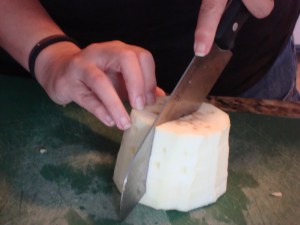
Next, figure out how to chop that eggplant! Here’s a suggestion, start by cutting into smaller sections with straight edges so the vegetable will sit flat when you start chopping.

How to Chop Eggplant

Now, peel the eggplant. Honestly, when I make my second batch of these muffins today (yes, they are that good!) I will not peel the eggplant and see how that goes… but the recipe called for peeling, so I did.

How to Chop Eggplant

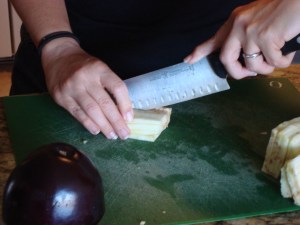
Finally, chop the section in half (again to give you a flat edge for safer chopping) and make smaller and smaller cuts. These pictures show going from the whole section, to half the section, to slices, to matchsticks, to a small chop.

How to Chop Eggplant
Finally - Chopped Eggplant!
Finally – Chopped Eggplant!

Moving on to the other ingredients, you will end up with four bowls of goodies. Top left is the flour mixture, top right is the butter mixture, bottom left is the chocolate chips, and bottom right is the chopped eggplant.

Ingredients Ready to Mix

The beautiful thing about making muffins is that it is so easy! Simply make a well in your flour mixture (dry ingredients) and add your liquid ingredients. Be careful how much mixing you do! Gluten develops quickly once liquid is added to flour so you want to mix as LITTLE as possible while still combining the ingredients so there are NO DRY SPOTS of flour. Then fold in the extras (chips and eggplant) and mix just enough to distribute those extras throughout the batter. The mixture should be lumpy!

The Perfect Muffin Batter is LUMPY!

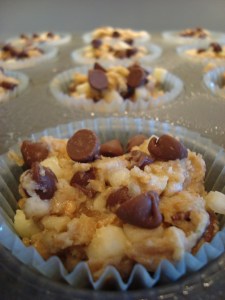
This recipe yields 24 muffins. Here they are before going in the oven

Muffins Ready for Baking

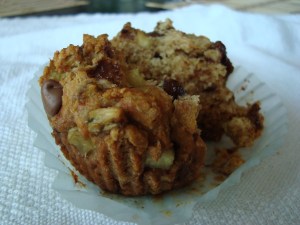
And after! YUM!

Eggplant Chocolate Chip Muffins

Compared to store-bought chocolate chip muffins, these have 50 less calories, 4 grams less fat, double the fiber, and we’ve added vitamins A and C.

Per muffin:

Calories 180
Carbohydrates (g) 26
Protein (g) 3
Fat (g) 8
Sat Fat (g) 3
Trans (g) 0
Cholesterol (mg) 30
Sodium (mg) 170
Fiber (g) 2.1
Vitamin A 3%
Vitamin C 7%
Calcium 2%
Iron 4%

Original publication date: September 30, 2012 at http://newmotivationcoaching.blogspot.com.

A Healthy Plate from ChooseMyPlate.gov

Fill Your Plate with Color for National Nutrition Month

A Healthy Plate from ChooseMyPlate.gov

March is National Nutrition Month and what better way to celebrate than with a plateful of colors?

The Academy of Nurtition and Dietetics’s (formerly theAmerican Dietetic Association) theme for the 2011 National Nutrition Month is “eat right with color” to emphasize the importance of choosing a variety of foods to promote optimal health. Since different colors of food contain different types of nutrients, incorporating a variety colors provides a wide range of nutrients that our bodies need to function at their best.

Other guidelines for healthy eating include:

Enjoy 2-3 servings of fruit every day. These provide many vitamins and minerals in the form of phytochemicals along with fiber. Eat the skins when you can! Fresh fruits make a great snack food, frozen fruits add thickness to homemade smoothies, and fruits can be pureed to use in place of fats in baking.

Sneak in 5-7 servings of vegetables every day. It’s important to eat vegetables from all five categories – dark green, orange/deep yellow, starchy, legumes (peas and beans), and others such as onions, mushrooms, tomatoes, okra, green beans, and cucumbers. Vegetables provide many nutrients and fiber. Pile vegetables on sandwiches, add to sauces and frozen entrees, and puree to add to soups. Just be sure to not add on calorie-laden sauces!

Aim for making half of your grain selections whole. Whole grains provide fiber and carbohydrates necessary for energy and brain power. Replace processed, refined, white products with whole grain products when choosing rice, pasta, and bread. Not all brands taste the same, so don’t give up if you don’t like the first one you try.

Lean meats and dairy are good choices for protein. Proteins are the building blocks of our bodies; they are the basis for our enzymes and hormones and build muscle that enables us to move. Proteins are typically high in fat. The healthiest options are to choose lean cuts of meat, to remove visible fat and grease when cooking, and to look for low-fat or non-fat dairy products.

Last but not least are the fats. Fats are a major component of our cell membranes, they provide padding for our internal organs, and they help with absorption of the fat-soluble vitamins. Just be sure to choose the healthier mono- and poly-unsaturated fats found in avocado, almonds, walnuts, fatty fish, and canola, safflower, or olive oils.

Fill your plate with a variety of colors while following the above guidelines and you are taking a big step towards good health.

By the way… March 9th is Registered Dietitian Day. Have you hugged your RD lately?

Original publication date: March 2, 2011 at http://newmotivationcoaching.blogspot.com.

Image from: Choosemyplate.gov.