All posts by Alexia Lewis RD, LD/N, CHC, CPT

Unknown's avatar

About Alexia Lewis RD, LD/N, CHC, CPT

Culinary Nutritionist (RD), Certified Health Coach (ACE), heart attack survivor, late-blooming home-cook, and your biggest cheerleader, confidence builder, and forever reminder-er to stop making things so darn complicated. DISCLAIMER: The information on this website is the opinion of the author(s) and is not medical advice, in fact, it may not be appropriate for you at all. Consult with your medical professional before making any changes. If you follow information on this site without consulting your healthcare provider, you are doing so at your own risk.

The Surprising Way Your Sugar Addiction is Harming You

This blog was originally published at N.E.W. Motivation Coaching in October 2019. NMC has closed and blogs are now posted here. Blog follows…

Yes, it’s true. Sugar lights up the same neurological pathways as addictive drugs giving us that happy dopamine feeling. Dopamine is a neurotransmitter which is basically just a messenger that tells our brain that we are feeling fine. The idea behind sugar addiction is this:

We eat sugar, dopamine makes us happy, it wears off, we aren’t as happy, we eat more sugar.

We are also hard-wired genetically to seek out sugar. If we go way back in time, our taste buds served a purpose. Before our foods came in pretty packages, our taste buds helped us know which foods were safe.

Bitter. Might be poison.

Sweet. Probably safe.  

Fast forward to today and we still know that sugary foods are delicious. Food manufacturers also know this and have loaded foods with sugar. As a society, our preference for sweet foods is getting stronger and stronger because we are getting more accustomed to that sweet flavor.

Don’t believe me? Think you love yogurt? Well, sure, a flavored yogurt with a little cup in the top to sprinkle in more sweet goodies. Now go try a plain yogurt and get back to me.

I’ll wait.

Now, there are some limitations to this and I have listed them at the end of this blog article. Be sure to jump there before you jump to conclusions about what I’m saying.

Back to it.

We know that sugary foods ramp up our dopamine and we know that sugary foods helped us survive and we know that the amount of sugar in our foods has gone up drastically.

Therefore, sugary foods are addictive.

Well, slow down partner.

When my clients tell me that they have a sugar addiction, I nicely tell them to knock it off.

Oh, but I can’t stop eating it, they tell me. I’m truly addicted.

Really? So then, tell me about the last time you knocked over a liquor store for your sugar fix. Didn’t happen.

Okay, then tell me about that time you stole money from your grandmother’s purse for your sugar fix. Oh. Haven’t done that either?

Okay, well, how about that time that you spent money on candy bars instead of paying your electric bill. No?

Hmmm.

So can we now agree that sugar is NOT addictive in the same way that drugs are addictive?

 Good. That’s a start.

Now I want to ask what telling yourself sugar is addictive is doing for you?

I usually hear something along the lines of sugar is wrecking my health or I’m gaining weight.

Nope. That is what eating too much sugar is doing to you. I’m asking what you are getting out of telling yourself the story that you are addicted to sugar?

Now, I get a pause. I love to sit in that silence while my clients think about things in a new way. I wait.

Usually, the answer is that it’s not doing anything for them.

Again, not true. It is absolutely doing something for you.

And here it is – the surprising way your sugar addition is harming you – it’s letting you off the hook.

Telling yourself that you have a sugar addiction is giving ALL your power to the food. It makes it okay to binge-eat a whole cake or eat a big candy bar every day at 3pm. It gives you permission to make the choice that you know is moving you away from your goals because “I’m addicted.”

I call bullshit.

You know why? Let me tell you a few other things that light up dopamine pathways.

  • A good night’s sleep
  • Exercise
  • Sex
  • Likes and Retweets

I have yet to have a client tell me that they are addicted to running and just can’t stop. If you love that “runner’s high” then you run, you get happy, you stop running and rest up until you can do it again. You don’t run and run and run because you’re addicted. No one has ever told me “I just can’t stop running.”

Running stops. Eating sugar can also stop.

So here’s your takeaway.

You sugar addiction is harming you because you are telling yourself that you have a sugar addiction.

I don’t care what the science says about sugar addiction and neither should you. What matters for you, for your health, for your goals, is the story you tell yourself. Words have power. If you decide that sugar is addictive, then you just gave away your power.

And if you want to stay right where you are, then continue telling yourself that same old story.

When you are ready to make a change and take your power back from the food, try this instead.

  • Every time your automatic thought pop up that says “I have a sugar addiction; I can’t help it” tell that thought to go to hell.
  • Tell yourself something like this instead, “I really love sweet foods and I can choose what I eat and when I eat it. I am in control of the food. The food is not in control of me.”
  • Then breathe. Seriously, like take 20 deep breaths.
  • Get up if you can and take a short walk or do 10 jumping jacks.
  • Ask yourself if that sugary food is moving you towards your goals or away from your goals.
  • Make a conscious decision about eating it.

You can still eat – and enjoy – sugar without guilt, without shame, and without declaring yourself a sugar addict.

Just do so consciously and with the power of choice firmly in your hands.

LIMITATIONS OF THIS ARTICLE:

1. The actual neurochemistry is way more complex and nuanced and beyond the scope of this article. This is kept simple and big picture to illustrate a point.

2. If you have dopamine deficiency, other medical or psychological concerns, or struggle with addictions, then there is a lot more to it than simply taking your power back from food and struggling through the difficult times. That is WAY beyond the scope of this blog and remember, I am A dietitian but I am not YOUR dietitian so please seek help from your medical and mental health providers.

The rest of you. Put down the candy bar and back away slowly.

References:

Lennerz B, Lennerz JK. Food Addiction, High-Glycemic-Index Carbohydrates, and Obesity. Clin Chem. 2018;64(1):64–71.

Dopamine. Psychology Today.

Can You Eat Red Meat Again?

This blog was originally published at N.E.W. Motivation Coaching in October 2019. NMC has closed and blogs are now posted here. Blog follows…

The red meat debate has heated up again. For years, you have heard to cut back on red meat and processed meat for your health. But, hold on. A recent review of five studies led to the declaration that you can eat these meats again.

Hold my Slim Jim and fire up the grill because baby, I’ve got a big juicy steak ready to go!

Your inclination is probably to roll your eyes and decide that no one really knows what they are talking about when it comes to nutrition. It sure does feel that way when the media gets hold of any headline that goes against the current guidelines. But let’s take a moment to explore this before you decide that your Beach Body Coach is the best person to tell you what to eat.

What does this “new” study say?

This new study looked at five other studies and decided that how much red meat someone eats doesn’t really impact their health that much after all. Their recommendation was that “most adults should continue to eat their current levels of red and processed meat.

I’m sorry but what kind of recommendation is that?

Who knows how much red and processed meat any one person is eating? How can that be the recommendation? It’s okay, keep on eating 5 pounds of meat a day! No worries!

Um, no.

Okay, let’s take to the research!

If you want to follow along, go to PubMed and drop “Gordon Guyatt meat” into the search bar. You will see that there are actually a handful of articles from 10/1/2019.

The one that interested me the most was this one because it is relevant for Dietary Guideline Considerations as stated in the title. This study states in its conclusions that “The panel suggests that adults continue current unprocessed red meat consumption (weak recommendation, low-certainty evidence). Similarly, the panel suggests adults continue current processed meat consumption (weak recommendation, low-certainty evidence).”  The bolding of the text is mine.

I’m certainly not changing my dietary choices based on weak recommendations from low-certainty evidence.

For a thorough review on the article telling you to pig out (get it?) on red meat, turn to Harvard Health. They always do a stellar job.

So, what should you do?

Well, first of all, stop getting your nutrition advice from the internet. And yes, that includes me.

I am A registered dietitian, but I am not YOUR registered dietitian. Your first stop should be your personal medical provider or dietitian because they know your family history and your health concerns. THAT is what determines how you should best eat for your health.

I’m going to keep on doing what I have been doing. These sensational headlines change nothing for me. I enjoy red meat now and again. I eat processed meats occasionally. I don’t eat huge portions of these foods when I enjoy them. I balance my meat intake out with vegetarian meals.

You want me to make nutrition easy? I’ll stick with my long-standing advice:

And you can pry my steak and bacon from my cold, dead hands.

PS – I haven’t eaten a Slim Jim for about 30 years!

Our Approach to Healthy Living

This blog was originally published at N.E.W. Motivation Coaching in March 2019. NMC has closed and blogs are now posted here. Blog follows…

So far, we have talked a big game about helping people improve their health in a positive way… and enjoy the cookies.

You may be wondering how we do what we do.

We coach in a safe, effective, and empowering way that fosters a good relationship with food, activity, and one’s body.

Step 1

We break a lot of food rules and challenge the traditional advice.

You know. That same-old thing you’ve been hearing for decades… that same-old thing that we’ve been busting our behinds to do… that same-old thing that is resulting in our nation ending up heavier and more out-of-shape than ever before.

That thing?

Eat less and move more.

We do not believe in dieting. We do not believe in out-exercising poor nutrition choices.

In short, the way we’ve been dieting for decades is wrong.

As Health & Nutrition Experts, we combine the science of nutrition, exercise, and health management with coaching techniques to help you bring nutrition-rich, flavorful food to your table AND meet your health goals. Yes, cookies included.

Our goal is for you to find peace within yourself about yourself – and improve your health and weight as you go. Oh, and we want you to EAT delicious food.

Step 2

We promote both non-diet and reverse-dieting approaches. So, how do we approach food?

We believe some people do their best with a more relaxed and gentle approach to food and activity without rules, stress, counting, tracking, or good food/bad food guilt. This is a non-diet approach.

Other people do well with a more structured plan focused on feeding your body instead of starving it. This is our reverse dieting approach.

In other words, no cookie cutter plans here. Your nutrition plan is tailored to your lifestyle and preferences.

Step 3

We acknowledge that life happens. And we plan for that.

If we hear another story about how a health professional told a client to “come back when you are ready” because they struggled with that professional’s perfect little plan, well, we may just scream or cry.

Our programs are designed to FIT TO YOU. We aren’t trying to fit you into them.

We move you to better health by building your skills and knowledge, working with you to find the best approaches for your lifestyle and preferences, and discovering real-life, flexible, and long-term solutions that fit into the craziness of your unique life.

Our Goal?

Our hope for our clients is that they can find peace with food and exercise, and appreciation and joy with their bodies.

We embrace body diversity and self-confidence because health comes in many shapes and sizes and approaches to health are not one-size-fits-all.

Medical Nutrition Therapy Vs. Health or Nutrition Coaching

This blog was originally published at N.E.W. Motivation Coaching in March 2019. NMC has closed and blogs are now posted here. Blog follows…

Where Do People Get Their Nutrition Information?

If I had a dollar for every time someone told me they were confused about nutrition or had stopped paying attention because “everything changes all the time anyway” well… I’d be rich. And I’d still be right here writing this blog.

Every year the International Food Information Council Foundation publishes a Food and Health Survey. This stuff is fascinating. It gives health professionals a sort-of-current snap shot of consumer behaviors and beliefs around food and health.

In 2018, 80% of people surveyed agree that there is a lot of conflicting information about what food they should eat or avoid. 80%!! Okay, this is a problem. It’s just food. How have we made it so complicated??

The good news is over 50% of Americans are putting their trust in Registered Dietitians, Healthcare Professionals, and Health Coaches. Nice.

The bad news – and the confusion – may come about because 25% of people trust a friend or family member, about 28% trust bloggers, and about 30% trust mobile apps.

Here’s where it gets even more fun – 30% of Americans turn to their friends and family members or to their healthcare professional to get information about what food to eat and what food to avoid.

I don’t know your friends and family so maybe they have the know-how to give you good information but most likely, they are repeating things they have heard from other sources (which may be right or wrong). And did you know that medical doctors typically only get 25 hours of nutrition education and 20% of medical schools do not require even one course in nutrition! (Source here). Shocking.

Well, at least Livestock Veterinarian finally fell off that list. I’m grateful for that!

Let’s get into it.

What is the Difference Between Nutrition Coaching & Education?

Nutrition coaching and nutrition education is providing general information from credible health agencies (American Heart Association, Dietary Guidelines for Americans, etc.) without making specific recommendations for any individuals.

There are no laws and no oversight for these titles. It does not require state licensure. In fact, you can make yourself a business card and call yourself a nutritionist or nutrition coach right now. People using these titles may have no training or may have great training. Ask questions.

This is ideal for you if:

  • You do not have any chronic medical conditions
  • You do not wish to work on improving or managing any health conditions
  • You know how to manage your health conditions and are able to tailor any general information or coaching to your specific conditions

This is not a good fit for you if:

  • You aren’t sure how to eat for your health conditions
  • You want someone to tell you how or what to eat
  • You do not know how to adjust general information for your health conditions

Medical Nutrition Therapy

Medical Nutrition Therapy is nutrition counseling and providing specific individualized recommendations to address chronic and/or specific conditions and diagnoses. In many states, this activity is licensed to protect the public from harm. Check here so see if licensure if required in your state.

Registered/Licensed Dietitians are required by Florida law (where NMC is located) to work with their client’s medical providers when providing Medical Nutrition Therapy.

Let’s Talk State License Laws

These state laws are put in place to ensure that those making nutrition recommendations have adequate education, experience, and training to understand the complex interactions between food, medical conditions, and the body’s metabolic and physiological processes.

It’s just like making sure you use a licensed hair stylist to make sure someone doesn’t unintentionally wreck your hair or using a licensed electrician to make sure someone doesn’t unintentionally burn down your home. You can regrow hair and repair your home; but you’ve only got one body.

While unlicensed professionals may not do harm, the potential for harm is greater. We believe that most people have good intentions but they just don’t know what they don’t yet know. And many know just enough to talk a good game and be dangerous for your health.

Seek a licensed health professional.

Love Yourself Healthy

This blog was originally published at N.E.W. Motivation Coaching in February 2019. NMC has closed and blogs are now posted here. Love Yourself Healthy was the Signature Coaching Program of N.E.W. Motivation Coaching.

Blog follows…

Love Yourself Healthy is a mind-set focused on health improvement and building healthy habits in a balanced, non-restrictive way.

Coach Alexia created this approach when she saw the need for an alternative to how we have been going about getting healthy for decades. The way we have been taught to diet and manage our health is wrong. We have been convinced that we need to “hate ourselves healthy.”

With food, this means that we have been eating foods we don’t like, following restrictive meal plans that don’t work for us and that leave us hungry and malnourished, denying ourselves food that we love and then obsessing about them until we give in and go overboard and feel guilt and shame.

With exercise this means that we have been doing exercise we don’t enjoy for much longer than we care to do it while telling ourselves to just “suck it up, buttercup” because this is what it takes to reach our goals.

We hate our bodies and we hate ourselves. And so we pay penance by way of food and exercise so that maybe – if we deny, deprive, and suffer through the work – maybe one day we can love who are and how we look and feel.

This has got to stop.

Love Yourself Healthy focuses on challenging that internal dialogue you have with yourself, so you can start to see your unique and amazing value and begin to let go of having do to everything perfectly.

At the same time, you start with a small-steps approach to food and exercise as a way to rebuild your confidence and show yourself that you can keep meaningful promises to yourself. This approach moves you towards better health and, yes, your desired weight in a loving and nurturing way.

What is really amazing is that when you start to feed your body and couple that with movement you can actually turn up your metabolism, have more energy, and lose weight while eating more food!

Win-Win!

Coach Alexia is passionate in her belief that women have got to change the negative way that we talk to ourselves and think about ourselves. We have to change what we see when we look in the mirror and begin to recognize our bodies our minds and ourselves as the strong, capable, amazing beings that we are.

We embrace body confidence and believe that you are 100% deserving of loving yourself as you are right now.

When we start first with love and gratitude for ourselves then the actual steps that we take with food, exercise, sleep, and self-care become so much easier.

We stop defining our success using external yardsticks – like a number on the scale or a size of clothing – and we instead define our success based on our personal integrity, in our creativity and flexibility to handle the curve-balls life keeps throwing at us, and our ability to set and reach realistic goals as we travel our unique path to better health and wellness.

We start to see and appreciate the small wins that we have every day. This is what leads us towards being able to love ourselves into a healthier lifestyle.

Love Yourself Healthy is N.E.W. Motivation Coaching’s signature plan. It is the foundation upon which we build all of our programs, online plans, and one-on-one coaching.

We are sick and tired women beating themselves up to reach unrealistic ideals and so we have designed our programs to lead women towards love and self-empowerment and on shutting down the inner critic.

We focus on celebrating women for who they are and what they can do regardless of the size or shape of their bodies.

You will find amazing things happen when begin to Love Yourself Healthy.

What I Learned from the 10 Holiday Survival Tips Workshop

Do you wish there was a way to have all of your favorite foods of the holiday season. Well, sit down and brace yourself – it IS possible!

Welcome Vanessa, NMC’s nutrition student and mentee, who  shares below what she learned from attending the live event showcasing the 10 Holiday Survival Tips from the “Love Yourself Healthy through the Holidays” Plan.

The holidays are fast approaching and I’ve already been daydreaming about the rich, indulgent foods that only are made at this time of year. They are calling my name! How do I choose what to eat? Do I go all in with my favorites, like green bean casserole or pumpkin pie, at every party… or do I not indulge in my favorite foods because I know how many more parties I will have to go to?

After seeing Coach Alexia talk about her 10 holiday tips to enjoy a guilt-free holiday, I walked away with three new ideas for how to enjoy everything about the holidays this year.

First, it is important to take the time to catch up with my family and friends. This is the only time of year that I get to see my aunt and uncle that live out west. I always say that I will plan a trip and I never do. If I take this time to catch up with them then I take the focus off the food and can reconnect with my family. As a bonus, while I’m chatting away, my mouth is too busy to chew!

Second, keeping my hands full will help keep me from eating too much. This year at the holiday party, I’m going to keep a drink in one hand and my phone in the other hand to have ready for taking pictures. With both hands full there is no space for me to hold a plate of snacks and mindlessly eat during the party.

Third, and most importantly, I gained new confidence for going into the holidays. With these 10 new strategies, I know can get through the season worry free (maybe even a little lighter!). The holidays are a time of family, friends, laughter and tons of food and this year I can now make my plan so I can eat, drink and be merry!

Happy Holidays from Vanessa!

Check out the entire Love Yourself Healthy through the Holidays Plan so you can make a plan and not be so uncomfortable after your holiday meals that you have to reach under the table and try to unbutton your pants while hoping no one notices!


What To Expect on a Grocery Store Tour

Are you curious about what actually happens on an interactive grocery store tour? Many people are unsure what to expect if they tour a grocery store with a nutritionist. Wonder no more – here is what you can expect on a grocery store tour with N.E.W. Motivation Coaching.

what to expect grocery tour blog imageA grocery store is an excellent resource for learning about food and food marketing in general, discovering which foods and products will work best for you and your family, and getting answers to your health and food questions.
In short, it is the best place to learn which foods can help you with your food goals because you have direct access to all the foods!

Expect a Mini Nutrition Education Class

Spend the first 15-20 minutes in a mini-class where you will learn the big-picture guidelines about the nutrition or health topic, how to read food labels, and what to look for on food packaging. You also get recommendations from 1-3 different agencies that make dietary recommendations so you can decide which guidelines fit your goals and food preferences the best.

Examples of tour topics include:

  • Heart Healthy Proteins
  • Healthy Grab-and-Go Grocery Store Meals
  • Fat, Sugar, and Salt
  • Keto Dieting – All about Dietary Fats
  • Low Carb Diets – Focus on Healthy Proteins & Fats

Expect to Walk the Store

This is where the fun really begins! After the mini nutrition education class, you will put Food-Label-Detectiveon your (imaginary) detective hat, go into the store, and put our hands on food packages. You get to put what you just learned into action to make better-for-you food choices.

You can go to the foods and brands you typically choose to take a good look at the packaging and compare it to other options. While brands may be recommended by your nutritionist based on your food preferences, budget, and health goals, you will not get any blanket brand recommendations during these tours. No kickbacks or bias here!

You will check out the package claims, nutrition facts, and ingredients to ensure the foods you choose fit into your food guidelines, you may learn about some hard-to-pronounce ingredients including what they are made of and how safe – or not – they are, and you may pick up some new tricks and tips to get the most out of your food choices. You also learn a little about how grocery store layout and food packaging can affect your buying choices without you even realizing it.

Expect Each Tour to be Different

Each tour has a focus but your questions determine where we go in the store and which foods we investigate.

Aisle by aisle, the nutritionist will help you make better food choices by pointing out marketing strategies and misleading packaging, showing you resources in the store that you probably haven’t ever noticed, introducing new foods and ingredients, and answering your food and nutrition questions.

Expect to Get Goodies

You always receive recipes related to the tour topic. You may also get samples of foods or coupons or other goodies like fabric grocery bags or shopping lists.

Expect to Become Empowered about Food

By the end of the tour, the confusion and anxiety around which foods to put in your grocery cart with will have been whisked away by the experience and insight you gained from having a dietitian at your side in the store.

You+RDYou will walk away empowered knowing you can choose healthier-for-you foods on your very next shopping trip. After this fun and interactive experience, you will be so much closer to knowing exactly how use food and nutrition to reach your health goals. You will also be well prepared to handle life’s curveballs because you know how to critically evaluate food packaging – instead of just getting brand recommendations. You will now have the skills to change your food choices as your health, needs and schedule changes.
In short, you will become an bonafide food label detective.

This is a guest blog by Vanessa Tarbell, University of North Florida Undergraduate Nutrition Student. 

5 Reasons to Go On a Grocery Store Tour

Do you dread going to the grocery store? Are you overwhelmed and confused with all the food choices you have? Do you wish you had a nutritionist by your side to help you to fill your up cart healthfully?

Grocery shopping should be a fun and easy task to check off your to-do list. And it can be when you become a savvy shopper and know how to make better, healthier choices!

Let’s review the 5 reasons you should join a grocery store tour!

5-Reasons-Grocery-Store-Tour

#1: Don’t get tricked by the food packaging

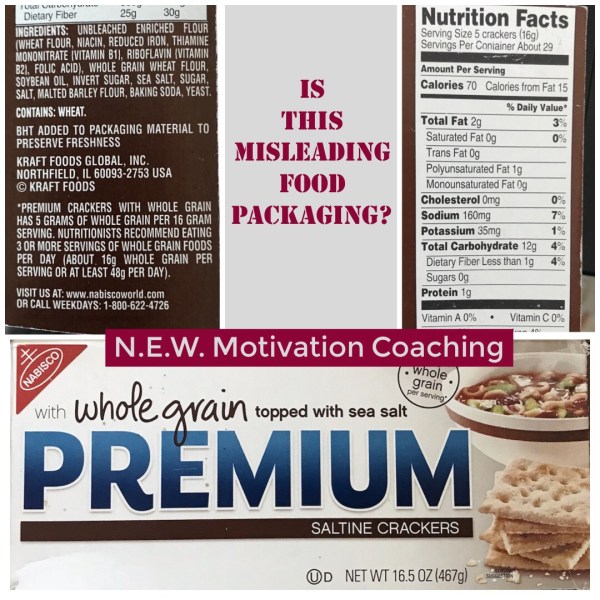
Did you know that a food manufacturer can label food as having ZERO TRANS FAT even if there IS trans fat in the food? It’s true!

Just because a package claims to be fat-free or sugar-free doesn’t mean that the claim is true or that the food is healthy for you. This applies even if the food is in a green package misleading-food-packagingwith the word “Natural” in big type on the front of the package and there are pictures of farms or hearts on it.

On a grocery tour, you can grab your go-to foods and take a good look at the packaging. Learning to understand and use the nutrition label, ingredients listings, and health claims on packaging will help you make informed food choices.

Food producers can make health claims about certain nutrients (such as fiber, fats, and sodium) and while these claims must be based on scientific studies and approved by the U.S. Food and Drug Administration, that doesn’t mean the food is a good choice overall. That “heart-health approved” food may be low in sodium to earn that claim… but it still may be high in sugar and not so heart-healthy after all.

A grocery tour can show you how to dig deeper into the packaging and compare products with a nutritionist at your side. You will leave confident that you can choose the healthiest foods for you and your family

#2. Learn about food processing, food marketing, and how food impacts your health and weight

How do they make chickens lay eggs with omega-3 fats in them?

How in the world do they add fiber to yogurt?

What is the difference between Sugar In the Raw, Table Sugar, Stevia, and Splenda – and which one is the best choice for your health concerns and preferences?

How do they make FairLife Milk have more 50% more protein and 50% less sugar than traditional milk?

almonds-and-milkWhat actually happens if antibiotics end up in dairy milk when it’s being transported?

And… how many almonds are really in that glass of almond milk you drink?

A dietitian is your go-to for this kind of information. You will learn not only about how food impacts your health, but how it is produced, changed, fortified, stripped, shipped, and marketed with the hopes of grabbing your food dollars.

#3. Navigate the grocery store like a pro

When you first enter your grocery store you are greeted by all the bargain bins and the smell of freshly baked bread, or maybe fried chicken.

Deals! Deliciousness! Let us in!!

Grocery stores are doing this on purpose with the hopes that you will make more impulse buys while in the store. Those bargain bins at the door entice you to not miss a good deal – even if it isn’t something on your list.

Those delicious smells are there to turn on your appetite.

Have you noticed the music yet? Listen next time you go… it’s there to make the experience more relaxing in hopes you will slow down and stay longer.

The store’s layout is also designed to increase your impulse purchases.

  • cerealThe aisles are long and sometimes hard to maneuver. Ever run your cart into a bin in the aisle with a sale item?
  • The end caps are also a main driver for impulse shopping as they are prime real estate and food manufacturers pay a hefty fee to have their items placed there.
  • Even the real estate on the shelves is “for sale” to food manufacturers. Why do you think the brightly colored sugary children’s cereals are at their eye level?
  • How much space a product gets on the shelves? You guessed it. Paid for. Notice a pattern yet?
  • Products are displayed beautifully, shelves are fully stocked, and there are big, bold numbers on those bargain priced sales signs at the top saying “buy me!” Sometimes these items are not a bargain, so go for it! But sometimes they are just new or seasonal items.

You may have heard that you should shop the perimeter and outside areas of the grocery store. Well, sure but you may be missing out.

Healthy foods are hidden in some inside aisles if you know where to look and how to read the packaging. Grocery stores group like items together to help make your buying decision easier. So check out the aisles! Frozen, canned, boxed, or dried – look for fruits and vegetables, nuts, beans, whole grains, herbs, spices, shelf stable meats, dairy foods, and those wonderful bulk bins – they are all waiting for you to find them in the middle of the store.

#4. Make better-for-you food decisions with a nutritionist

Aisle by aisle, a licensed nutritionist will help you make healthier food choices by showing you how to read labels, introducing new ingredients, answering your food and nutrition questions, and providing grocery shopping and meal planning tips and tricks.

grocery-tour-exampleIf you have been wondering about that new cold brew coffee or the pre-made overnight oats or egg cups, a grocery tour is a great chance to figure out if those products are worth a try.
Or if you know that there is too much salt in the soup that has been your go-to for lunches, you can compare different brands and types of soups with a nutritionist pointing out how to choose the best option for your health concerns – or budget!

You will walk away empowered to choose the best brands and foods to use nutrition to reach your health goals.

#5. It’s fun!

Grocery tours give you a chance to get together with a few friends – or make new friends – in a hands-on practical way. The goal is to raise your awareness of healthful food choices and teach you how to eat more healthfully.

Grocery-Tour-Got-QuestionsGrocery tours are interactive – each one is different! Your questions guide what the tour covers so you can be sure to get what you need from the tour.

Who knows? You may even discover new foods and try something that you have never had before!

Ready To Go?

If you’re convinced that you need to hop on board for a grocery store tour then come out and join N.E.W. Motivation Coaching!

Our tours are focused on making the healthy choice the easy choice – while still helping you put delicious food on your table. One of our coaches will lead the tour and be available to answer any questions as well as give you tips and suggestions – and some recipes!

A grocery store tour can be one of the best learning experiences you can have to understand and improve your nutrition to reach your goals and live a healthy lifestyle.

Check our Calendar of Events or follow our FaceBook page for information or go to Eventbrite to register for our next tour. Next up is Heart Healthy Proteins on October 23 at 9:00 and 10:30 or on October 27 at 9:00 at the Nocatee Town Center Publix.

This is a guest blog by Vanessa Tarbell, University of North Florida Undergraduate Nutrition Student. 

References:

Building a Healthy Diet with Smart Shopping.  nutrition.gov.  website https://www.nutrition.gov/subject/shopping-cooking-meal-planning/food-shopping-and-meal-planning/build-healthy-diet-smart-shopping.  Accessed September 28, 2018

Label Claims for Conventional Foods and Dietary Supplements.  U.S. Food and Drug Administration.  website https://www.fda.gov/Food/LabelingNutrition/ucm111447.htm.  Accessed September 29, 2018

Choose MyPlate.gov.  United Stated Department of Agriculture.  website https://www.choosemyplate.gov.  Accessed September 28,

Does An Apple A Day Really Keep The Doctor Away?

In honor of American Heart Month, we are celebrating apples for heart health! Check out our newest recipe (Cinnamon Roasted Apples) and read on to learn why affordable, delicious apples are a great choice for your health and how to always pick the best apple from the bunch.

First, where did this “apple a day” idea come from?  The expression originated in the United Kingdom, specifically, Pembrokeshire in Southern Wales. The original proverb was “To eat an apple before going to bed, will make the doctor beg his bread.” We found record of it first being published in the February 1866 edition of Notes and Queries magazine.

apple-a-day

While there wasn’t really research done on apples way back then, they got it right about the possible health benefits of apples. Research shows many possible health benefits associated with apples due to some of the wonderful little phytochemicals (plant compounds) that are found in apples. For example, apples have:

  • Phenolic Compounds which may have antimicrobial properties and are associated with reduced risk of tooth decay
  • Flavonoids (specifically quercetin) which is associated with reduced risk of lung and colorectal cancer
  • Pectin, phytosterols and polyphenols which are associated lowering cholesterol levels which can reduce risk of cardiovascular disease
  • Flavonoids which may improve endothelial function (basically the ability of your blood vessels to expand and contract when they are supposed to) in people who are at risk for cardiovascular disease – which may reduce their risk for cardiovascular disease

So, yeah. apples, which happen to be the 2nd most eaten fruit (yay!) pack a powerhouse of nutrition-rich, health-promoting goodies!

All this being said. Please don’t rely on apples when you need to visit the doctor! 

Good news – apples are available year-round and believe it or not, every single state in the USA grows apples. This could be thanks in part to Johnny Appleseed (remember him?) who planted apple trees on his trek as the United States were settled. And we are happy he did as the crabapple is the only apple native to North America.

Let’s talk real life here. You’re in the grocery store and looking at a huge selection of different types of apples. How do you know which apple to choose?

Well, we always say the best choice is the one you enjoy the most, so feel free to grab your favorite type of apple and call it a day!

After that, look to your food budget… which brings more good news: apples are affordable. If your food budget is your main concern, choose the least expensive type of apple.

If you want more details though…

In terms of picking out a good-quality apple, select ones that are firm, show no signs of bruising or decay, and don’t have broken or shriveled skin.

Great tasting apples should be ripe when picked, to maintain consistent flavor, texture, and make them last longer. You can speed up ripening by leaving them at room temperature, then store in the refrigerator when they are ripe.

There are many varieties of apples, each variety with its own distinct characteristics. For example, the Red Delicious, is excellent eaten fresh or in a salad, but does not do well in roasting. Some apples that are good for baking and/or roasting are the Fuji, Gala, Golden, Granny Smith, and the Rome Beauty. Click for more information on the different types of apple varieties and what they are best suited for.

Nutritionally:

One medium apple has just under 100 calories, 25 grams of carbohydrates, 4.5 grams fiber, and 14% of the daily value for Vitamin C. It has no fat, very little protein (1/2 gram), no cholesterol, and only 2 mg of sodium (yes, natural foods have sodium – check out our series of videos on salt!).

Don’t peel your apples! Pectin and about 2/3 of the nutritional goodness (fiber and antioxidants) are in the skin. Also, be careful when juicing. There are approximately 2 1/4 apples in an 8-ounce glass of juice so you can really get a lot of calories and natural sugars by juicing and won’t register fullness the same way you would if you ate 2 apples.

The N.E.W. Motivation Coaching criteria for heart healthy foods includes (1) has fiber, (2) low saturated/trans fat, (3) low sodium, (4) low added sugars, and (5) not too high in calories. Apples are a perfectly heart-healthy choice!

Post a comment and let us know your favorite type apple or apple recipe! We are partial to the Honeycrisp variety and love us some good apple pie… and our Recipes Page has our Cinnamon Roasted Apple recipe which mimics the flavor of apple pie! YUM!

This blog was researched and written by Millie Yeamans, UNF Nutrition Student and edited by Alexia Lewis RD. We support RD2BE students!

Have-you-had-an-apple-today

References:

  1. The Meaning And Origin Of The Expression: An Apple A Day Keeps The Doctor Away. Phrases.org.uk. https://www.phrases.org.uk/meanings/an-apple-a-day.html. Accessed February 13, 2018.
  2. Kalinowska M, Bielawska A, Lewandowska-Siwkiewicz H, et al. Apples: Content of phenolic compounds vs. variety, part of apple and cultivation model, extraction of phenolic compounds, biological properties. Plant Physiol Biochem. 84 (2014) 169-188. http://dx.doi.org/10.1016/j.plaphy.2014.09.006
  3. Boyer J, Liu RH. Apple phytochemicals and their health benefits. Nutr J. 2004;3:5. https://nutritionj.biomedcentral.com/articles/10.1186/1475-2891-3-5/.
  4. Bondonno N, Bondonno C, Croft K, et al. Flavonoid-rich apple improves endothelial function in individuals at risk for cardiovascular disease: a randomized controlled clinical trial. Mol Nutr Food Res. 2018 Feb;62(3).  https://www.pubfacts.com/detail/29086478/Flavonoid-Rich-Apple-Improves-Endothelial-Function-in-Individuals-at-Risk-for-Cardiovascular-Disease
  5. Drake BH, Shertzer JK. Selecting, Storing, and Serving Ohio Apples. https://ohioline.osu.edu/factsheet/HYG-5507. Published February 25, 2010. Accessed February 13, 2018
  6. McWilliams M. Fruits. Food Fundamentals. 10th ed. Pearson Education; 2014:120.
  7. Commodity Apples. https://www.agmrc.org/commodities-products/fruits/apples/commodity-apples. Accessed February 14, 2018.
  8. Apple Facts. https://extension.illinois.edu/apples/facts.cfm. Accessed February 14, 2018.
  9. Apples, raw, with skin. http://nutritiondata.self.com/facts/fruits-and-fruit-juices/1809/2. Accessed February 14, 2018.


Salt: Where Does the Salt in Your Diet Come From?

This is Video/Blog # 2 in our Series: All About Salt.

Myth or Fact? I don’t have to worry about my sodium because I don’t use the salt shaker at meals or when cooking?

When my clients want to reduce sodium in their diets, they typically focus on the salt shaker. They believe if they don’t add salt to their food at the table or when they are cooking, it is enough to keep their salt intake low.

Is it enough?

This is a MYTH!

Wait. What? Why???

Most of the salt in the average American diet – a whopping 71% according to the Centers for Disease Control and Prevention – comes from processed foods and restaurant foods – not from the salt we add during cooking or sprinkle on to our cooked steaks or vegetables!

In fact, the foods with hidden sources of salt are the biggest offenders since many do not realize they are so high in salt. The American Heart Association has dubbed these foods the “Salty Six.”

The Salty Six includes:

  • Breads
  • Deli lunch meats
  • Sandwiches
  • Pizza
  • Soups
  • Processed chicken products.

And, if they asked me, I would make it the Salty Seven and added

  • Sauces and condiments

Can you Trust the Food Packaging Claims?

You can always look at the nutrition information label to find the milligrams (mg) per serving – just be sure to notice how much is considered one serving of the food per the label.

Those nutrition claims on food packages are a little trickier. Let’s quickly go over what those nutrition claims really mean.

First, realize that some of the claims are based off comparing the lower sodium version to the regular version.

If you see “reduced sodium” on the label, that means there is at least 25% less salt than the regular version. So, if your food is a salty one – like soup that can have 2000 mg in one can, then reduced sodium may still have 1500 mg which is not what I would consider low in sodium at all.

Claims that mean low sodium include “low sodium” with 140 mg or less per serving, “very low sodium” with 35 mg or less per serving, and “salt / sodium free” which means less than 5 mg per serving.

Finally, “no salt added” means just that – salt was not added during the food processing. The food may or may not be high in salt naturally.

Check out the video where I review some food packages and talk about the salt in some common foods – including what you just might be eating for lunch today!

So getting rid of the salt shaker may not be enough to get you to your salt intake goals.

Which may make you wonder… just how much salt should I actually eating? I will answer that question with our next video!

To get these when they are released – subscribe to my YouTube Channel

Slide7