Tag Archives: healthy diet

Header with words, "Hello 2025" and background picture of a clock about to strike midnight.

Hi There 2025!

Hello Bubbly Buddies!

The new year is the time when people are ready to stop buffering and hit Ctrl-Alt-Delete on their habits. Clicking over into a fresh start, and hopefully, one that gets you to what you want. 
 
If you have been around a minute (Hi, I appreciate you!), then you have heard me talk about NOT setting New Year’s resolutions in the past.

I have been a firm believer that you should not wait to start a new healthy habit. I often start new habits on Thursdays or Fridays. If that’s when the commitment happens in my mind, I get right to it instead of waiting for a Monday.
 
After all, Jan 1 and Mondays aren’t magic days. Or… are they?
 
Let’s talk about motivation. Oh, motivation. It comes and it goes.

Many believe they should be able to maintain a motivated mindset all. the. time. But it doesn’t work that way. Sorry about that.
 
But… new beginnings = increased motivation.
And… increased motivation = more action.
And… more action = better results.
And… better results = more motivation!
 
If you rinse and repeat, this can put you in the middle of a big ole upward spiral. And that is why I changed my mind and now encourage you to set some resolutions!
 
Check out The Monday Campaigns if you want more info on this “fresh start” approach.
 
And remember, I don’t recommend setting up resolutions that are focused on NOT doing something or deprivation. Instead, add in new things and you may find the old things get crowded out on their own.
 
In other words, don’t set a resolution to never eat another cookie… you may just crumble under the pressure! #badpun.

January 1 “is the first blank page of a 365-page book. Write a good one.” – Brad Paisly.

Yours in good health,
Alexia Lewis, RD
Master’s Level Nutritionist
Registered Dietitian
Certified Health Coach
Header with words, "Hello 2025" and background picture of a clock about to strike midnight.

I have been getting back into Meal Prep Sundays lately and have been enjoying salads for lunch. One that has been in my rotation a lot lately is a Fall Harvest Salad. It’s not incredibly budget-friendly due to some of the ingredients, but man, is it ever delicious!

Fall Harvest Salad

Picture of the Fall Harvest Salad in a bowl.

Not a lot of measuring in this one. So, if not noted, just divide ingredients evenly among 5 containers.

  • Pomegranate arils, 8-ounce container
  • Crumbled feta cheese (light or regular), 2 Tbsp per salad
  • 2 cans of black beans, low sodium, rinsed
  • Quinoa, cooked, 1/2 cup per salad
  • 2 16-ounce bags of pre-cut Butternut squash, fresh (not frozen) and roasted in oven until soft
  • Pepitas (pumpkin seeds), 1 Tbsp per salad
  • 16-ounces (1 lb) raw Brussels sprouts, rinsed and shredded (use a food processor if you can!)

Prep by cooking the squash and quinoa. Factor in some time for this to cool down before you assemble the salads.

Layer the ingredients into your container in the order listed.

I’ve been using a Creamy Ceasar dressing (so yum) but use whatever you like – or nothing, this is full of flavor already.

Depending on your storage containers, these can last anywhere from 3-5 days. But I must tell you, to be on the safe side, the food safety rule is to toss things out after 3 days. You do you.

One of the recommendations I make for many of my patients is to add some probiotics to their diet. I’ve been talking a lot about gut health, and specifically bloating and distention.
 
Probiotics are the trillions of little guys (bacteria) that live in your gut – and this is a good thing! You may have heard of them as your gut microbiome, microbiota, or microflora. They account for 3-4 pounds of your body weight and there are over 400 strains in our guts.
 
Probiotics live in food, specifically fermented foods. Think yogurt, kefir, miso, tempeh, kimchi, sauerkraut and kombucha. Not all probiotics survive their trip through our guts, and processing (like cooking sourdough bread) kills them off. Yogurt is your best bet to get these guys where you need them.
 
There are also many supplements on the market. Supplements are the Wild West of Big Wellness (yep, I said that) and what is in that supplement bottle is a crapshoot.

If you choose this path, look for supplements that are independently verified for quality by USP, NSF, or other organizations. In other words, someone besides the seller should test it to make sure it actually has what it says it has in it… and it doesn’t have things in it that aren’t on the label (hello heavy metals). Also, check out What You Need to Know about supplements.
 
Speaking of Big Wellness, the probiotics market in the USA was over $1.2 million in 2024.
 
You will see CFUs (colony forming units) which is how the “dose” is measured. And you will likely see different types of lactobacillus and bifidobacterium on the labels. Many companies have copyrighted a unique combination of strains, which can make their supplements seem extra special. (They’re not).  
 
While probiotics can have many benefits, they do specifically impact heart health (which is my jam). They may lower total and LDL cholesterol, but it does appear this benefit is from multiple strains. Studies are providing inconsistent results for reducing body weight, so stay tuned on this one.

Antibiotics and the standard American diet (high in saturated fat, added sugar, and processed foods) can suck the life out of these little guys.
 
Finally, you should  know that there are no official dietary recommendations for probiotics. Adults and littles with specific conditions should not include these in their diets.
 
For many, grabbing a yogurt, or lactose-free yogurt, is a delicious way to support these little guys who are always hard at work supporting you. 
 
For more information:
https://ods.od.nih.gov/factsheets/Probiotics-consumer/
https://media.market.us/probiotic-statistics/

Wanna talk about probiotics or gut health with me? More ideas for meal prep salads?

Let’s do it!

Click right here to get to Alexia’s provider page, choose a date/time and start the scheduling process.

  • One of the first screens when you start will let know if your health insurance is accepted by Nourish.
  • Before you finish the booking process, you will enter your insurance information and get an estimate of the expected costs.

And, of course, you can reply to this email if you have questions or want to be hooked up with another amazing RD at Nourish. I’m happy to help! 

I believe in science, humor, and delicious food.

Heart health is my jam. I love to write and speak publicly on this topic and all aspects of living a heart-healthy lifestyle.

I believe you shouldn’t sacrifice your mental health chasing better physical health. You deserve to be both happy and healthy. You don’t have to choose just one.

I am a master’s level nutritionist who is also a registered and licensed dietitian in multiple states in the USA, a certified personal trainer, and certified health coach. I also invested in becoming a culinary nutritionist and weight management specialist. In other words, I got you boo.

Picture of Alexia
Banner with the words "Alexia Lewis. The Real Deal Nutrition" with a red heart next to it.
Close up image of hand with chopsticks over bowl of food with overlay text saying: Three Whole Foods to Boost the Protein in your Plant Based Diet.

Three Whole Foods to Boost the Protein in Your Plant-Based Diet

If you are wondering about getting enough protein in your plant-based diet, check out these three healthy, minimally processed plant-based foods that can boost your protein right up. Also get registered dietitian and culinary nutritionist, Alexia Lewis RD’s take on protein supplements and vegan meat alternatives.

When you start following a more plant-based dietary approach, including vegetarian and vegan diets, you might be concerned about eating enough protein. And it’s a valid concern. It can be more difficult to eat enough protein when following a plant-based, vegetarian, or vegan diet.

But… let’s be real. Without proper planning, any kind of dietary approach can be poorly done, even those that include animal-based foods. Just sayin.

Sure, you could easily boost your protein in a plant-based diet by including a plant-based protein powder or supplement. And there is room for these foods in an overall healthy diet – more on that below.

But what if you want to avoid too many highly or ultra-processed foods like these?

It’s too early to draw any sweeping conclusions, but you may have seen that recent studies are starting to show a link between highly processed foods and negative health outcomes.

So, how can you get enough protein in your plant-based diet if you want to start cutting back on these ultra-processed foods?

Protein in Meats Verses Plant-Based Foods

Generally, foods with protein come from meats (including poultry and seafood), eggs, legumes (beans, peas, and lentils, which also includes soy), and nuts or seeds. Even though veggies and grains have protein, they aren’t considered protein-rich foods.

If you are wondering why, it’s because meats generally have the most protein per bite. Sure, all foods have some protein, but plant foods typically have less protein per bite than meats.

Consider that a 3.5 ounce chicken breast, which is about the size of an average palm, has about 31 grams of protein. To get that much protein, you would need to eat 8 cups of broccoli.

Take a look at these foods and their protein content.

FoodGrams in a ServingOr about…Has this much protein
Chicken Breast, cooked100 * 3/4 cup31 grams
Black beans, cooked1001/2 cup9 grams
Quinoa, cooked1001/2 cup7 grams
Broccoli, cooked1001/2 cup2 grams
* 100 grams is the reference size in the USDA Food Data Central Database.

Okay, well I love a good dinner bowl and I chose those foods for a reason. Because I would totally smash a quinoa, black bean, and broccoli bowl with avocado, salsa, and sriracha!

But when I have a bowl like this, I typically use about 1 cup of quinoa and 3/4 cup of black beans plus about 2 cups of veggies. Good news – that actually has the same 31 grams of protein as that chicken breast. (yay!)

And, you may have realized, there’s the rub.

You may have to eat a huge portion of plant-based foods (4 cups!) to equal the protein in a small portion of animal-based foods (about 3/4 cup). For some, this big portion is welcome news; but others may have difficulty eating this amount of food at each meal.

So, let’s get on to the three minimally processed foods that I recommend for boosting the protein in a plant-based diet, so you don’t have to stuff yourself to meet your protein needs.

Food Number One: Tempeh

Tempeh should be at the top of your list if you are a plant-based eater who does not like tofu.

Tempeh is made with soybeans, just like tofu, but the beans are fermented which holds the beans together in a solid layer. It’s kind of like being able to take a slice of soybeans.

You get about 20 grams of protein for each 100-gram serving of tempeh, making it one of the plant-based foods that gets close to the meat-based foods, bite for bite.

Tempeh has a savory and slightly nutty flavor. It needs to be cooked and, well, you may have no idea what to do with it if you haven’t had it before.

You can slice it and pan-sauté it to make a vegan “BLT” with the crispy tempeh replacing the bacon. Fun fact – this breakfast sandwich, which also has avocado, was Alexia Lewis RD’s first Instagram post.

Close up of sandwich on toasted bread with lettuce, tomato, avocado, tempeh, and egg

You can also rough chop tempeh or pulse it in your food processor to break it up then toss it in a pan to use as a replacement for ground beef in tacos, spaghetti sauce, or chili. The extra flavors in these dishes will give more flavor to the tempeh.

Food Number Two: Nut Butters and Pressed Nut Powders

Nuts are a nutritious food, but the calories add up fast. This is great if you are working to gain weight, but not so great if you are on a weight loss journey.

The reason nuts are higher in calories than many other foods is that they have a high percentage of fat, which translates to more dietary fat and calories per bite.

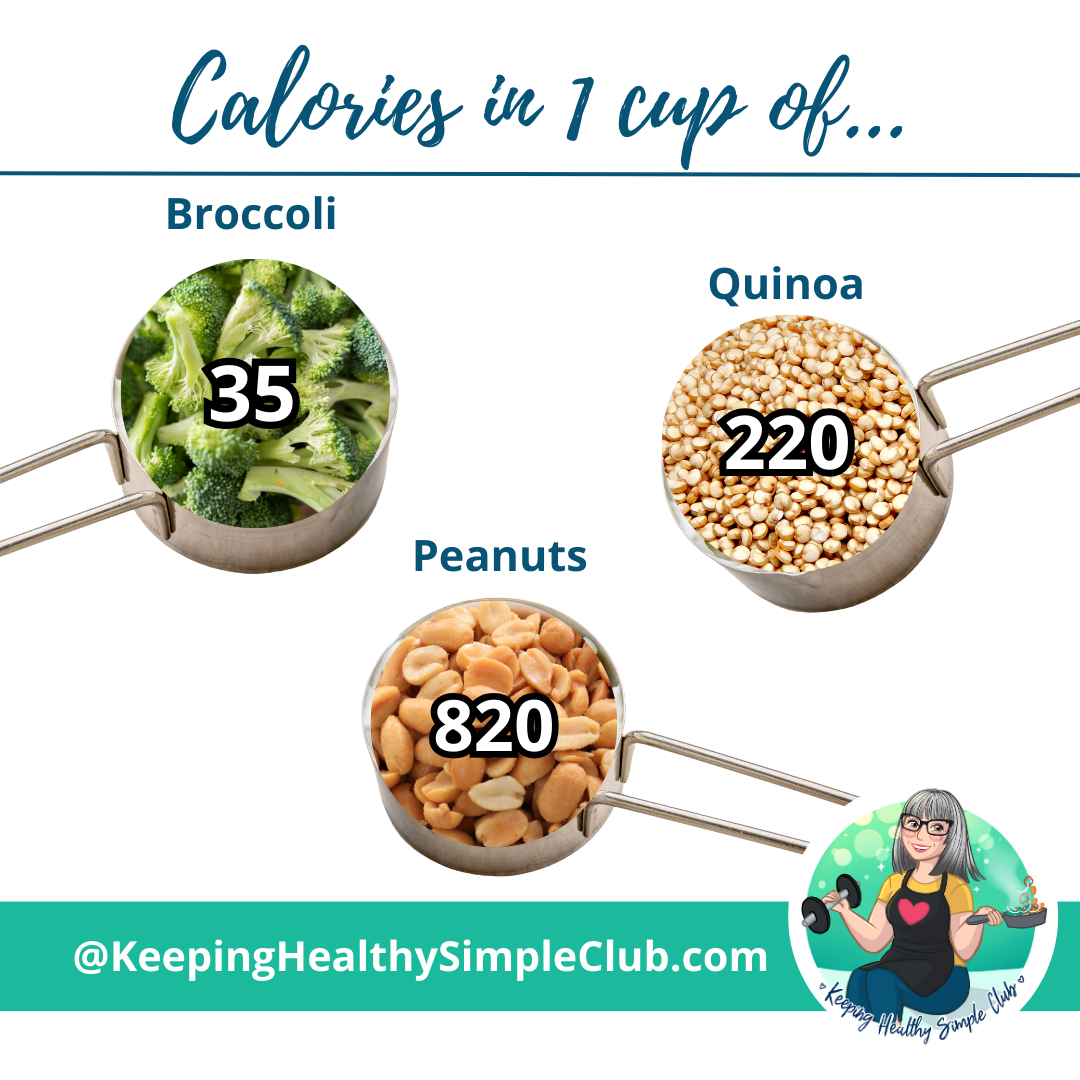
Graphic showing 1 cup of broccoli having 35 calories, 1 cup of quinoa having 220 calories, and 1 cup of peanuts having 820 calories.

Nut butters are considered a minimally processed food, especially if you check the food label to make sure the ingredients are limited to the nut and salt (ex: peanuts, salt). Be wary as some brands add more ingredients to emulsify, stabilize, and sweeten the nut butter.

You may think that nut butter powders are a highly processed food since it’s basically turning peanuts into a powder. But hear me out.

Yes, you are correct that this is a more processed food. However, it’s not heavily modified. The peanuts are roasted, pressed to remove the oils, then ground into powder, reducing the fat and keeping a lot of protein. Again, look for the nuts and salt on the ingredients list.

For each 100-gram serving, you get about 22 grams of protein in peanut butter (and 600 calories) and whopping 48 grams of protein in powdered nut butter (and 460 calories).

But don’t get too excited because you likely won’t eat this much in one sitting. I mean, that would be a 1-cup measuring cup full of peanut butter powder before you even mix it with something.

Use the nut butter powder in smoothies or sprinkle some in any dishes that pair well with the nutty flavor and could use a little protein boost. It would be great in this pineapple curry tofu recipe, which is one of my faves. You can also mix the powder with a little water and stir to mimic the consistency of peanut butter.

Food Number Three: Chia Seeds

Just like nuts, seeds are higher in fat and calories than many other types of foods. You get 17 grams of protein in a 100-gram serving.

WARNING – please do not eat 100-grams of chia seeds. If you do not eat a high-fiber diet, do not go crazy on these because they can lead to GI issues and constipation in large quantities. So, take it slow and drink more water.

Chia seeds can be used as a vegan egg substitute when baking by mixing with water and letting them sit until they form a gel-like consistency. Try using 2-3 tablespoons of water for each tablespoon of seeds.

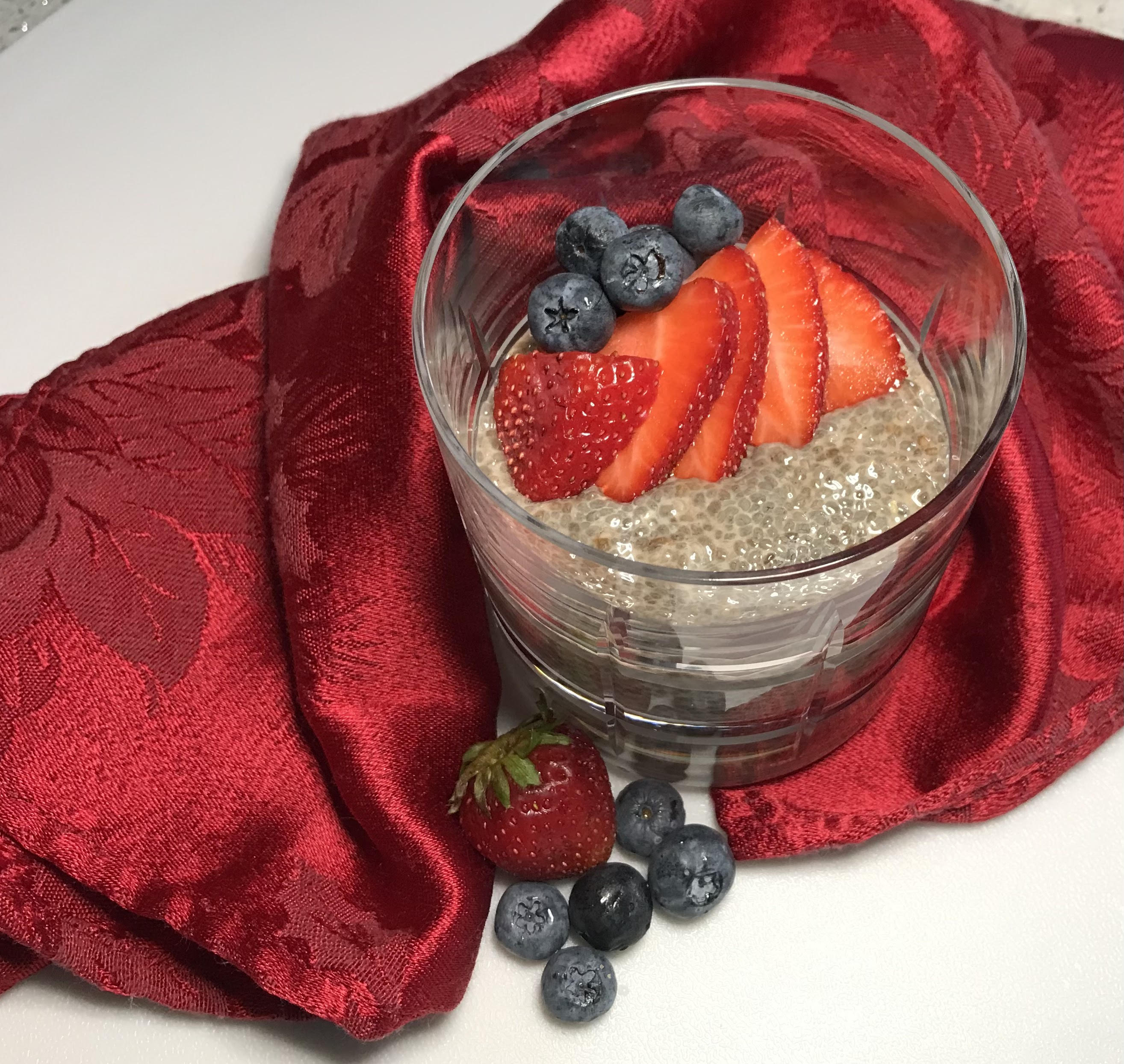
I love them as a chia seed pudding, which you can meal-prep for a quick, filling snack or dessert. Here is one of my faves – a vanilla chia seed pudding with fresh berries.

Picture of chia seed pudding topped with berries.

Protein Summary

Here are how these three minimally processed plant-based foods stack up when added to our chart on protein.

FoodGrams in a ServingOr about…Has this much protein
Chicken breast, cooked100 * 3/4 cup31 grams
Powdered nut butter50 **1/2 cup24 grams
Peanut butter1001/3 cup22 grams
Tempeh1001/2 cup20 grams
Chia seeds1001/2 cup17 grams
Black beans, cooked1001/2 cup9 grams
Quinoa, cooked1001/2 cup7 grams
Broccoli, cooked1001/2 cup2 grams
* 100 grams is the reference size in the USDA Food Data Central Database. / ** Serving size reduced to more closely match the volume of the other foods.

As you can clearly see, these plant-based foods pack in more protein than the foods you may typically think of when looking for a plant-based protein.

Protein Supplements

Okay, let’s circle back to the easy way to boost protein – with supplements.

First and foremost, there is no shame – nada, zip, zero, none – in using a protein supplement.

These are a great option if you can’t meet your protein needs with less processed foods, you don’t have time to (or want to) cook or meal prep, or you are in a hurry and need a grab-and-go. Or really, any other reason. You don’t have to justify how you eat to anyone.

In fact, when I have a nighttime craving for something sweet, I love to use the Transform Protein Powder or Meal Replacement Powders in a smoothie or in my Ninja Creamie to make a protein ice cream. And this is where I let you know that I am an affiliate for Transform, which means you can get a deal on these products.

Also, on mornings where I don’t have time for a proper breakfast, I often will add a pre-made caramel protein drink to my coffee for a delicious pick-me-up and protein/calories to start my day.

Vegan Meat Alternatives

And if you are wondering why I didn’t include any vegan “meats,” it’s because I am incredibly wary of these foods. They are very highly processed and I’m putting my money down now that these are going to turn out to not be a healthy approach to plant-based eating in any way.

You heard it here first.

What’s Next?

Switching to a more plant-based diet?

Curious if you are eating enough protein for your body’s needs and health goals?

Talk to Alexia through Nourish. You can even use your health insurance!

References:

  1. Harvard Health: More Evidence That Ultra-Processed Foods Harm Health.
  2. USDA FoodData Central: Legacy Foods Search
  3. PB2: PB2 Original Powdered Peanut Butter
  4. University of Wyoming Extension: Appetite for Knowledge – Powdered Peanut Butter

Image with ebook cover and preview of worksheet pages.

It’s Time to Meal Plan with Ease

It’s time for a big announcement!!

Alexia has just released her latest eBook on The Aspire Strategy: Creating Your Own Personalized Meal Plan with Ease.

Cover of eBook showing the title over a picture of healthy foods.

It’s time to trust yourself to be the expert on what you should eat. You don’t need yet another meal plan that someone else created.

For any meal plan to work for you, it has to be tailored to your food preferences, eating style, cooking skills, food budget, and available time.

No wonder those one-size-fits-all plans never work for long.

Come along with registered dietitian and culinary nutritionist, Alexia Lewis, as she lays out a strategy to guide you in how to create your own meal plan. There are also more than 35 recipes to get you started.

This how-to guide is the sum of years of experience leading meal planning workshops and coaching clients to help them find their unique and personalized way to meet their nutrition and health goals.

You can reach your food and nutrition goals when you ASPIRE to plan healthy meals!

Take a look and feel free to share your best meal planning tip – or biggest meal planning challenge – in the comments!

If Hunger is the Problem, Food is the Solution

Yesterday I was so hungry. I wanted to snack my way through my afternoon. I am working on weight loss so how much I eat is a factor. I try to eat enough food to fuel my body without eating more than I need at any one time.

Here’s the question – a person is working on weight loss and is hungry in the afternoon, what should they do?

Some common answers might be:

  • Ignore it, the hunger will pass
  • Drink a huge amount of water to fill up your stomach
  • Eat a snack pack bag of carrots (low calorie) or a boiled egg (protein) and then stop
  • Give up, go off the diet, feel bad, pledge to start again tomorrow

I’ve heard all these answers in practice and they don’t address the problem in a realistic way. There is a mindful eating saying that if hunger isn’t the problem, food isn’t the solution. (Read that again). So true and if I were bored or pissed off, then food wouldn’t be what I needed. However… I was hungry!

Isn’t the flip side of that saying: If hunger is the problem, then food is the solution?

Here’s the thing, our bodies are not steady-state machines in terms of how much energy (calories) they need each day because we don’t ask our bodies to do the same things every day AND all those inside workings are different day-to-day (immune responses, stress, etc.).

Some days, I may not need much food; my hunger will be low and I should take advantage and eat less if weight loss is my goal. As long as I ensure adequate nutrition that is – please don’t eat less than your BMR!

Other days, I may need more food (energy) and my body will let me know it’s hungry and so I should… well, according to the answers above… I should ignore that and eat by my plan. I should deprive myself, tell myself I’m a failure if I eat in response to hunger, fight through it because weight loss is hard and this is expected. I should basically spend the afternoon fighting a mental war between my body and mind.

Um, no. Why be so unkind to yourself?

Here’s the question again – a person is working on weight loss and is hungry in the afternoon, what should they do?

Eat.

Simple. Easy. Honoring your body and loving yourself.

First, check in and make sure the hunger physiological. If it is, then FEED YOUR BODY!

Here’s how this dietitian handled a ravenous appetite:

  • A handful of fresh cherries and about a cup of fresh blackberries. Wait. Still hungry.
  • Add protein. A fresh apple with a little tub (3/4 oz. or a heaping Tbsp.) of peanut butter. Wait. Still hungry.
  • Add protein / healthy fat. Pecans, Just under an ounce. Wait Still hungry. Are you kidding me body???
  • Bring out those carbohydrates. A Flatout with 1 Tbsp. of light olive oil butter, a sprinkle of Splenda, cinnamon. Wait. Finally satiation! No more hunger!

I added nearly 600 calories in snacks yesterday and that put my total calories up a little higher than usual. So what? I ate to satisfy my hunger! Nutritious choices = more food! Choosing a convenience crispy-crunchy or chocolately snack would not have satisfied my hunger. I instead made nutritious choices and got to eat a whole lot until I felt satisfied.

Are you shaking your head at me and saying: I bet you put on weight by giving in to your cravings and eating all that food. Nope. I weigh in every morning and I’m up 0.2 lbs this morning, which is 100% water-not-weight variation. If in doubt, see my last post: Weight Loss: A Long and Winding Road.

The moral of my story is – feed yourself when you are hungry and do it with healthful choices.

(Image for blog from: https://memegenerator.net/)

Meal Plan Yumminess

It’s been a while since I posted a meal plan and I’m back with a delicious week of meals to share with you. I’ve been faithfully planning and prepping and have started to get a little bored with the same old meals. This week, I added a few new recipes.

Do as much prep as you can over the weekend. I chop omelet veggies, make overnight oats, boil eggs (last 5 days if they don’t crack!), make mason jar salads, and do whatever else I can to prepare ahead of time. Notice this week is heavier in cooking the first few days but then relies on leftovers to get through the week.

Not listed is a Chocolate Chia Pudding dessert I’ll be making when I sign off from here because chocolate. Yum.

Sunday: 

B – Egg white omelet made with egg whites, shredded cheddar/jack, onions, mushrooms, and spinach served with a piece of toast with olive oil butter. TIP: Do your breakfast prep for the week by chopping onions and mushrooms that have been cleaned with a paper towel (no water!) and storing in mason jars – you still have to cook; but the chopping is the time-consuming part so this saves time in the morning!

L – White Bean Caprese Salad (added chopped raw videlia onions) served on spinach/romaine lettuce.

D – Baked tofu (press, cube, toss with Italian salad dressing and bake) mixed with zucchini carpaccio (pictured with this blog). Note to self: invest in a mandolin.

S – Boiled egg; cucumbers and Zesty Carrot Hummus – you seriously must try this! DELISH!

Monday:

B – omelet with toast

L – Loaded Sweet Potato

D – Strawberry Cucumber Salad (with balsamic glaze – yes please!) and (Chicken) Sausage Stuffed Zucchini Boats. 

S – Apple with Laughing Cow Cheese

Tuesday:

B – Overnight Oats (were prepped over weekend so easy breezy breakfast) with a sliced banana.

L – Leftover White Bean Caprese Salad on lettuce/spinach

D – Leftover Sausage Boats and Strawberry Cucumber Salad

S – Kefir and blackberries

Wednesday:

B – Overnight Oats with banana

L – Leftover Loaded Sweet Potato

D – Baked fish, steamer vegetables, quinoa

S – Egg salad (egg, mayo) with carrots

Thursday:

B – Overnight Oats with banana

L – Mason Jar Salad (prepped over weekend) with a boiled egg and blue cheese crumbles

D – Fish Bowls (leftover fish, quinoa, chipotle, jalapeno, veggies, sour cream – whatever is on hand and needs to be eaten but with a Mexican twist).

S – Apple with carrot hummus

Friday:

B – Omelet with toast

L – Leftover Loaded Sweet Potato

D – Turkey burgers (tomato, lettuce, red onion, avocado, cheese) and fries (yes – the splurge meal happens for me too!)

S – Kefir and blackberries

Saturday: 

B – Overnight Oats

L – Mason Jar Salad with tuna packet (buffalo tuna is so yum).

D – Turkey Burger Bowls (chopped burger, lettuce, tomato, pickles, blue cheese and the rest of the chopped food that needs to be eaten!

S – Carrots with carrot hummus

Thanks for the inspiration as always to Clean Eating Magazine (just the recipes please people, not the articles! Food is NOT “clean” or “dirty” unless of course, it needs to be washed), SkinnyTaste (easy, low calorie, and crazy good recipes) and this week to my new find, Minimalist Baker.

Let me know if you try any recipes this week and if you like the Meal Plan posts!

Overnight Oats

“Getting what you want is simple, but not easy.” – Mel Robbins.

I believe this is true when applied to nutrition. I think many of us know WHAT to do – nutrition is really simple once you get away from the hype of the media and uneducated bloggers. We just struggle with ACTUALLY DOING IT – it isn’t easy!

To further my mission of “heart healthy nutrition made easy,” I bring you a way to fit a healthy breakfast into your meal planning. I love the ease of the week when I take the time to do meal preparation on the weekends. In fact, my husband and I have only eaten out about 8 times since the year began five months ago. That was not our goal; but is a happy unanticipated consequence of having a plan in place.

One of the best perks of meal prep is having a hot breakfast for very little work. I’ve been accomplishing this with overnight oats and with pre-chopped vegetables for omelets or “scrambles” if I’m in a hurry. Mason jars are AMAZING for keeping my chopped onion and mushrooms (cleaned with a paper towel, not water) fresh through the week!

However, in my work with my patients lately, I have been hard pressed to find an overnight oats recipe online that works for all of my patients – especially those working on blood sugar control. Once you add oats, dairy, and fruit together, you’ve got a small jar carbohydrate delight that is just an overload for the morning meal.

Note – carbohydrates are NOT bad. Carbohydrates are AWESOME! However, many people tend to eat tooooo many of them. So, please DO NOT ban or severely limit carbohydrates; but many of us could do with reigning in our portion sizes a bit.

Without further ado – my basic overnight oats recipe is below. This serving provides 215 calories and 30 grams of carbohydrates per jar. Feel free to add more fruit and nuts and other assorted yumminess to fit your needs and preferences.

Oh and by the way, Mel Robbins 20 minute video is so worth the time!

Click the recipe title for a printer-friendly version!

Simple-Overnight-Oats

Serves one

Ingredients

1/3 cup of old-fashioned or quick cooking plain oats

2/3 cup of unsweetened almond milk

1 tablespoon of chia seeds

1 Tablespoon peanut butter powder (no sugar added)

1 teaspoon of ground cinnamon

1 teaspoon cocoa powder

1 teaspoon vanilla extract

Directions

  1.  Put all ingredients into a Mason jar or other container and stir to combine.
  2. Store in refrigerator at least overnight (can be made up to 5 days in advance and stored in fridge!)

To serve: This can be eaten cold or hot (microwave 1-2 minutes but do NOT microwave in a plastic container).

Nutrition per serving (entire recipe): 215 calories, 8 grams fat, 7 grams unsaturated fats, 1 gram saturated fat, 0 grams trans fat, 0 milligrams cholesterol, 165 milligrams sodium, 30 grams carbohydrates, 10 grams fiber, 8 grams protein.

NOTES:

The chia seeds act as a thickener (in addition to be a great heart healthy food!) but they are expensive so you can try leaving them out or substituting ground flaxseed.

For those counting carbohydrates to manage blood sugar:  Don’t forget to add your carb grams for any fruit or sweeteners you add!

Are You Healthy?

Is overweight the new healthy? The answer might surprise you.

Let’s start with the definition of healthy. How do you define healthy?

There are many aspects of health – there is body size (BMI, body fat) or metabolic health (lab results) or cardiovascular health (resting heart rate, ability to perform daily living tasks or purposeful exercise) or even emotional and spiritual health (do the standards you hold yourself to for your physical health damage your emotional health?). Or is it based on quality of life? Or the characteristics of those who live the longest?

(Spoiler alert: We are finding that a BMI in the “overweight” range has a lower mortality rate than those in the “normal” weight range).

So, I ask: how should we define health? The good news is that you get to define it based on what is important to you and I’d recommend you do it in collaboration with a physician.

I can tell you that people choose physical appearance over their emotional health a lot. One thing most people have in common when they walk in the door to meet with an RD is that their emotional health has taken a hit regardless of their body size. It seems very few people can find peace with their bodies – even those who appear “fit” or “healthy” to others.

This concerns me.

I used to be there too and I still some days struggle with self-acceptance and self-love (stupid #fitspo memes). It’s no secret that I carry a few extra pounds. Should you consider me proof that knowing what to do to get to a socially desirable weight and actually doing it are two different things? Or should you perhaps consider that I am happy and healthy with a few extra pounds? Could this be true?!?!

In 2007, I was “overweight” by the numbers and I fought with my body and had low body-acceptance. My hips were too big, my belly isn’t flat, my thighs are so big when I sit down… all those things we let ourselves say in our heads when we don’t love ourselves as we are. I had a heart attack. I felt my body had let me down even more… and then I realized that this body that I hated – big belly, hips, thighs, and all – had actually carried me through and I survived that heart attack. Just that simple realization led to a big mind shift and changed those thoughts in my head to appreciation and gratitude for this body that I was lucky enough to still have!

Before you go screaming that being overweight is why I had a heart attack – let me stop you. I was a smoker for decades, I worked a stressful job, and I have a strong family history. Most health conditions (and the supposed “obesity epidemic”) are not as simple as people believe. These things have multiple factors that lead to these outcomes. Being thin would not have prevented my heart attack.

I share all this to lead you into considering your HEALTH over your APPEARANCE. I encourage you to think a little deeper than the eat-less-move-more movement. Check out HAES (Health at Every Size), read up on new studies that might indicate a coming shift in beliefs (just one of many studies here: BMI 27: The New Normal?), and start loving yourself first.

Change your body or don’t – we are all works in progress – but please start from a place of self-love and body-acceptance. Look forward to more information on this topic in the future.

Image from: https://fridayforgood.com/2015/11/20/be-rebellious/

Spiralized Sweet Potato

Happy New Meal Planning!

I returned to work today and the majority of people are focusing on meal planning as their current focus with their renewed enthusiasm of a new year. Meal planning and preparing foods ahead of time is a wonderful way to have a successful week in terms of meeting your nutrition goals. Two quotes come to mind:

  1. Ben Franklin is purported to have said: He who fails to plan, plans to fail.
  2. Mel Robbins kind of said (forgive me Mel, I paraphrase your Ted talk): You can have anything you want – it’s simple; but it’s not easy.

By the way, I really encourage you to invest 20 minutes in watching Mel’s Ted talk. I watch it every time I need a  motivation boost.

In the interest of helping others who struggle with meal planning, I decided to share my meal plan for this week and links to recipes where possible. I warn you though, this takes time and effort. Expect to spend a good 4 hours in the kitchen… but then relax because your food for the week is DONE!

Sunday:

B = egg white omelet with mushrooms, onions, spinach, shredded cheddar cheese(veggies chopped on Sunday for the week), L = green salad (veggies chopped on Sunday for the week) with Asian Sesame dressing with chicken salad (canned chicken, olive oil mayonnaise, red onion, celery, red grapes, black pepper); Zesty Lime Shrimp and Avocado over brown rice, vegetable soup (garlic, onion, tomato, zucchini, low sodium chicken broth, black pepper, red pepper flakes, basil).

Monday:

B = overnight oats (made for week) with oatmeal, unsweetened almond milk, chia seeds, peanut butter powder, cinnamon, cocoa powder, and vanilla extract with banana sliced into it in the morning, L = Zesty Lime Shrimp on romaine, D = Mexican Sweet Potato Casserole, broccoli, Snacks = yogurt, crackers.

Tuesday:

B = omelet, L = tofu sandwich (chipotle baked tofu, lettuce tomato, whole wheat bread), vegetable soup, D = Mexican Sweet Potato Casserole, brussels sprouts.

Wednesday:

B = omelet, L = green salad with chicken salad, vegetable soup, D = pork chop, edamame pesto pasta (copied from a recipe book so can’t link sorry!) with grape tomatoes, sauteed squash and mushrooms.

Thursday:

B = oatmeal, L = tofu sandwich, vegetable soup, D = pork chop, leftover pasta, green salad.

Friday:

B = omelet, L = green salad with chicken salad, D = Mexican Sweet Potato Casserole (from frozen), broccoli.

Saturday:

B = omelet, L = sandwich, crackers, D = a leftovers meal with whatever remains!

My snacks aren’t planned day by day but they include celery/carrots with hummus or peanut butter; yogurt with grape nuts; or crackers with cheese.

I hope this helps!


D-vine Orange Chipotle Cod

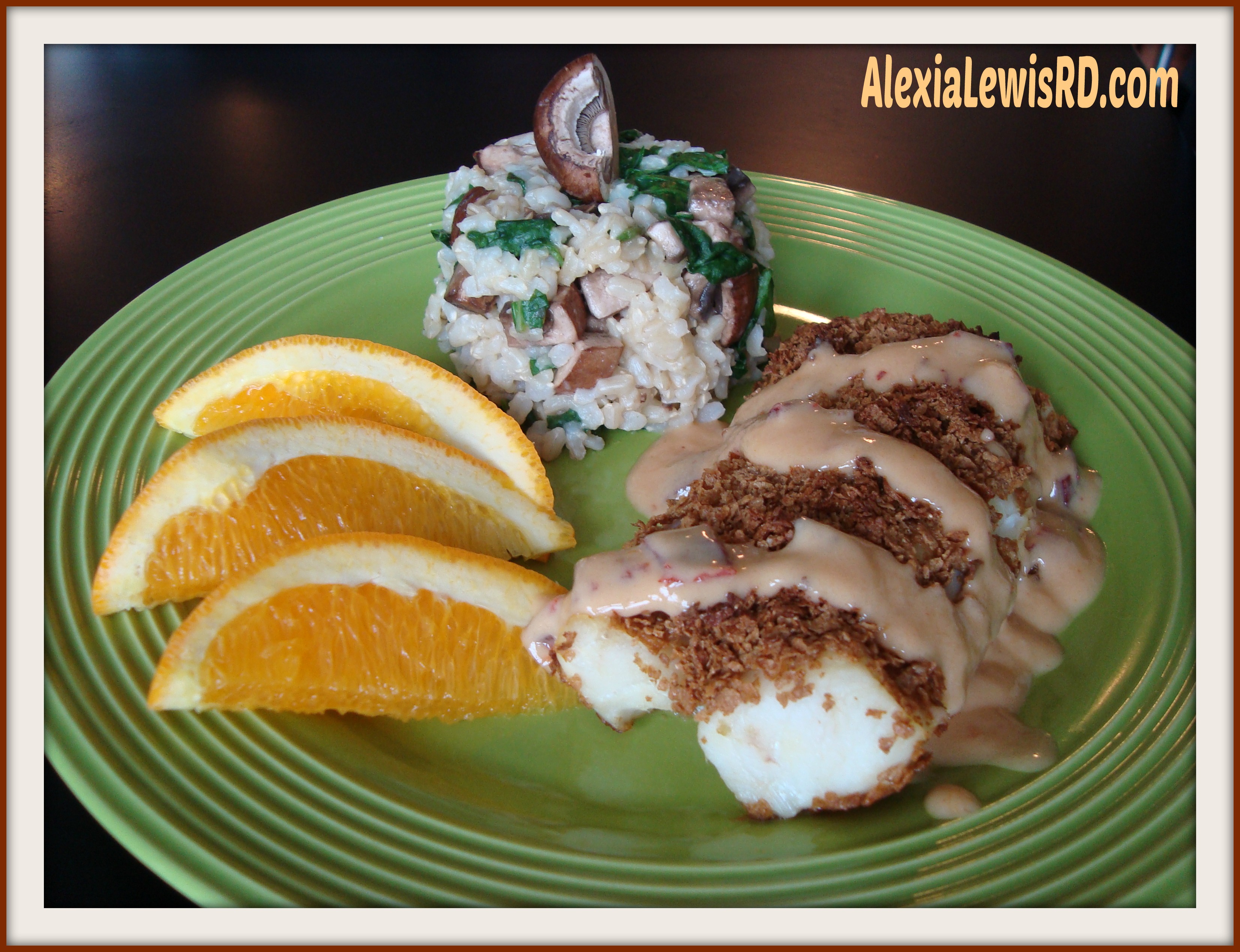
“D”-vine Orange Chipotle Cod: A Dish High in Vitamin D

Vitamin D is one of those vitamins that keeps popping up in the media as beneficial for our health and it’s a vitamin that many of us are lacking. I created a recipe high in vitamin D using Atlantic cod, orange juice, bran cereal flakes, and chipotle. The result was a divine vitamin-D rich Orange Chipotle Cod recipe.

904 Fitness Magazine gave me this challenge to go along with a vitamin D article that is in the May edition. As a dietitian, I love turning to food before supplements so I accepted the challenge!

Facts about Vitamin D

  • According to the CDC, 31% of non-Hispanic blacks, 12% of Mexican Americans, and 3% of non-Hispanic whites have vitamin D deficiency.
  • Vitamin D is called the “sunshine vitamin” because substances in our skin are activated by the UV rays to produce vitamin D. This partially explains why vitamin D deficiency is higher in those with darker skin (which protects against UV rays) as well as those who live in climates with less sunshine or who spend more time indoors.
  • The recommended amount of Vitamin D for adults between 19-70 is 600 IU (international units) per day. A deficiency may cause bone issues such as bone pain, muscle pain or spasms, osteomalacia (soft bones), and rickets in children.
  • Since many people supplement, I’ll also give you the tolerable upper limit, which is 4,000 IU per day. Research is ongoing that is looking at the effects of large amounts of Vitamin D so these recommendations may change in the future. A toxicity may cause bone loss and kidney stones – you cannot overload on vitamin D from sunlight.
  • Vitamin D is important for calcium absorption and bone health. It’s being researched for its impact on heart disease, cancer, immune function, type 2 diabetes, blood pressure, and many other things.

I’m a light-skinned white dietitian who lives at the beach in Florida and even I had low enough levels of vitamin D that my physician put me on supplements! So, it is difficult to get your D when you rely on sunshine and foods.

Here’s why it is difficult to get enough vitamin D (600 IU) from foods… unless you are willing to swallow cod liver oil or can afford to eat salmon every day!

Food Amount IU (average) Source
Cod liver oil 1 tablespoon 1,360 Natural
Swordfish 3 ounces 560 Natural
Portabella mushrooms (with UV exposure) 1 cup 450 Natural
Salmon/mackerel (fatty fish) 3 ounces 425 Natural
Tuna (light, canned) 3 ounces 200 Natural
Fortified orange juice 1 cup 115 Fortified
Fortified milk 1 cup 115 Fortified
Fortified yogurt 6 ounces 80 Fortified
Fortified cereal 1 cup 70 Fortified
Sardines (canned in oil, drained) 2 pieces 50 Natural
Egg yolk 1 large 30 Natural
Portabella mushrooms (no UV exposure) 1 cup 10 Natural

Note that the fortified foods give an average for the IU of vitamin D and the actual amount can vary quite widely based on the level of fortification. When I was looking for cereals for my recipe, I found cereals with 0% to 25% of the daily value of vitamin D! It’s important to look at the labels for the fortified foods you choose. Also, notice that mushrooms contain much more vitamin D if they have been exposed to UV light. Since the packaged mushrooms in my store didn’t mention UV light on their labels, I asked my grocer about the mushrooms in the store and he had no idea if they were UV-exposed.

I turned to fish and fortified foods to make a “D”-vine Orange Chipotle Cod dish that has 32% of the daily value (~ 200 IU) of vitamin D and packs a nice little spicy kick. This recipe is also heart-healthy with low calories, low saturated fat, no trans fat, and low sodium. It is a little higher in cholesterol than I’d like; but still within heart healthy recommendations.

D-vine Orange Chipotle Cod (click link for a printer-friendly version)

Makes: 4 servings

Ingredients

Orange Chipotle Sauce

  • Chipotle in Adobo: 1 chipotle pepper, de-seeded and chopped plus 1 Tablespoon sauce
  • 1 cup vitamin D fortified orange juice
  • 1/4 cup vitamin D fortified plain non-fat yogurt

Fish

  • 2 large eggs
  • 2 cups vitamin D rich (25% DV) bran flakes cereal
  • 4 6-ounce Atlantic Cod filets
  • Non-stick cooking spray

Directions

Preheat oven to 450° F. Line baking sheet with tin foil and spray with non-stick cooking spray and set aside.

When preparing chipotle peppers, or any hot pepper for that matter, remember that the heat is mostly in the seeds. Chipotles pack a spicy punch so remove these little seeds before chopping to reduce the kick in the sauce.

Deseeding Chipotle Peppers

Begin sauce. Pour 1 cup orange juice, chipotle pepper, and chipotle sauce into small saucepan and heat until mixture just begins to boil. Reduce heat to low and simmer, stirring frequently to prevent sticking until mixture thickens, approximately 35 minutes. Set aside when done.

The thicker drops show that the sauce has begun to thicken - it will continue to thicken after removed from the heat.
The thicker drops show that the sauce has begun to thicken – it will continue to thicken after removed from the heat.

In a shallow bowl, crack eggs and stir to combine yolk and white. Pour bran cereal into another shallow bowl and use measuring cup or the back of a spoon to crush the cereal into small pieces.

Use the back of your measuring cup as a crushing tool for the cereal
The smaller the flakes, the better the coating!

Rinse fish filets, draw through the egg and then press gently into the cereal to coat the fish with cereal. Place fish on foil-lined baking sheet. Repeat with each filet. Sprinkle any remaining cereal on top of fish.

Having everything prepared and close together makes coating the fish much easier

Bake fish in oven for 20 minutes or until done and flesh flakes easily with a fork.

When orange-chipotle sauce has cooled, combine the sauce with the yogurt and stir to combine.

To serve, top each fish filet with approximately 1/4 cup of sauce.

Nutrition Information per serving (1 fish filet topped with 1/4 cup sauce): 315 calories, 5 grams fat (1 gram saturated fat, 0 trans fat), 174 milligrams cholesterol, 375 milligrams sodium, 26 grams carbohydrate (3 grams fiber), 37 grams protein, and 32% DV of vitamin D.

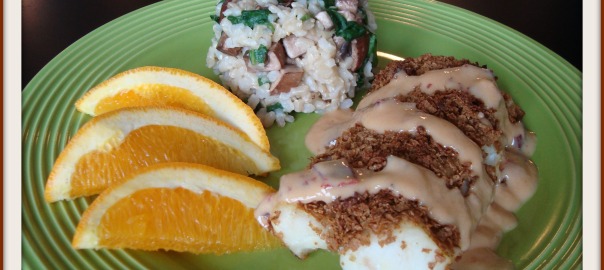
Served with brown rice mixed with chopped mushrooms and spinach – enjoy!

D-vine Orange Chipotle Cod

References as linked above, Nutrition: Concepts and Controversies, and the Linus Pauling Institute.

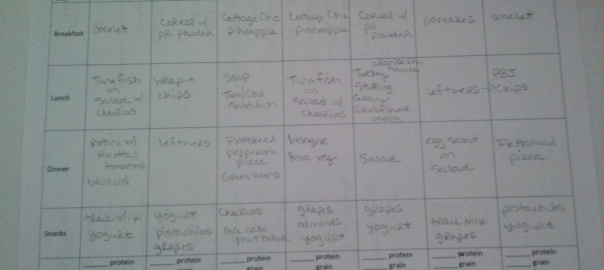
A Weekly Meal Planner

“ASPIRE” – Six Steps to Healthy Meal Planning

The one best thing you can do to make healthier, nutrition-rich meals, save time and money, and make life easier is to plan your meals ahead of time. You need a strategy to plan healthy meals. If you wait until you are hungry and tired at the end of the day, figuring out what to make for dinner is not easy and you’re more likely to choose something fast, easy, and unhealthy. However, this is one of the things that my clients find the hardest to do.

I’m here to help you “make nutrition easy,” so here is my strategy for you.

Grab some paper, a pen, and ASPIRE to plan your meals. Remembering this acronym will guide you through a simple way to plan meals that are healthy, yummy, and reduce your grocery expenses! I designed my free Weekly Menu Planner just for this! You can use any format as long as you have one column for each day of the week.

A = Agenda

The first thing to do is check your agenda for any commitments, meetings, and changes to your usual schedule. Also check the calendars of the others in your household. This is important so you know which nights you have time to make a meal and which nights you don’t and should plan for leftovers. It also lets you know which nights you need quick and easy meals and which nights you can spend more time on your meal creations. You can also note the days that you have to be out of the house early and may benefit from packing your a lunch the night before. Write down everyone’s commitments that have an impact on meals on the weekly menu planner.

S = Stock

What do you already have on stock, on par, or in your pantry and fridge? Flip your weekly menu planner over and make a list of all the foods in your fridge and pantry (your “stock foods”) on the left side of the back of the paper.

P = Promotions

Check the store promotions. What is on sale this week? What do you have coupons for? We all want to stretch our food dollars and this is one way to do it. If you don’t clip coupons, go to the grocery store’s web site as many are now allowing their customers to electronically collect coupons on reward cards or by their phone number. You can also check one of my favorite coupon sites, Southern Savers, for printable coupons. On the right side of the back of your weekly menu planner, write down the “promotions foods” you plan to buy based on sales, coupons, and promotions.

I = Invent

Put on your creative chef’s hat, and invent meals you can put together using only foods on your list of “stock foods.” If you can’t make anything with what you have in stock, then figure out what you can add from the list of “promotion foods” to make a meal with your  “stock foods”. The idea is to use as few foods from the “promotion foods” list so you make as many meals as you can without spending money on new foods! Once you have invented a few meal ideas, flip your weekly meal planner over and put the meals where they fit best based on your schedule.

A Weekly Meal Planner

Tips

  • Google is your friend. I made this delicious Puff Pastry Tart just by putting “puff pastry,” “spinach,” “sweet potato,” and “healthy easy recipe” into Google!
  • Cook more than you need so you have leftovers from every time you cook! A few tweaks and one night’s baked chicken, sauteed mushrooms and zucchini, and brown rice transform into the second night’s chicken quesadillas.
  • Make the first meal on your weekly planner one that you have all the ingredients for… just in case you don’t make it to the store right away.
  • This is the hard part and it takes time – so save every weekly meal planner you create to re-use for those weeks you don’t want to spend the time and effort doing all this work.
  • Use the food group tallies on the bottom of my weekly meal planner to make sure you are including food from all food groups in your meal plans. Don’t know how many of each food group to include? Here’s a guideline based on a 2,000 calorie diet.

R = Run

Get out and run those errands! Use your list of “promotions foods” to make a shopping list. Clip your coupons. Go to the grocery store and do your shopping.

E = Execute

You spent all that time and effort making a plan, now execute your plan.

Post the weekly meal planner in the kitchen where you can see it. If you have helpers at home, let them know they can start prepping foods for dinners before you get home.

Most importantly, be flexible. This plan is an outline and life happens. You may have forgotten you need fish for one dinner… just push that meal back to another day. You may decide that you are way too tired to cook one night… just pick up your plan the next night.

Always have a Plan B Meal in mind. In my home, it is either flatbread pizza or turkey burgers and sweet potato fries. We always have the ingredients in stock  and, on those nights we aren’t feeling our meal plan, we have a yummy 20-minute, low-effort dinner.

Let me know if you like my strategy. I hope you ASPIRE to give meal planning a try this week!