Category Archives: Protein

Close up image of hand with chopsticks over bowl of food with overlay text saying: Three Whole Foods to Boost the Protein in your Plant Based Diet.

Three Whole Foods to Boost the Protein in Your Plant-Based Diet

If you are wondering about getting enough protein in your plant-based diet, check out these three healthy, minimally processed plant-based foods that can boost your protein right up. Also get registered dietitian and culinary nutritionist, Alexia Lewis RD’s take on protein supplements and vegan meat alternatives.

When you start following a more plant-based dietary approach, including vegetarian and vegan diets, you might be concerned about eating enough protein. And it’s a valid concern. It can be more difficult to eat enough protein when following a plant-based, vegetarian, or vegan diet.

But… let’s be real. Without proper planning, any kind of dietary approach can be poorly done, even those that include animal-based foods. Just sayin.

Sure, you could easily boost your protein in a plant-based diet by including a plant-based protein powder or supplement. And there is room for these foods in an overall healthy diet – more on that below.

But what if you want to avoid too many highly or ultra-processed foods like these?

It’s too early to draw any sweeping conclusions, but you may have seen that recent studies are starting to show a link between highly processed foods and negative health outcomes.

So, how can you get enough protein in your plant-based diet if you want to start cutting back on these ultra-processed foods?

Protein in Meats Verses Plant-Based Foods

Generally, foods with protein come from meats (including poultry and seafood), eggs, legumes (beans, peas, and lentils, which also includes soy), and nuts or seeds. Even though veggies and grains have protein, they aren’t considered protein-rich foods.

If you are wondering why, it’s because meats generally have the most protein per bite. Sure, all foods have some protein, but plant foods typically have less protein per bite than meats.

Consider that a 3.5 ounce chicken breast, which is about the size of an average palm, has about 31 grams of protein. To get that much protein, you would need to eat 8 cups of broccoli.

Take a look at these foods and their protein content.

FoodGrams in a ServingOr about…Has this much protein
Chicken Breast, cooked100 * 3/4 cup31 grams
Black beans, cooked1001/2 cup9 grams
Quinoa, cooked1001/2 cup7 grams
Broccoli, cooked1001/2 cup2 grams
* 100 grams is the reference size in the USDA Food Data Central Database.

Okay, well I love a good dinner bowl and I chose those foods for a reason. Because I would totally smash a quinoa, black bean, and broccoli bowl with avocado, salsa, and sriracha!

But when I have a bowl like this, I typically use about 1 cup of quinoa and 3/4 cup of black beans plus about 2 cups of veggies. Good news – that actually has the same 31 grams of protein as that chicken breast. (yay!)

And, you may have realized, there’s the rub.

You may have to eat a huge portion of plant-based foods (4 cups!) to equal the protein in a small portion of animal-based foods (about 3/4 cup). For some, this big portion is welcome news; but others may have difficulty eating this amount of food at each meal.

So, let’s get on to the three minimally processed foods that I recommend for boosting the protein in a plant-based diet, so you don’t have to stuff yourself to meet your protein needs.

Food Number One: Tempeh

Tempeh should be at the top of your list if you are a plant-based eater who does not like tofu.

Tempeh is made with soybeans, just like tofu, but the beans are fermented which holds the beans together in a solid layer. It’s kind of like being able to take a slice of soybeans.

You get about 20 grams of protein for each 100-gram serving of tempeh, making it one of the plant-based foods that gets close to the meat-based foods, bite for bite.

Tempeh has a savory and slightly nutty flavor. It needs to be cooked and, well, you may have no idea what to do with it if you haven’t had it before.

You can slice it and pan-sauté it to make a vegan “BLT” with the crispy tempeh replacing the bacon. Fun fact – this breakfast sandwich, which also has avocado, was Alexia Lewis RD’s first Instagram post.

Close up of sandwich on toasted bread with lettuce, tomato, avocado, tempeh, and egg

You can also rough chop tempeh or pulse it in your food processor to break it up then toss it in a pan to use as a replacement for ground beef in tacos, spaghetti sauce, or chili. The extra flavors in these dishes will give more flavor to the tempeh.

Food Number Two: Nut Butters and Pressed Nut Powders

Nuts are a nutritious food, but the calories add up fast. This is great if you are working to gain weight, but not so great if you are on a weight loss journey.

The reason nuts are higher in calories than many other foods is that they have a high percentage of fat, which translates to more dietary fat and calories per bite.
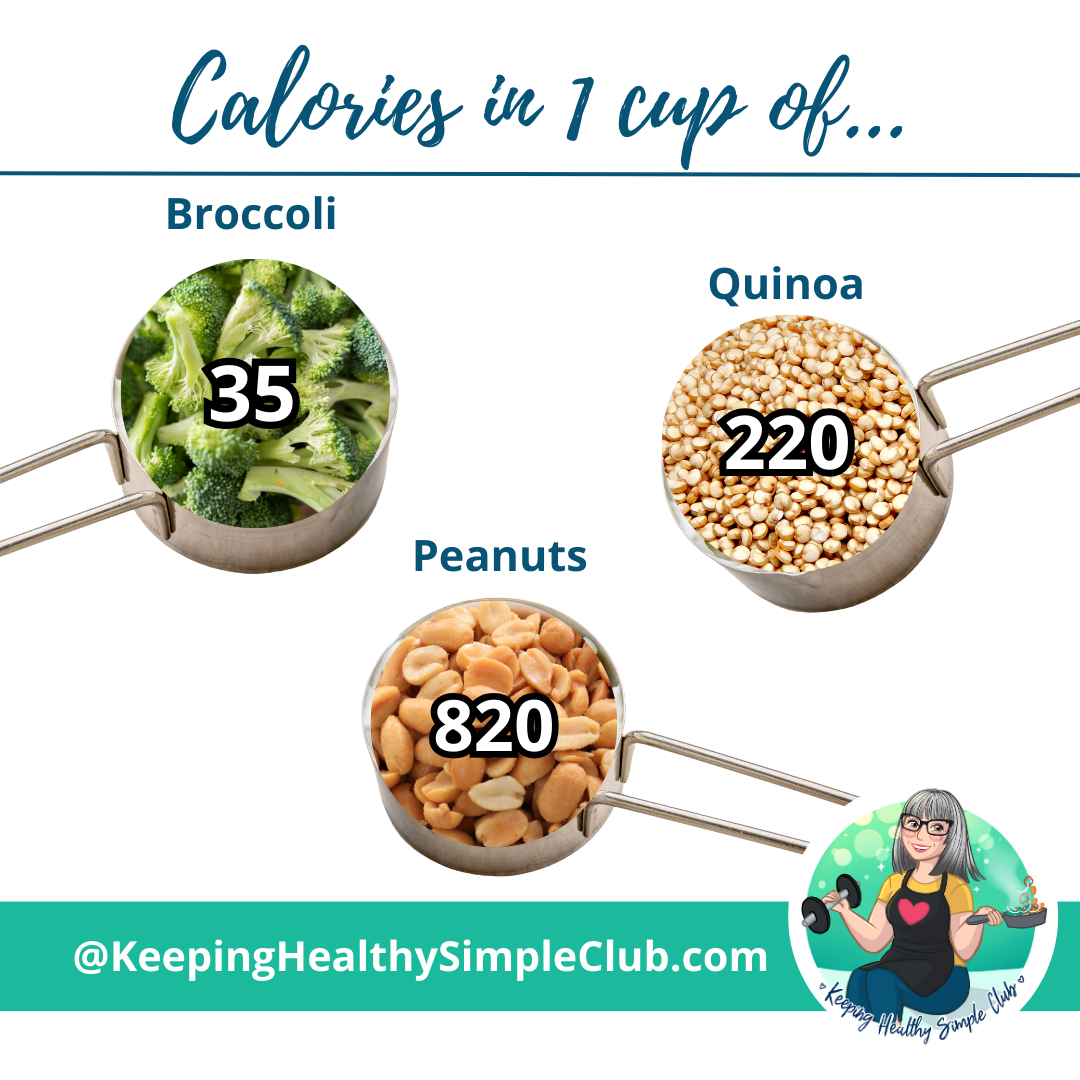
Graphic showing 1 cup of broccoli having 35 calories, 1 cup of quinoa having 220 calories, and 1 cup of peanuts having 820 calories.

Nut butters are considered a minimally processed food, especially if you check the food label to make sure the ingredients are limited to the nut and salt (ex: peanuts, salt). Be wary as some brands add more ingredients to emulsify, stabilize, and sweeten the nut butter.

You may think that nut butter powders are a highly processed food since it’s basically turning peanuts into a powder. But hear me out.

Yes, you are correct that this is a more processed food. However, it’s not heavily modified. The peanuts are roasted, pressed to remove the oils, then ground into powder, reducing the fat and keeping a lot of protein. Again, look for the nuts and salt on the ingredients list.

For each 100-gram serving, you get about 22 grams of protein in peanut butter (and 600 calories) and whopping 48 grams of protein in powdered nut butter (and 460 calories).

But don’t get too excited because you likely won’t eat this much in one sitting. I mean, that would be a 1-cup measuring cup full of peanut butter powder before you even mix it with something.

Use the nut butter powder in smoothies or sprinkle some in any dishes that pair well with the nutty flavor and could use a little protein boost. It would be great in this pineapple curry tofu recipe, which is one of my faves. You can also mix the powder with a little water and stir to mimic the consistency of peanut butter.

Food Number Three: Chia Seeds

Just like nuts, seeds are higher in fat and calories than many other types of foods. You get 17 grams of protein in a 100-gram serving.

WARNING – please do not eat 100-grams of chia seeds. If you do not eat a high-fiber diet, do not go crazy on these because they can lead to GI issues and constipation in large quantities. So, take it slow and drink more water.

Chia seeds can be used as a vegan egg substitute when baking by mixing with water and letting them sit until they form a gel-like consistency. Try using 2-3 tablespoons of water for each tablespoon of seeds.

I love them as a chia seed pudding, which you can meal-prep for a quick, filling snack or dessert. Here is one of my faves – a vanilla chia seed pudding with fresh berries.
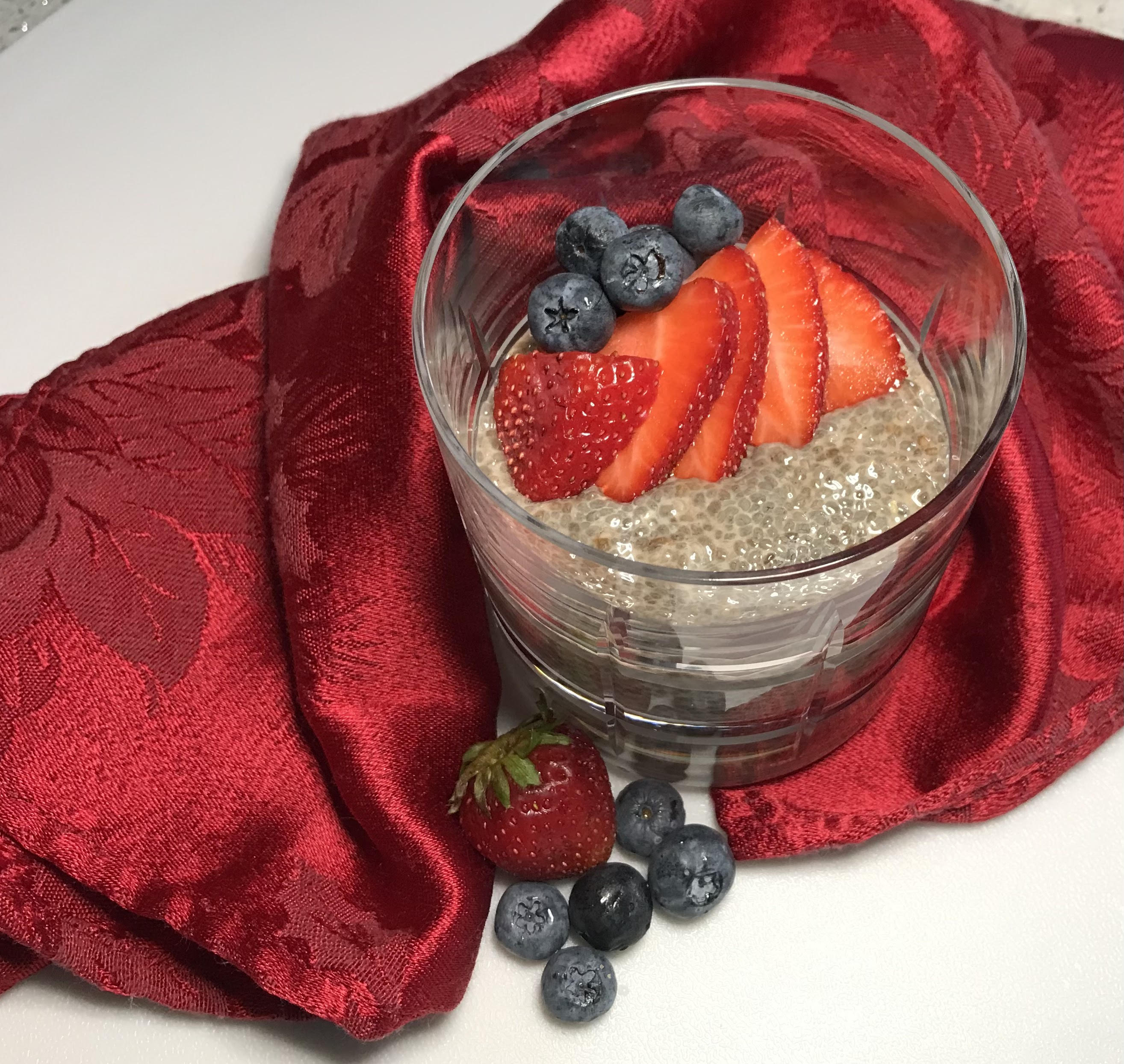
Picture of chia seed pudding topped with berries.

Protein Summary

Here are how these three minimally processed plant-based foods stack up when added to our chart on protein.

FoodGrams in a ServingOr about…Has this much protein
Chicken breast, cooked100 * 3/4 cup31 grams
Powdered nut butter50 **1/2 cup24 grams
Peanut butter1001/3 cup22 grams
Tempeh1001/2 cup20 grams
Chia seeds1001/2 cup17 grams
Black beans, cooked1001/2 cup9 grams
Quinoa, cooked1001/2 cup7 grams
Broccoli, cooked1001/2 cup2 grams
* 100 grams is the reference size in the USDA Food Data Central Database. / ** Serving size reduced to more closely match the volume of the other foods.

As you can clearly see, these plant-based foods pack in more protein than the foods you may typically think of when looking for a plant-based protein.

Protein Supplements

Okay, let’s circle back to the easy way to boost protein – with supplements.

First and foremost, there is no shame – nada, zip, zero, none – in using a protein supplement.

These are a great option if you can’t meet your protein needs with less processed foods, you don’t have time to (or want to) cook or meal prep, or you are in a hurry and need a grab-and-go. Or really, any other reason. You don’t have to justify how you eat to anyone.

In fact, when I have a nighttime craving for something sweet, I love to use the Transform Protein Powder or Meal Replacement Powders in a smoothie or in my Ninja Creamie to make a protein ice cream. And this is where I let you know that I am an affiliate for Transform, which means you can get a deal on these products.

Also, on mornings where I don’t have time for a proper breakfast, I often will add a pre-made caramel protein drink to my coffee for a delicious pick-me-up and protein/calories to start my day.

Vegan Meat Alternatives

And if you are wondering why I didn’t include any vegan “meats,” it’s because I am incredibly wary of these foods. They are very highly processed and I’m putting my money down now that these are going to turn out to not be a healthy approach to plant-based eating in any way.

You heard it here first.

What’s Next?

Switching to a more plant-based diet?

Curious if you are eating enough protein for your body’s needs and health goals?

Talk to Alexia through Nourish. You can even use your health insurance!

References:

  1. Harvard Health: More Evidence That Ultra-Processed Foods Harm Health.
  2. USDA FoodData Central: Legacy Foods Search
  3. PB2: PB2 Original Powdered Peanut Butter
  4. University of Wyoming Extension: Appetite for Knowledge – Powdered Peanut Butter

Are Kodiak Cups Good For A Quick Breakfast?

Updated 03/04/2025. If you need a healthy on-the-go breakfast, you may be wondering… are Kodiak Cups good for a quick breakfast? When I first saw these breakfast cups back in 2020, this kind of convenience food was still fairly new. Add water, microwave, and eat! Why, yes, I think maybe these Kodiak Cups are good for a quick breakfast!

I do want to say thank you to Kodiak Cakes for the RD Kit containing these free products for me to sample. I have not been paid or encouraged to post any kind of information in exchange for these samples. You can see on my disclosure page that I give honest reviews of products and would never let receiving a free product influence my review.

I encourage a balanced breakfast to get the day started – protein, carbs, fats, alla them. But mornings can be hectic. I hear from my patients that fitting in a healthy, balanced breakfast can be a challenge. They don’t have time in the morning to eat breakfast, let alone make one! Life is busy. I get it.

If you like to meal prep, then the problem is solved. But what about those who just aren’t into meal prepping? (No shame!). More and more products like this are hitting the shelves because food manufacturers know we want convenience.

So, let’s put on our nutrition detective hats and explore.

If you have heard of the brand, Kodiak, then you know that higher protein is kinda their jam. And higher protein in grains gets my interest as I’m an occasional macro-tracker. Protein has been having its moment for a long minute now, as it should because protein is important for so many reasons. (Get my take about The Beef on Protein).

I tried the Kodiak oatmeal first and was happy to see they sent the best flavor: maple and brown sugar. (Fight me).

In terms of ease of breakfast, this is a big winner.

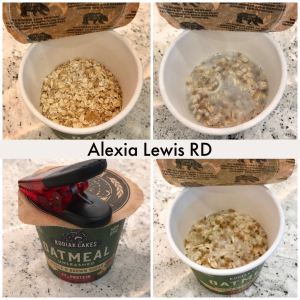
I used my electric tea kettle to heat water, added it to the Kodiak Cup, and let it sit covered for the recommended two minutes. You can also add water and microwave. It doesn’t get much easier – or quick – than that.

Straight up. I was super concerned about the very small portion, especially since it has about half of the calories of my typical breakfast. But this little cup of oatmeal kept me full until lunchtime. Totally surprised!

This has 230 calories, 14 grams protein, 38 grams carbs, and 3 grams of fat. It has 4 grams of fiber, 12 grams of added sugar, and 200 milligrams of sodium.

I wouldn’t expect a lot of protein from oatmeal and that tracks here. I often recommend adding protein when oats are for breakfast. This can be done with protein powders, as in this product where protein was increased with pea and milk proteins, or with whole foods, such as an egg/egg whites. PS: I have a great pina colada overnight oats recipe.

This also may seem like a lot of carbs to some; but it is oatmeal, soooooo… and 38 grams if completely appropriate for many people. When it comes to grains, always look for a product that has a whole grain as the first ingredient – which this one does.

I’m not one who is afraid of long complicated words on an ingredients list but this one keeps it very simple and I’m sure many “clean eaters” would give this product a thumbs up.

Btw, my definition of clean eating is not eating food that’s fallen on the floor. Just sayin’.

Pros:

  • First ingredient is 100% whole grain oats.
  • Very low in saturated fat (0.5 grams).
  • Super convenient.
  • Good flavor and good consistency, and no aftertaste.
  • Staying power.

Cons:

  • Low in protein (for a meal).
  • High in added sugars.

American Heart Association recommendations for added sugars is set at 25 grams for women and 36 grams for men. At 12 grams, this is 1/2 to 1/3 of the total recommended. I like to find ways to make convenient food fit if it can help people eat in a way they want to. So, this absolutely can fit into a heart-healthy diet as long as you are mindful about added sugars for the rest of the day.

And, personal preference here, I’m not a big fan of pea protein due to a not-too-fun experience involving veganism and pea protein in oatmeal. I’m sure it’s come a long way since then.

Overall thoughts?

Two Forks up! This is delicious, filling, and is heart healthy.

Next, I tried the Cinnamon Maple Flapjack Kodiak Cup.

This serving size made my eyes much happier as it filled up more of the container. But it wasn’t as filling as the oats. Go figure.

It smells amazing and has a good crumb; but I do recommend a spoon instead of a fork as it ends up getting very crumbly as it is eaten. Per my husband, this tastes like smushed up pancakes (count me in!) and it is true the finished product was a little bit dense.

This has 260 calories, 19 grams protein, 39 grams carbs, and 7 grams of fat. It has 3 grams of fiber, 14 grams of added sugar, and 340 milligrams of sodium.

This one is also lower in calories than my typical breakfast, so I added some butter, which made it taste even better. If you’re looking to add calories, you could also add some syrup (but it totally isn’t needed) or top it with an egg.

As with the oats, this is a bit low in protein and high in carbs and this is to be expected from pancakes. Same advice applies here as did with the oats – more protein!

The ingredients list is longer, and the first two ingredients are whole grains. This would likely pass the “clean eating” test for some.

The pancakes do have eight times as much saturated fat as the oatmeal, coming in at 4 grams. The saturated fat here comes from the palm, palm kernel, and palm oil. My guess is that since unsaturated fats are less stable and go rancid more quickly, they balanced out the need for shelf stability with the desire for a nice nutrition profile and landed on saturated oils instead of others.

American Heart Association recommendations for saturated fats puts the maximum intake at 6% of total calories. Using the reference standard on nutrition facts panels of 2,000 calories a day, that comes to 13 grams a day. That puts this product at 1/3 of your saturated fat for the day.

Just like added sugars (btw this one has more than the oats), this can fit into a heart-healthy diet as long as you are mindful about how you eat the rest of the day. I would encourage plant-based eating to keep saturated fats low. Get my suggestions for three plant-based whole foods to boost the protein in a plant-based diet.  

Pros:

  • First two ingredients are whole grains.
  • Tastes good and has a nice crumb like a pancake should
  • Super convenient.

Cons:

  • Low in protein.
  • Higher in saturated fat and added sugars that I would like.
  • Didn’t hold me as long.

Overall thoughts?

One Fork up! Just one because it didn’t hold me until lunchtime.

I will also say a big pro for both of these is the portability, which means you can eat them when you first get up or bring them into the office or when you’re out on the go.

Yes, this dietitian Kodiak Cups are good for a quick breakfast! Just add an egg, okay?

Give these a try and let me know what you think!

Curious about balanced breakfasts that will work for you? Want some help with finding recipes or strategies to meal prep your breakfast? (PS – you don’t have to a whole week at a time!).

Let’s do it!

Click right here to get to Alexia’s provider page with Nourish, choose a date/time and start the scheduling process.

One of the first screens when you start will let you know if your health insurance is accepted by Nourish. Before you finish the booking process, you will enter your insurance information into the Insurance Calculator to get an estimate of the expected costs. If you don’t like the number, just cancel out and you won’t be scheduled.

And, of course, you can reply to this email if you have questions or want to be hooked up with another amazing RD at Nourish. I’m happy to help! 

Graphic with image of Alexia.

Hi there! I’m Alexia and I believe in science, humor, and delicious food.

Heart health is my jam. I love to write and speak publicly on this topic and all aspects of living a heart-healthy lifestyle.

I believe you shouldn’t sacrifice your mental health in pursuit of better physical health. You deserve to be both happy and healthy. You don’t have to choose just one.

I am a master’s level nutritionist who is also a registered and licensed dietitian in multiple states in the USA, a certified personal trainer, and certified health coach. I also invested in becoming a culinary nutritionist and weight management specialist. In other words, I got you.

no meats

Planning for Vegan Eating

I’ve been planning meals for my Vegan Experiment. As I mentioned in my last post, there are certain nutrients that vegetarians (and vegans) tend to eat in lower than recommended amounts.This may lead you to ask two questions. One – What exactly are nutrients? Two – Who makes these recommendations?

Nutrients are the nutritional substances we get from foods: carbohydrates, proteins, fats, vitamins and minerals, and even phytochemicals (or plant nutrients like resveratrol in wine/grapes).

The recommendations are made by the Food and Nutrition Board of the Institute of Medicine of the National Academy of Sciences. They are based on years of population studies and research. They have drafted the DRIs (dietary reference intakes), which include the RDAs (recommended daily amounts), AI (adequate intake) and TULs (tolerable upper limits) for specific nutrients.

In plain language, these all tell the general population (or health professionals who translate it!) how much of the nutrient meets the needs of the 98% of the healthy population over age 2 in order to prevent deficiencies. For certain nutrients, there is also an upper level to prevent toxicity. Personally, preventing deficiency and toxicity sound good to me. Remember though, if you are under two (and you’re reading this, I’m impressed!) or have any health condition, these recommendations may not apply to you. There’s some good information on the USDA’s Food and Nutrition Information Center. If you want to know the recommendations specifically for you, there’s an interactive tool; but I wouldn’t get too caught up in all those numbers if I were you!

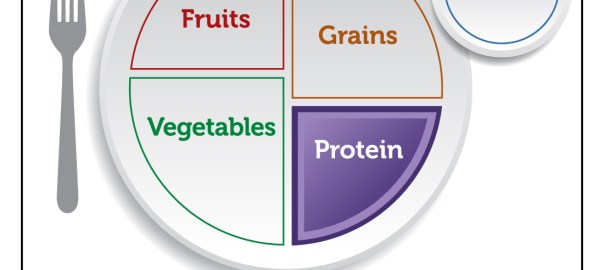
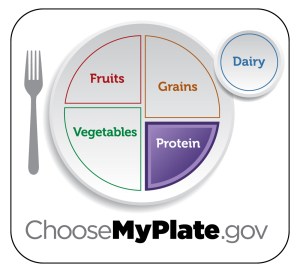
Any person who cuts out entire food groups is going to be lacking in certain nutrients. There is a reason there are food groups as the basis of the ChooseMyPlate method of eating. It’s because different food groups provide different nutrients and our bodies function best when we eat all of them. Whether it’s grains (breads and other carbohydrate foods), proteins (meats), fruits and vegetables, or dairy (milk, cheese, and yogurt), cutting out a food group cuts out specific nutrients. Those who cut out meats are taking away a large chunk of the foods in the protein group and most of the sources of complete proteins (proteins that have all the amino acids our body needs and cannot make on its own).

Image from ChooseMyPlate.gov

Finally, on to my point!

For optimal health, I recommend that over the course of the day, vegetarians include foods that, when put together, make complete proteins and plan to eat enough foods that provide iron, calcium, zinc, omega-3’s, and vitamins D and B12. Iodine may also be a concern if iodized salt is not used in cooking or flavoring foods.

How to do this?

Complete proteins: Examples of foods that make complete proteins include: tofu and rice, corn and beans, rice and beans/peas, peanut butter and whole wheat bread, granola and soy milk, or a green salad with garbanzo beans and sunflower seeds. The idea is to match grains/seeds/nuts with beans/peas or to match vegetables with  both grains/seeds/nuts and beans/peas. Simple enough! And to make it even easier, soy and quinoa are already complete proteins.

For the other nutrients listed, here are some examples of where a vegan can find these nutrients to include in their meals.

Iron: Beans (pair with vitamin C foods and avoid pairing with calcium foods to absorb more iron!) Examples might be: beans and rice with lime (vitamin C), cilantro, and salsa or a “loaded bowl” (see image below) with quinoa and black beans and vegetables including tomatoes (vitamin C).

Calcium: Fortified imitation milks (almond milk, soy milk, etc.) or dark leafy green vegetables (althought we don’t absorb as much from the vegetables!).

Zinc: Beans, peas, and nuts (I’m personally a huge almond fan and usually have a handful a day as a snack).

Omega-3’s: Walnuts and ground flaxseed. Add ground flaxseed to to smoothies, sauces, or sprinkle on salads – just watch out because it gets gummy when mixed with liquids, which is why it’s a great vegan egg replacement in baking.

Vitamin D: Sunshine! Fortified foods (milk imitators).

Vitamin B12: Fortified foods.

Iodine: Iodized table salt.

Quinoa Loaded Bowl
Quinoa Loaded Bowl

I also recommend that someone who is following a vegetarian or vegan lifestyle, ask their physician to pull a “vitamin panel” to check their levels of vitamin D and B12 (and others) every now and again just to make sure that deficiencies are being kept at bay!

I hope you found this helpful. If you have other ideas or ways to incorporate these important nutrients, please post your thoughts, meal ideas, and recipes!

Images from: ChooseMyPlate.gov, Microsoft Free Images, and personal photographs.

ChooseMyPlate.gov Protein Food Group

Macronutrients – The Beef on Protein

ChooseMyPlate.gov Protein Food Group

Updated 12/03/2024. One of the jobs I have held was as a wellness dietitian for a university. I loved that job. I was working on updating the nutrition info on the website and thought I’d share some of the things I’ve been updating. Enjoy!

I’m working on the macronutrients (aka macros). First up, the *beef* on protein (because I just can’t resist bad wordplay!)

Protein

Sources:

Protein comes from animal sources such as meat, dairy, and eggs and from plant sources such as beans, nuts, seeds, and even some grains.

Even your broccoli has protein, but you would have to eat nearly 3 cups to equal the protein in 1 ounce of meat. I’m stuffed just thinking about it. (And, oh, the gas!).

It is possible to consume enough protein for good health on a vegetarian or vegan diet if you plan your food choices well.

Functions:

Protein is an essential nutrient meaning that we must get it from our food. Proteins break down in our bodies to amino acids. Our bodies cannot make all the amino acids it needs to function and approximately 25% of amino acids are lost to other uses every day, which is why protein is an important part of the daily diet.

Protein has many functions including:

– Provides body structure by building and maintaining muscle, bone, and other body tissue

– Allows for movement (40% of body protein is muscle tissue)

– Regulates gene expression

– Integral part of enzymes, hormones, and neurotransmitters

– Immunity through antibodies

– Transports of vitamins, minerals, oxygen and other substances through the body

– Regulates fluid and electrolyte balance

– Maintains acid-base balance

– Necessary for blood clotting

– Used as fuel when other sources of energy are not available. (Cue the nightmare metabolism images from grad school).

– Protein is satiating – it helps us to feel full and satisfied

Recommendations:

For a generally healthy adult, the recommended daily allowance (RDA) range for protein intake is set between 10% and 35% of daily calories. A person consuming a 2,000 calorie diet would have a range of 200 – 700 calories. Since 1 gram of protein has 4 calories, this is a range of 50- 175 grams of protein per day.

Further, the recommendation for generally healthy adults is 0.8 grams per kilogram (8g/kg) of body weight. To convert pounds to kilograms, divide weight by 2.2. For example, a 150 pound person is (150 divided by 2.2) 68.18 kilograms. This person would consume around 54 grams of protein per day, which is the low end of the above range.

Now, that recommendation is based on nitrogen balance studies from way back when. It is the amount needed to prevent nitrogen deficiency. Those amino acids have a nitrogen molecule on them, which leads to a recommendation.

A recommendation that I think is too low. And I’m not the only one. For example, NASM recommendations go up to 2g/kg based on athletic training needs. And this article in the journal Nutrients questions if it’s time to update the RDA. 

People with specific health conditions or concerns may need a different amount of protein in their daily diet.

And bro, no matter how much protein you eat, you won’t build muscle without some form of resistance training.  

Updated: December 3, 2023. 

Original publication date: September 17, 2012 at http://newmotivationcoaching.blogspot.com.

Reference: Nutrition Concepts and Controveries, 12th ed. by Sizer and Whitney, 2012. ISBN-13: 978-1-1133-62818-7.

Image from: http://www.choosemyplate.gov