Category Archives: Healthy Diet

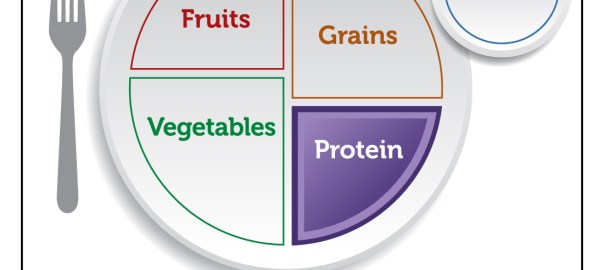
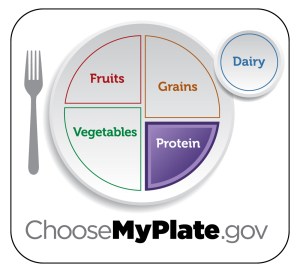
ChooseMyPlate.gov Protein Food Group

Macronutrients – The Beef on Protein

ChooseMyPlate.gov Protein Food Group

Updated 12/03/2024. One of the jobs I have held was as a wellness dietitian for a university. I loved that job. I was working on updating the nutrition info on the website and thought I’d share some of the things I’ve been updating. Enjoy!

I’m working on the macronutrients (aka macros). First up, the *beef* on protein (because I just can’t resist bad wordplay!)

Protein

Sources:

Protein comes from animal sources such as meat, dairy, and eggs and from plant sources such as beans, nuts, seeds, and even some grains.

Even your broccoli has protein, but you would have to eat nearly 3 cups to equal the protein in 1 ounce of meat. I’m stuffed just thinking about it. (And, oh, the gas!).

It is possible to consume enough protein for good health on a vegetarian or vegan diet if you plan your food choices well.

Functions:

Protein is an essential nutrient meaning that we must get it from our food. Proteins break down in our bodies to amino acids. Our bodies cannot make all the amino acids it needs to function and approximately 25% of amino acids are lost to other uses every day, which is why protein is an important part of the daily diet.

Protein has many functions including:

– Provides body structure by building and maintaining muscle, bone, and other body tissue

– Allows for movement (40% of body protein is muscle tissue)

– Regulates gene expression

– Integral part of enzymes, hormones, and neurotransmitters

– Immunity through antibodies

– Transports of vitamins, minerals, oxygen and other substances through the body

– Regulates fluid and electrolyte balance

– Maintains acid-base balance

– Necessary for blood clotting

– Used as fuel when other sources of energy are not available. (Cue the nightmare metabolism images from grad school).

– Protein is satiating – it helps us to feel full and satisfied

Recommendations:

For a generally healthy adult, the recommended daily allowance (RDA) range for protein intake is set between 10% and 35% of daily calories. A person consuming a 2,000 calorie diet would have a range of 200 – 700 calories. Since 1 gram of protein has 4 calories, this is a range of 50- 175 grams of protein per day.

Further, the recommendation for generally healthy adults is 0.8 grams per kilogram (8g/kg) of body weight. To convert pounds to kilograms, divide weight by 2.2. For example, a 150 pound person is (150 divided by 2.2) 68.18 kilograms. This person would consume around 54 grams of protein per day, which is the low end of the above range.

Now, that recommendation is based on nitrogen balance studies from way back when. It is the amount needed to prevent nitrogen deficiency. Those amino acids have a nitrogen molecule on them, which leads to a recommendation.

A recommendation that I think is too low. And I’m not the only one. For example, NASM recommendations go up to 2g/kg based on athletic training needs. And this article in the journal Nutrients questions if it’s time to update the RDA. 

People with specific health conditions or concerns may need a different amount of protein in their daily diet.

And bro, no matter how much protein you eat, you won’t build muscle without some form of resistance training.  

Updated: December 3, 2023. 

Original publication date: September 17, 2012 at http://newmotivationcoaching.blogspot.com.

Reference: Nutrition Concepts and Controveries, 12th ed. by Sizer and Whitney, 2012. ISBN-13: 978-1-1133-62818-7.

Image from: http://www.choosemyplate.gov

Quinoa Loaded Bowl

Thoughts on Dieting and a Quinoa Recipe

One Pea on a Fork
One Pea on a Fork

I believe we should all eat when we are hungry.

I interned and now work part-time with a private practice that specializes in eating disorders. We all have that voice inside our heads that sends us positive and negative messages about our bodies, our food intake, our ability to control these things. Eating disorders, like any psychological illnesses, are normal thought patterns taken to the extreme. Those with eating disorders battle with that voice in their heads and that voice begins to win.

I have also worked briefly at a bariatric surgeon’s office who specialized in lapband surgery. I had ethical issues with his post-surgery diet so it wasn’t a good fit. In the time I worked there, however, I saw another form of disordered eating in both the pre- and post-surgery patients.

 
Both of these populations had lost touch with or flat out ignored their body’s hunger and satiety cues and I, in no way, endorse this.

If you are hungry, eat. If you are not hungry, don’t eat.

Yes, that is simplistic and much easier said than done; but that’s the premise for a healthy relationship with food.

I  also do not believe in “dieting” per se. The research shows time and time again that dieting does not work. No matter the method (low carb, low fat, high protein, shakes, meal plans, or simple calorie restriction), the weight comes off (duh), the dieting stops, and the weight comes back on. The diet mentality is not effective.

One can go “off” a diet and therein lies the problem.

 
I’ll step off my soapbox now to share a recipe and picture. I’m working on my food photography skills. Here is a version of a recipe I found in Clean Eating Magazine.

Quinoa Bowl: 1/2 cup quinoa, 1/2 cup rinsed black beans, 7 grape tomatoes halved, chopped red onion to taste, 1/4 avocado chopped, red wine vinegar to taste, lime juice, and cilantro. YUM!

Nutrition Info: 335 kcal, 56g CHO, 9 g fat, 13g protein.

Quinoa Loaded Bowl
Quinoa Loaded Bowl

Original publication date July 29, 2012 at http://newmotivationcoaching.blogspot.com.Images from personal photographs and http://office.microsoft.com/en-us/images

Cheeseburger

Fast Food: Cheeseburger Vs. Salad

Cheeseburger
Cheeseburger

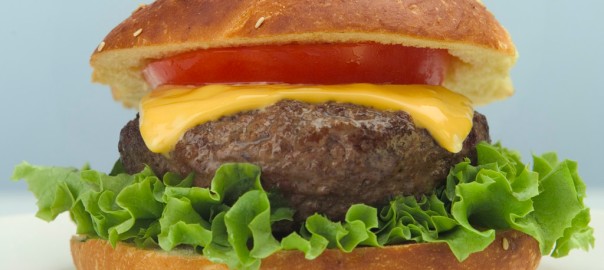
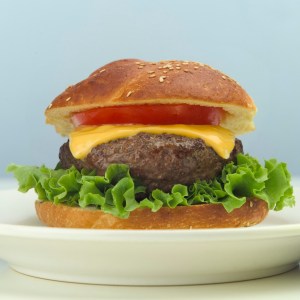
I admit it. I watched part of The Doctors television show the other day. I caught a segment on how Americans eat and one of the doctors was working at a fast food drive-through window attempting to get customers to choose a healthy meal over the unhealthy meal they were ordering. It did not go that well for him. Only one person on the segment out of four changed their meal after he told them how unhealthy their selection was in terms of calories, fat, and sodium levels.

What stuck with me was that one woman said that a cheeseburger was kind of like a salad. Her point was that salads have vegetables and cheeseburgers have vegetables. Therefore, they are similar. The audience laughed good-heartedly and I groaned and laughed.

Then I got to thinking… Is a fast-food salad really that much better of an option than a fast-food cheeseburger? I turned to the restaurant’s Web sites to make some comparisons.


Let me start by saying that there are other choices than what I have compared below. If the Wendy’s Garden Side Salad with no croutons and low-fat dressing (70 calories, 0 g fat, 190 mg sodium) or the ¾-pound Dave’s Hot ‘N Juicy Triple Burger (1060 calories, 67 g fat, 2020 mg sodium) are your choices then yes, the salad is much healthier. However, I have tried to pick middle of the road choices that I think people would make in these examples.

First, I compared a regular McDonald’s Cheeseburger to their Premium Southwest Salad with Grilled Chicken (with and without the creamy southwest dressing). As the table below shows, the salad with dressing, which is how most people would order it, has 90 more calories, 2 more grams of fat, and 240 more milligrams of sodium than the cheeseburger. If you can go without the dressing for the salad, you are only saving 10 calories, 4 grams of fat, and 100 milligrams of sodium versus the cheeseburger. That is not a huge difference.

Food Calories Fat Sodium
Cheeseburger 300 12 750
Salad 290 8 650
Salad with dressing 390 14 990

Next, I moved to Wendy’s to compare the Jr. Cheeseburger Deluxe to their Apple Pecan Chicken Salad (with and without the pomegranate vinaigrette dressing). Again, the cheeseburger is the healthiest option in terms of calories, fat, and sodium. The salad with dressing has 210 more calories, 8 more grams of fat, and nearly 700 more milligrams of sodium. If you can go without the dressing, you will still have 100 more calories and 3 more grams of fat than the cheeseburger; but you will save almost 300 milligrams of sodium.

Food Calories Fat Sodium
Jr. Cheeseburger Deluxe 350 19 850
Salad 450 21 580
Salad with dressing 560 27 1540

I could continue; but I think the pattern is clear. The salad is not always the healthier choice at a fast food restaurant. We are still operating under the assumption that the salad is always healthier, or at least that audience and I were, and that is just not true! Now, there is a lot to consider when deciding which choice is healthier, such as the types of fats, cholesterol, and other nutrients such as the vitamins and minerals. But if I included all of that, you would have stopped reading by now…

My advice?

1. – Avoid the fast food places altogether. You can make a yummy salad or a healthier cheeseburger at home using a small portion of lean grass-fed beef, low-fat cheese, and lots of vegetables.

2. – If you cannot avoid the fast food restaurant, ask for the nutrition information before you order (many have handouts) or look at their Web site before you go. Most importantly, make your choice before you order at the register (where you can see the pictures and smell the food).

3. – Realize that what you think may be an unhealthy choice, may not be the unhealthiest choice on the menu. Sometimes, the cheeseburger may be better than the salad.


As always – enjoy your food!


Original publication date: December 10, 2011 at http://newmotivationcoaching.blogspot.com

Image from: http://office.microsoft.com/en-us/images

How To Be a Healthy Snacker

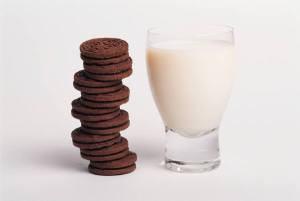
A large snack of cookies and milk
 

I am a snacker.

I typically do not leave the house without two things: a snack and my water bottle. Snacking used to have a bad reputation. The standard American diet consisted of three square meals a day, not snacks. Snacking was linked in people’s minds with overeating and weight gain. It was a bad thing to do.

Oh how things have changed. Snacking is no longer the exception, it is now the norm and it may help people to lose or maintain their weight.

I got to thinking about this because I came across an article entitled “Frequent Snacking Linked to Healthier Diet” (1). This article reports on a five-year study of over 11,000 people aged 20 and over which found that snackers consume more healthy foods such as whole grains, fruits, and milk products and less high-sodium foods. Well, it sounds like snackers do have healthier diets! As one reads on, the study also reported that snackers also consumed more sugar, solid fats, and alcohol along with fewer vegetables. Hmmm. Finally, the article reports on another study in a younger population (teenagers) that found that teen snackers also consumed more fruit and dairy products.
Another study on snacking from the November 2011 issue of the Journal of the American Dietetic Association (2) looked at women in the 30-60 age range and grouped them by BMI. The study found that normal weight women had the highest number of snacks (2.3 snacks/day), followed by those who had lost weight and were maintaining that loss (1.9 snacks/day), followed by those who were overweight (1.5 snacks/day).

This all seems to point to the fact that snacking may actually be beneficial in terms of BMI as long as we choose healthy snacks.

But is there a downside?

Let’s say that we eat a snack that includes carbohydrate-containing foods, such as fruit, milk, or grains. For most people, it takes 1 to 2 hours for all consumed food to move through the stomach and reach the small intestine where nutrients are absorbed. Absorption of glucose (blood sugar) from the carbohydrate-containing foods triggers the hormone insulin, which is needed move glucose into our cells for use.

If we graze all day or have large snacks of carbohydrate-containing foods in between meals, we are asking our bodies to continue to release insulin and our insulin levels do not have time to go back down in between meals. On the flip side, if we eat three big meals a day, we see a big spike of glucose after that big meal and we may overload insulin’s ability to be effective. Both overloading our insulin with high levels of glucose at one time and having constantly elevated insulin levels can lead to insulin resistance and potentially to type 2 diabetes. Insulin also promotes energy storage – in other words, it makes our bodies store fat.

What’s a snacker to do?

It sounds like moderation and balance are the keys. I think we have heard that somewhere before. Here are some guidelines to help you keep your snacking healthy.

1. – Respect your body and eat when you are physically hungry. If your stomach is grumbling and you have been drinking your water, then it is time to eat something.

2. – Pick your snacks wisely. Focus on healthy foods such as fruits and vegetables, low-fat dairy, whole grains, and lean proteins. If you decide to have a “fun food” for a snack, then pay attention to the next point!

3. – Watch your portion size. A snack should not be the same as a meal in size or calories.

As always – enjoy your food!

Original publication date: December 4, 2011 at http://newmotivationcoaching.blogspot.com.

References

1. Frequent Snacking Linked to Healthier Diet. Today Health Web site. Available at: http://today.msnbc.msn.com/id/45307103/ns/today-today_health/t/frequent-snacking-linked-healthier-diet/

2. Bachman et al. Eating Frequency is Higher in Weight Loss Maintainers and Normal-Weight Individuals than in Overweight Individuals. Available at: http://www.adajournal.org/article/S0002-8223(11)01376-9/abstract

3. Image from http://office.microsoft.com/en-us/images.

A Healthy Plate from ChooseMyPlate.gov

Fill Your Plate with Color for National Nutrition Month

A Healthy Plate from ChooseMyPlate.gov

March is National Nutrition Month and what better way to celebrate than with a plateful of colors?

The Academy of Nurtition and Dietetics’s (formerly theAmerican Dietetic Association) theme for the 2011 National Nutrition Month is “eat right with color” to emphasize the importance of choosing a variety of foods to promote optimal health. Since different colors of food contain different types of nutrients, incorporating a variety colors provides a wide range of nutrients that our bodies need to function at their best.

Other guidelines for healthy eating include:

Enjoy 2-3 servings of fruit every day. These provide many vitamins and minerals in the form of phytochemicals along with fiber. Eat the skins when you can! Fresh fruits make a great snack food, frozen fruits add thickness to homemade smoothies, and fruits can be pureed to use in place of fats in baking.

Sneak in 5-7 servings of vegetables every day. It’s important to eat vegetables from all five categories – dark green, orange/deep yellow, starchy, legumes (peas and beans), and others such as onions, mushrooms, tomatoes, okra, green beans, and cucumbers. Vegetables provide many nutrients and fiber. Pile vegetables on sandwiches, add to sauces and frozen entrees, and puree to add to soups. Just be sure to not add on calorie-laden sauces!

Aim for making half of your grain selections whole. Whole grains provide fiber and carbohydrates necessary for energy and brain power. Replace processed, refined, white products with whole grain products when choosing rice, pasta, and bread. Not all brands taste the same, so don’t give up if you don’t like the first one you try.

Lean meats and dairy are good choices for protein. Proteins are the building blocks of our bodies; they are the basis for our enzymes and hormones and build muscle that enables us to move. Proteins are typically high in fat. The healthiest options are to choose lean cuts of meat, to remove visible fat and grease when cooking, and to look for low-fat or non-fat dairy products.

Last but not least are the fats. Fats are a major component of our cell membranes, they provide padding for our internal organs, and they help with absorption of the fat-soluble vitamins. Just be sure to choose the healthier mono- and poly-unsaturated fats found in avocado, almonds, walnuts, fatty fish, and canola, safflower, or olive oils.

Fill your plate with a variety of colors while following the above guidelines and you are taking a big step towards good health.

By the way… March 9th is Registered Dietitian Day. Have you hugged your RD lately?

Original publication date: March 2, 2011 at http://newmotivationcoaching.blogspot.com.

Image from: Choosemyplate.gov.