Tag Archives: vegetarian

A beautiful vegan salad

Vegan Experiment – Day Three: Taking It to the Office

This was the first day that I was following my vegan diet at work. This added just a little more of a challenge since I had to prepare my lunch and snacks in the morning. I also forgot to photograph my meals while at work, even though I did remember to bring my camera.

Breakfast: Same as previous two days and I’m getting bored with it – Kashi Cinnamon Harvest cereal with almond milk, coffee with almond milk and splenda.

Post-workout Snack: Smoothie with banana, pineapple, and ice/water.

Lunch: Peanut butter and banana sandwich on a sandwich thin.

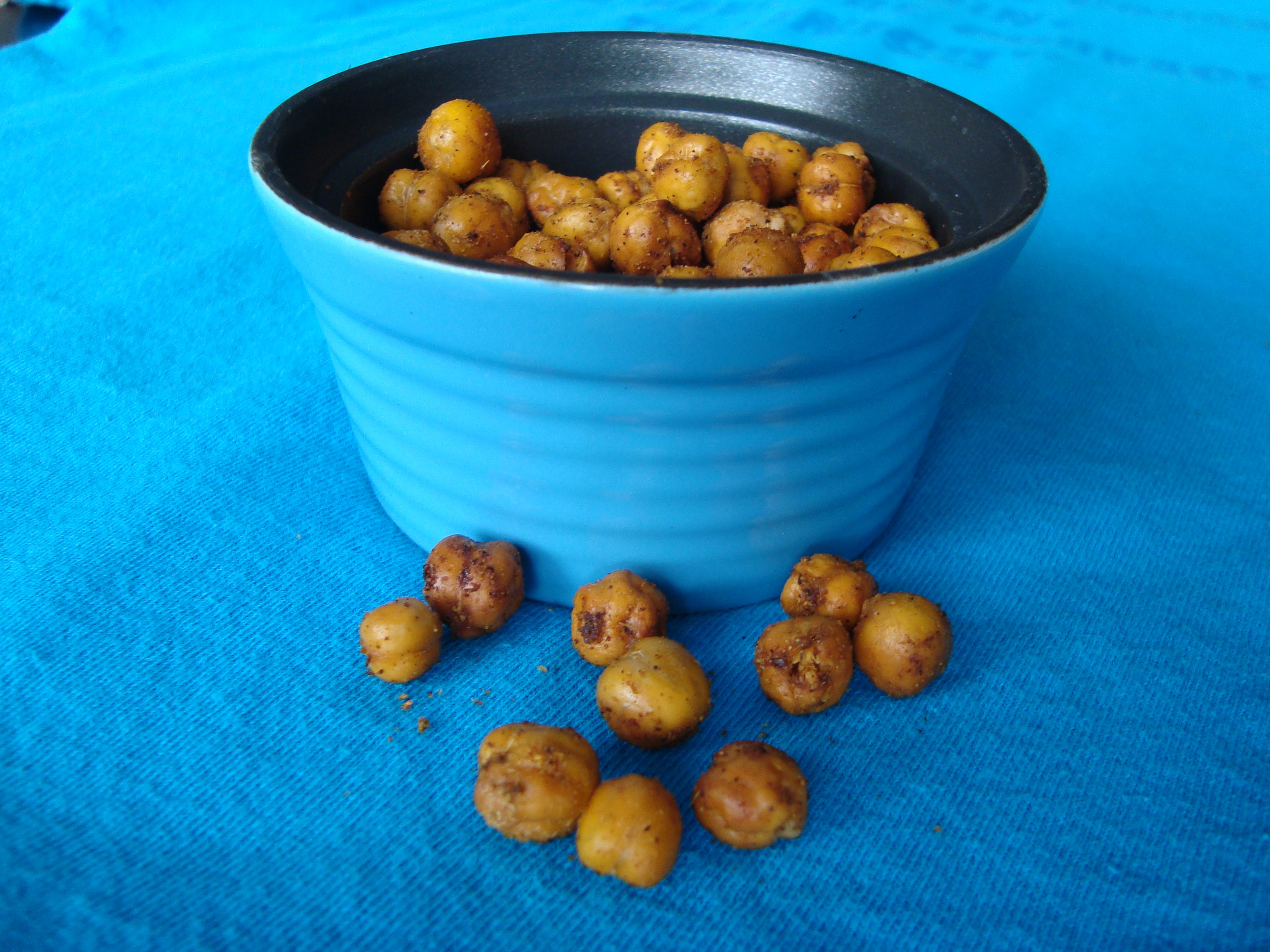
Snack: Snack: Roasted spicy chickpeas.

Snack: Vegetables from veggie tray (grape tomatoes, baby carrots, snap peas, broccoli).

Dinner: Huge salad with romaine lettuce, broccoli, celery, carrots, mushrooms, snap peas, grape tomatoes, avocado, raisins, roasted chickpeas, sliced almonds, and balsamic vinegar served with triscuits.

A beautiful vegan salad

Overall, I have been feeling fine; but I was a little low on energy on this afternoon. I came home and found myself wishing I didn’t have a meal to prepare for dinner, especially a salad – so much chopping! I also am still ridiculously gassy! I ran this morning and was happy to find that I am still properly fueled to enjoy my morning workouts.

My biggest struggle so far has been my ability to meet what I’ve deemed my nutrient goals for some nutrients.

Nutrition information: 1430 calories, 249 grams carbohydrates, 48 grams fiber, 37 grams fat, 4 grams saturated fat, 0 trans fat, 0 cholesterol, 51 grams protein, and 670 milligrams sodium. For the daily values, my numbers were 67% calcium, 65 iron, 33% vitamin D, 12% zinc, and 0 vitamin B12.

Overall, the quality of my diet is good in many ways following a vegan diet; but there are some concerns. I am concerned with my low protein intake (I am for about 55 grams/day minimum) and I haven’t been able to find soy protein in the conventional grocery stores. I went to a supplement store and purchased a plant protein powder. It was expensive and I’m realizing that it may not be possible to easily stick with non-specialty foods and get enough protein as a vegan. Today I was closest to my minimum protein goal (4 grams under). While it sounds weird to say, I think I may not be getting enough sodium either (ranging from 670-890 mg/day); but from what I can find there is no set minimum requirement. The previous two days, it has been difficult to get enough calories; but today I was right where I like to be on workout days!

I’m learning how to better work with this type of diet and my goals.

This has gotten me thinking… My goal was to do this without any specialty products; but perhaps vegans do need to use the specialty products (protein powder, aminos, TVP, etc.) to meet their body’s needs. At least, it would make it much easier to meet the body’s needs. While my food costs for this week were low (before the protein powder purchase); I think if I followed this as a permanent lifestyle, my food budget might increase to account for these products.

As a final thought, I want to hit on one of the miconceptions about veganism. I’m a talker; I talk to anyone and everyone. I stopped by the dollar store to pick up more spices and pretzels and was chatting with the cashier and mentioned that I was doing this vegan challenge. People have such misguided notions about food and nutrition… he asked me how my immunity was, since I wasn’t eating meat, wasn’t I more likely to get sick? Ummm, no. I have learned not to go to deep into nutrition unless people ask, so I just told him I was feeling fine. 🙂 And in case you are wondering, no, a vegan diet does not make anyone who is generally healthy already more likely to get sick.

Roasted Spicy Chickpeas

Vegan Experiment – Day Two: Ranch Dressing!

Today, I realized that there is more to think about when following a vegan lifestyle than just meat and dairy foods. I have to admit to an unintentional slip today – ranch dressing! But I’ll get to that as I go through my meals in pictures.

Breakfast: Kashi Cinnamon Harvest cereal with almond milk, coffee with almond milk and splenda.

An easy vegan breakfast

Snack: Roasted spicy chickpeas.

Roasted Spicy Chickpeas

This was a time-consuming recipe; but I’m working on stretching my food dollars so it was worth the effort. I started with a bag of dried garbanzo beans (chickpeas) and soaked and cooked them one day. The next day, I tossed the half of the cooked beans with a tablespoon of canola oil, a pinch of salt, and a fair amount of paprika, cumin, and a touch of cayenne pepper. Then I cooked them in the oven at 400 degrees for about an hour on a baking sheet lined with tin foil and sprayed with canola oil cooking spray. Cook the beans in one layer because the goal is to dry them out until they are a crispy crunchy treat. If you don’t cook them long enough, they will be mealy. I know this from my first attempt at this recipe! Per 1/2-cup serving: 135 calories and 7 grams of protein.

Post-workout snack: granny smith apple courtesy of my gym’s member appreciation day offerings.

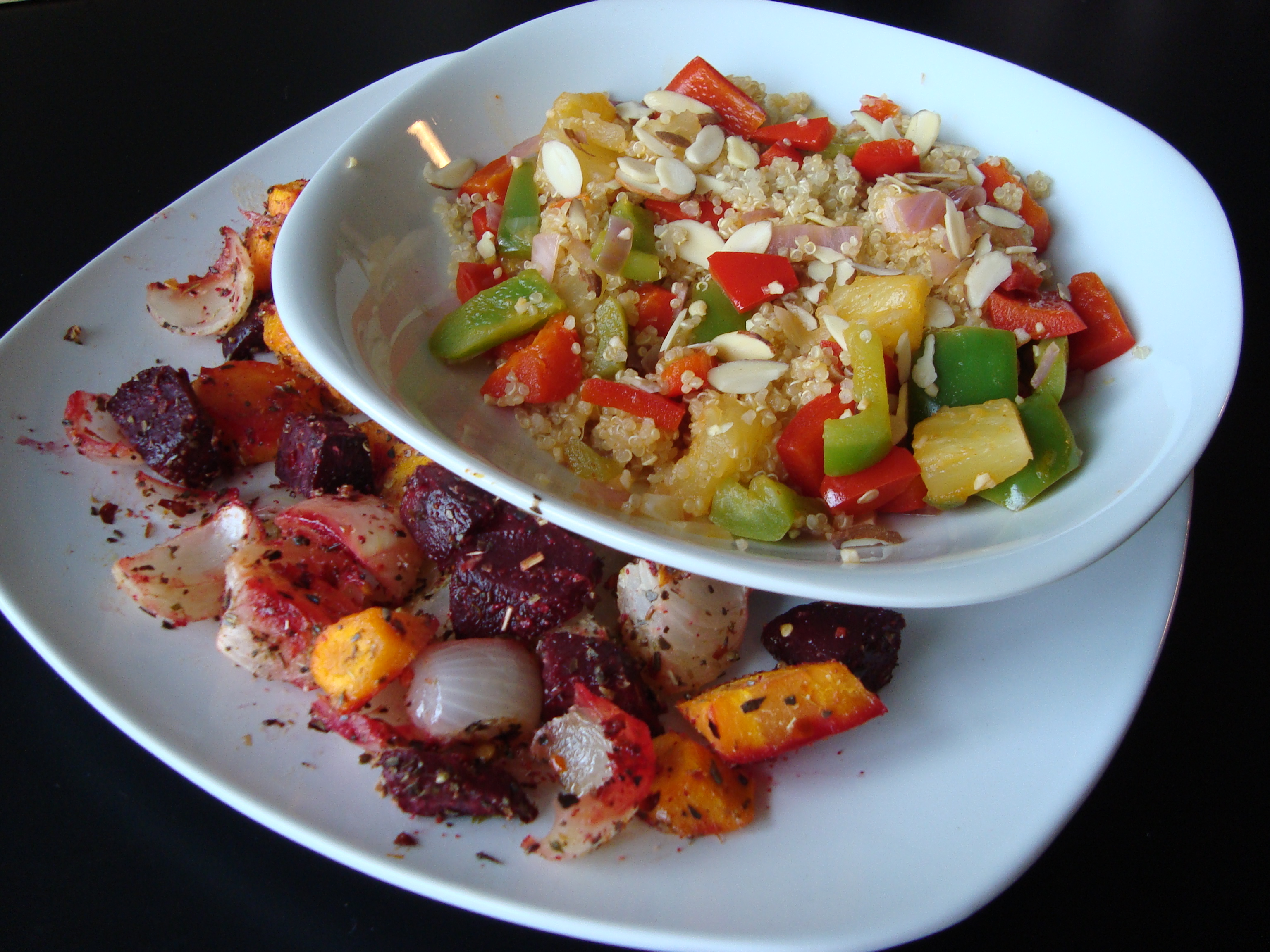
Lunch: Last night’s dinner leftovers: Quinoa with red/green bell peppers, red onions, garlic, pineapple, sliced almonds, and a dash of sriracha sauce served with a side of roasted vegetables (beets, carrots, onions) seasoned with canola oil, garlic powder, oregano, and red pepper flakes.

Quinoa bowl and roasted garden vegetables

Snack: Sweet Peanut Butter Smoothie!

I typically make my smoothies with either milk, yogurt, or almond milk depending on what I have on hand and how much protein and calories I would like to have. This time, I used water and ice instead of a milk or yogurt. I blended banana, pineapple chunks, and peanut butter with water and ice (adjusting to fill my cup and be the consistency and I wanted).

Snack: Celery and snap peas.

This is where I inadvertenly fell off the vegan wagon. I had an evening meeting to attend. The good news is that I brought the snacks and so could bring vegan alternatives. One thing I brought was a veggie tray with ranch dressing. I grabbed a celery stick and dipped it in the ranch dressing and as I was chewing, it hit me that the dressing was probably not vegan! I checked and I was correct – buttermilk is the second ingredient. This made me realize that there are more foods to limit that I realized. I wanted the convenience of the pre-made veggie tray… If only the grocery stores packaged veggie trays with hummus instead of dressing.

Dinner: Portobella mushroom sandwiches (mushroom, lettuce, avocado, mustard on sandwich thin) and Alexia sweet potato fries with ketchup.

Portobella sandwich with sweet potato fries

When making the Portobello sandwich, I was reaching for the mayonnaise when I realized that was also not vegan! This is more difficult than a vegetarian diet.

So, how am I feeling? Gassy! There is so much fiber in my diet now!

Otherwise, I’m feeling good and have energy for working out. I’m getting plenty of carbohydrates and calories; but I am still lacking in protein. I love how incredibly low my saturated fat, cholesterol, and sodium intake is following a vegan diet. Even with my one unintentional slip, I’m still going strong and feeling good about sticking with this challenge!

Nutrition information: 1360 calories, 204 grams carbohydrates, 43 grams fiber, 35 grams fat, 3 grams saturated fat, 0 trans fat, 0 cholesterol, 43 grams protein, and 725 milligrams sodium. For the daily values, my numbers were 60% calcium, 63% iron, 25% vitamin D, 8% zinc, and 0 vitamin B12.

All images are personal photographs. You may use them as long as you credit me (my name and a link back to my Web site).

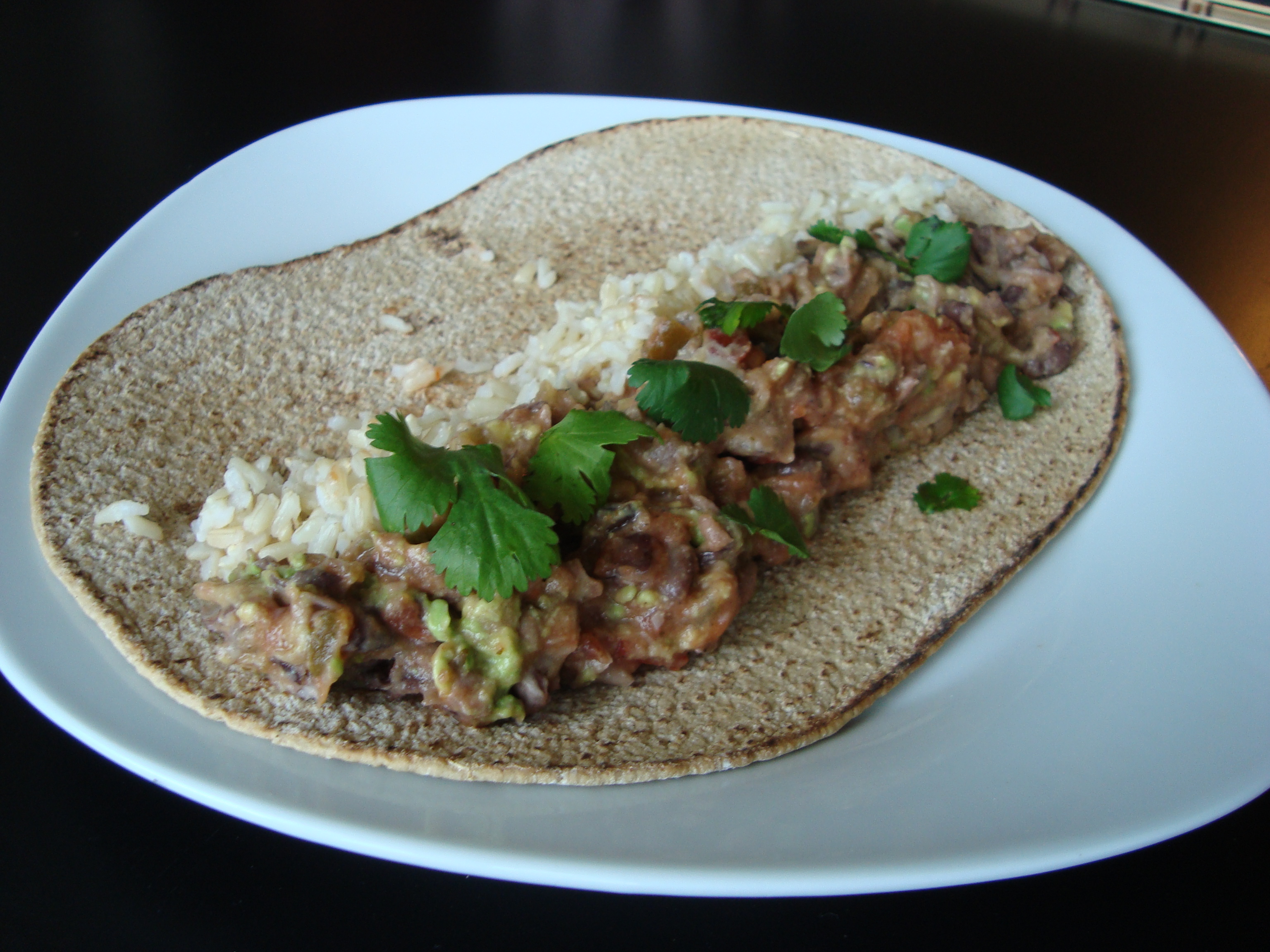
Mash beans, avocado, and salsa together

My First Day Being a Vegan

Yesterday, I started the Vegan Experiment Challenge.

The day started off with a true challenge. The breakfast I had planned was mock scrambled eggs made with tofu. Unfortunately, I didn’t research any recipes before I shopped and I got the wrong consistency of tofu. This threw off my plan for my very first meal! Even with a bumpy start, my husband and I perservered and  were 100% vegan on the first day of the challenge!

I felt tired; but I don’t think that was related to diet (more a poor night’s sleep and a busy day!). I felt like I ate a lot of vegetables and the 51 grams of fiber indicates I did indeed eat many vegetables yesterday. I hit my calorie range; but was low on protein. Meal details and nutrition information follow with all the numbers at the end of this post.

Breakfast: Kashi Cinnamon Harvest cereal with almond milk, coffee with almond milk and splenda

An easy vegan breakfast

Morning snack: almonds and raisins

Easy homemade snack
Easy homemade snack

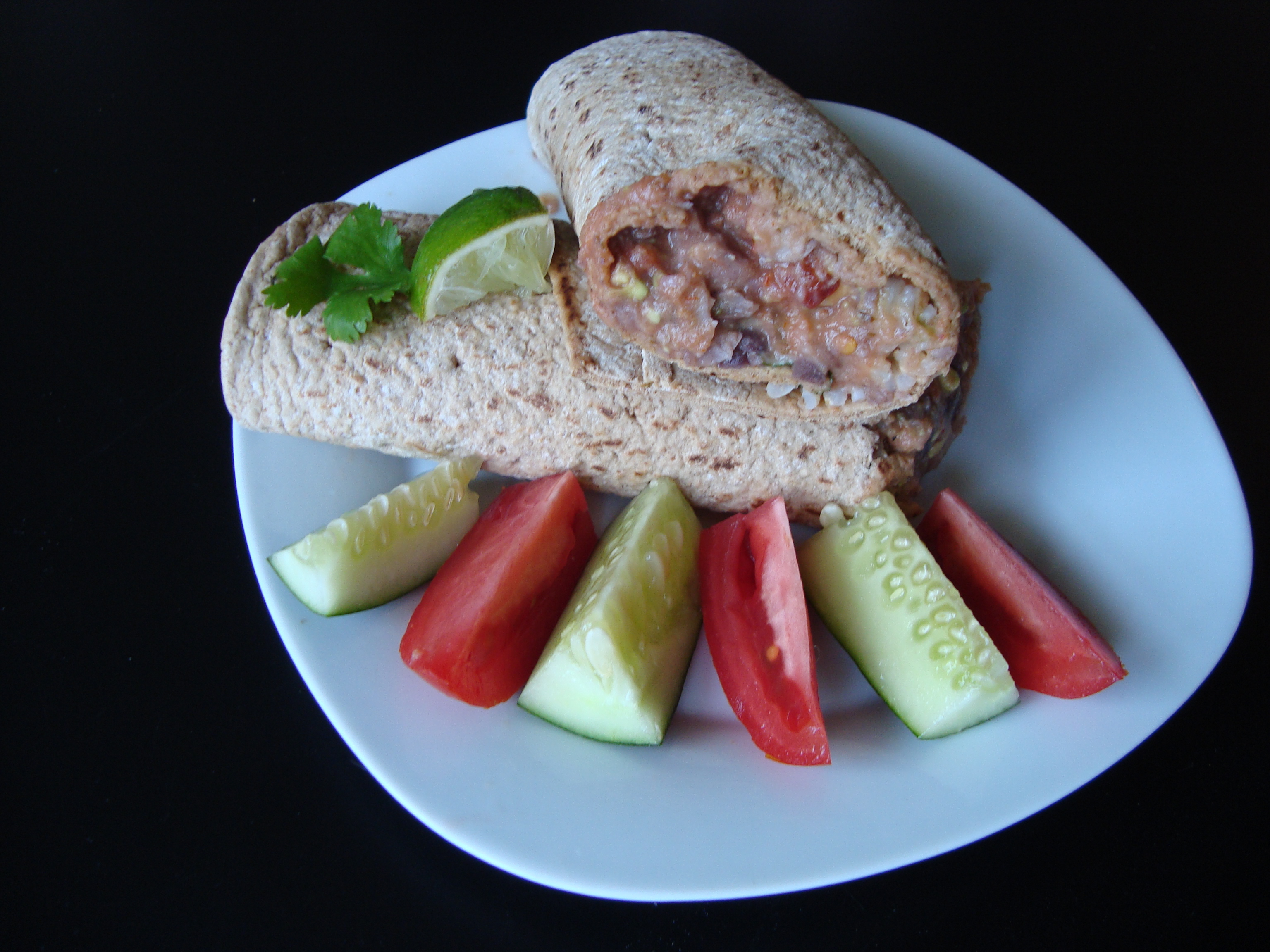
Lunch: bean burrito made from a Flatout wrap, mashed black/pinto beans, salsa, avocado, rice, cilantro,  and lime juice served with tomato and cumumber slices on the side

Mash beans, avocado, and salsa together
Put mixture, rice, cilantro, and lime juice on wrap
Vegan Bean Burrito
Vegan Bean Burrito

Afternoon snack: while I hesitate to call it a snack, I must confess to having 2 beers while relaxing on the beach in the afternoon…

Dinner: Quinoa with red/green bell peppers, red onions, garlic, pineapple, sliced almonds, and a dash of sriracha sauce served with a side of roasted vegetables (beets, carrots, onions) seasoned with canola oil, garlic powder, oregano, and red pepper flakes

Quinoa bowl and roasted garden vegetables

For those of you out there who like the numbers, here you go!

1560 calories, 209 grams carbohydrates, 51 grams fiber, 37 grams fat, 3 grams saturated fat, 0 trans fat, 0 cholesterol, 47 grams protein, and 890 milligrams sodium. For the daily values, my numbers were 73% calcium, 71% iron, 31% vitamin D, 13% zinc, and 0 vitamin B12.

All images are personal photographs. You may use them as long as you credit (my name and a link back to my Web site).

groceries

Vegan Experiment Shopping Day

I have found myself wondering if eating a vegan diet for five days will be more expensive than my typical diet. I believe there are two ways to go with vegetarian/vegan eating. One is to use whole natural foods and shop in the conventional grocery stores and one is to use the vegetarian/vegan-specific marketed foods and shop in the specialty grocery stores.

Now, that I write that, I realize that’s true no matter what type of diet one follows.

Today, I spent $55.33 at a conventional store on groceries for the next six days. I already have some staples on hand, such as quinoa and dried beans, and I just got a nice harvest (curly kale, carrots, onions, and basil) from the university’s organic garden. I am so looking forward to those kale chips I’ll be making tomorrow with the beautiful organic curly kale! I couldn’t find a soy-only protein powder, so I still need to pick that up for about $10-$12. Even if I had to purchase the quinoa, black beans, and garden vegetables and adding the cost of the protein powder, I think ~$75 to feed 2 people for six days is pretty darn good! That’s just $6.25 per person per day, or around $2 meal!

Here’s my list. Don’t worry – the meals and recipes will be coming over the next five days as I live this experiment!

Produce: avocado, bananas, green/red bell peppers, romaine lettuce, tomatoes, cucumber, portobello mushrooms, apples, limes, and canned pineapple

Proteins: silken tofu, sliced and whole almonds, peanut butter, canellini beans

Grains: cereal, rice cakes, whole wheat spaghetti

Misc: soup, salsa

Any ideas what I’ll be making?

no meats

Planning for Vegan Eating

I’ve been planning meals for my Vegan Experiment. As I mentioned in my last post, there are certain nutrients that vegetarians (and vegans) tend to eat in lower than recommended amounts.This may lead you to ask two questions. One – What exactly are nutrients? Two – Who makes these recommendations?

Nutrients are the nutritional substances we get from foods: carbohydrates, proteins, fats, vitamins and minerals, and even phytochemicals (or plant nutrients like resveratrol in wine/grapes).

The recommendations are made by the Food and Nutrition Board of the Institute of Medicine of the National Academy of Sciences. They are based on years of population studies and research. They have drafted the DRIs (dietary reference intakes), which include the RDAs (recommended daily amounts), AI (adequate intake) and TULs (tolerable upper limits) for specific nutrients.

In plain language, these all tell the general population (or health professionals who translate it!) how much of the nutrient meets the needs of the 98% of the healthy population over age 2 in order to prevent deficiencies. For certain nutrients, there is also an upper level to prevent toxicity. Personally, preventing deficiency and toxicity sound good to me. Remember though, if you are under two (and you’re reading this, I’m impressed!) or have any health condition, these recommendations may not apply to you. There’s some good information on the USDA’s Food and Nutrition Information Center. If you want to know the recommendations specifically for you, there’s an interactive tool; but I wouldn’t get too caught up in all those numbers if I were you!

Any person who cuts out entire food groups is going to be lacking in certain nutrients. There is a reason there are food groups as the basis of the ChooseMyPlate method of eating. It’s because different food groups provide different nutrients and our bodies function best when we eat all of them. Whether it’s grains (breads and other carbohydrate foods), proteins (meats), fruits and vegetables, or dairy (milk, cheese, and yogurt), cutting out a food group cuts out specific nutrients. Those who cut out meats are taking away a large chunk of the foods in the protein group and most of the sources of complete proteins (proteins that have all the amino acids our body needs and cannot make on its own).

Image from ChooseMyPlate.gov

Finally, on to my point!

For optimal health, I recommend that over the course of the day, vegetarians include foods that, when put together, make complete proteins and plan to eat enough foods that provide iron, calcium, zinc, omega-3’s, and vitamins D and B12. Iodine may also be a concern if iodized salt is not used in cooking or flavoring foods.

How to do this?

Complete proteins: Examples of foods that make complete proteins include: tofu and rice, corn and beans, rice and beans/peas, peanut butter and whole wheat bread, granola and soy milk, or a green salad with garbanzo beans and sunflower seeds. The idea is to match grains/seeds/nuts with beans/peas or to match vegetables with  both grains/seeds/nuts and beans/peas. Simple enough! And to make it even easier, soy and quinoa are already complete proteins.

For the other nutrients listed, here are some examples of where a vegan can find these nutrients to include in their meals.

Iron: Beans (pair with vitamin C foods and avoid pairing with calcium foods to absorb more iron!) Examples might be: beans and rice with lime (vitamin C), cilantro, and salsa or a “loaded bowl” (see image below) with quinoa and black beans and vegetables including tomatoes (vitamin C).

Calcium: Fortified imitation milks (almond milk, soy milk, etc.) or dark leafy green vegetables (althought we don’t absorb as much from the vegetables!).

Zinc: Beans, peas, and nuts (I’m personally a huge almond fan and usually have a handful a day as a snack).

Omega-3’s: Walnuts and ground flaxseed. Add ground flaxseed to to smoothies, sauces, or sprinkle on salads – just watch out because it gets gummy when mixed with liquids, which is why it’s a great vegan egg replacement in baking.

Vitamin D: Sunshine! Fortified foods (milk imitators).

Vitamin B12: Fortified foods.

Iodine: Iodized table salt.

Quinoa Loaded Bowl
Quinoa Loaded Bowl

I also recommend that someone who is following a vegetarian or vegan lifestyle, ask their physician to pull a “vitamin panel” to check their levels of vitamin D and B12 (and others) every now and again just to make sure that deficiencies are being kept at bay!

I hope you found this helpful. If you have other ideas or ways to incorporate these important nutrients, please post your thoughts, meal ideas, and recipes!

Images from: ChooseMyPlate.gov, Microsoft Free Images, and personal photographs.

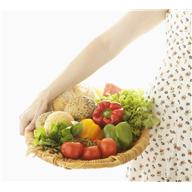
Woman with basket of fruits, vegetables, and bread

The Vegan Experiment

The gauntlet has been thrown down and I said, “Challenge accepted!” The Academy of Nutrition and Dietetics has issued a challenge to dietetics professionals to live a vegan lifestyle for five days.

I am not doing this for the Vitamix blender that is the prize in this contest (although I would gladly accept it). I am doing this because I believe that a vegetarian or vegan diet can be just as healthful and complete as a diet that includes animal products. In my work as a wellness dietitian at a university, I always make my cooking demonstrations vegetarian, and vegan when possible, to show the community that vegetarian/vegan meals can be yummy and satisfying. I decided I would “walk my talk” for five days.

I mean, anyone can do anything for a mere five days, right?

Let’s start with the basics: what is veganism?

There are many levels of vegetarianism. I think the definition that many people think of for a vegetarian is a person who eats no meats. However, some vegetarians still include fish (pescatarians) and some still include dairy and/or eggs (lacto/ovo-vegetarians). If carnivores (meat-eaters) on one very end of the scale, then vegans are at the other end. Vegans do not eat any animal products – meat, poultry, fish, dairy, eggs, cheese, or butter. As a friend pointed out on my Facebook page, vegans may even decide not to eat honey since animals make honey.

For more information, see the Academy’s Web site, which includes a link to a PDF document that is their position on vegetarian diets. There is a wealth of information in the position paper.

Personally, I could easily become a pescatarian. For my health, since I have heart disease, I would choose to include fish due to the nice heart-healthy omega-3 fatty acids in some fish. But cutting out cheese and milk? I think I could live on tomatoes and cheese alone… so this will present a challenge.

Finally, since I am a registered dietitian, I am concerned about the nutritional quality of my vegan choices. I will have to do some planning. There are two things that I will be thinking about when I follow a vegan diet. One is to make sure I am combining foods in a way that makes complete proteins and the other is to get all the important nutrients about which vegans must be concerned (see the link to the Academy’s Web site above). Some nutrients are found mostly in animal products so vegans must have the knowledge to plan meals that include these nutrients.

I also personally tend to eat as clean as I can, so I doubt I will be including the packaged vegan alternatives. I have to look at the food labels; but the way I remember it, these products have a long list of ingredients that are not whole foods or natural flavors or preservatives. This is a personal choice; not a part of veganism.

I am beginning my planning this week. So far, I think I will try silken tofu as a scrambled egg replacement and I just bought a few bags of dry beans to play with. I would love any ideas so please post your comments and tell me about your favorite vegan recipes.

Wish me luck!

(Note: Free images from http://office.microsoft.com/en-us/images/)

A day's work for an RD

Vegan Oatmeal Cookies

Today, my mission was to rework an oatmeal cookie recipe to be more heart-healthy and vegan. Oats are already a heart-healthy food so I didn’t have much work to do there; but I have not done much vegan baking. This was going to be a challenge! I ended up making two batches of oatmeal cookies. One is low-fat and the other is vegan. You decide which one fits into your healthy eating goals better.

I started with a basic oatmeal cookie recipe and focused on the ingredients that needed to be swapped out.

Ready to make oatmeal cookies!

First up, vegetable shortening. Great for flakiness and flavor in baking; but it contains trans fat which is about as far away from heart-heatlhy as you can go. For the low-fat recipe, I swapped 3/4 cup vegetable shortening with 1/4 cup butter and 1/2 cup mashed banana to retain moistness and flavor. In my experience, when I replace more than half the fat in a recipe with a fruit puree, the final product loses some “yummy.” This wouldn’t do for the vegan version however since butter is a dairy/animal product, so I chose refined coconut oil. The refining removes some of the coconut flavor and leaves you with a solid fat that is good for baking. This swap removes the trans fat; but it adds some saturated fat. I think I could find a better option; but this is at least a baby-step towards heart-healthier.

Next replacement was the egg for the vegan version. Mixing 1 tablespoon ground flaxseed with 3 tablespoons of water makes for a nice egg replacement. If you buy flaxseed from the bulk bins, it is much cheaper! I was about to spend $4 for a bag of ground flaxseed and ended up spending $0.65 on a small amount of seeds from the bulk bin. Shop smart!

Flaxseed - before and after grinding
Flaxseed – before and after grinding
Ground flaxseed mixed with water is a great egg replacer

Finally, I wanted to add more fiber. I swapped half the all-purpose flour for whole wheat flour and called it a day.

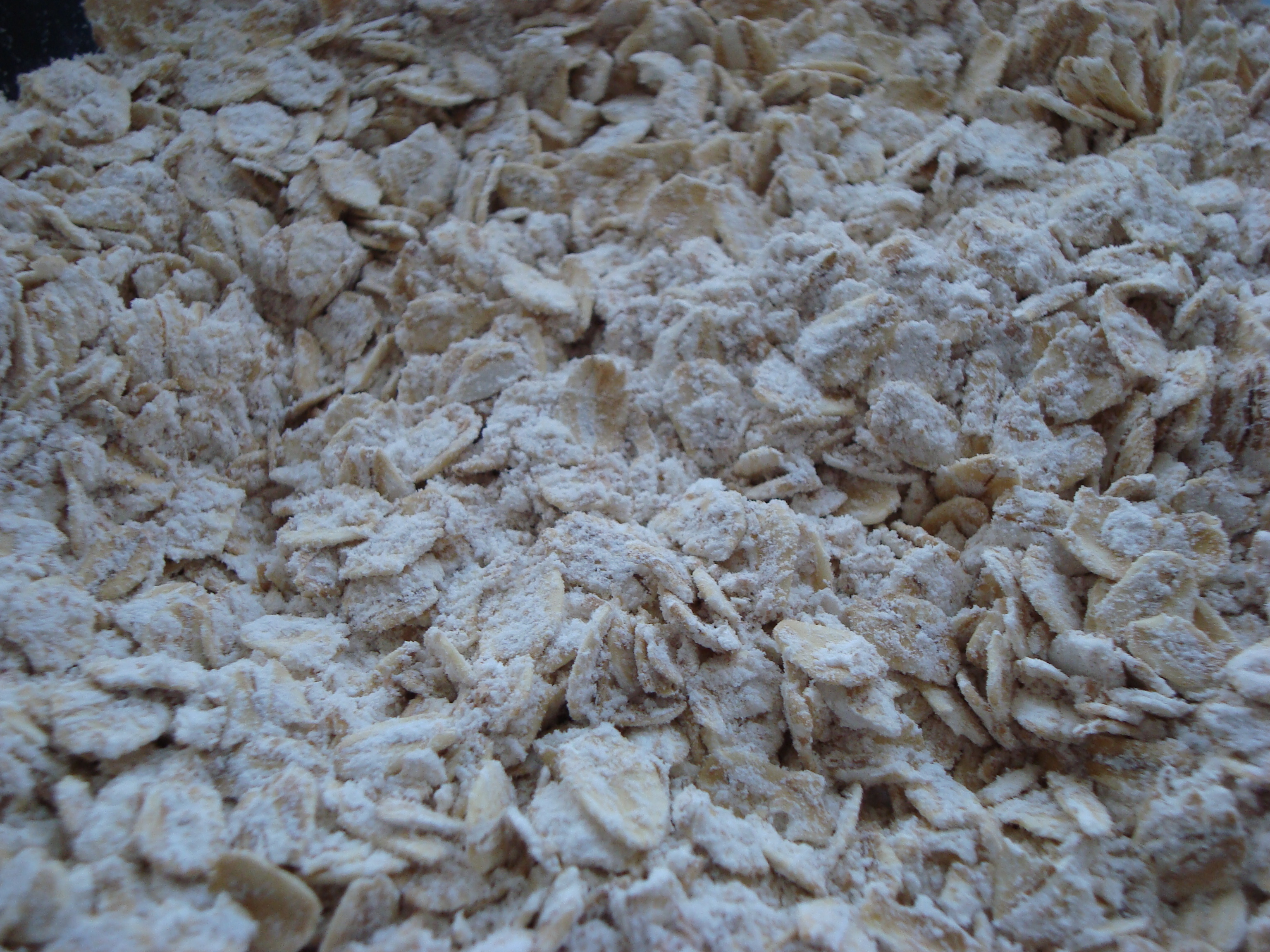
Rolled oats coated with all-purpose and whole wheat flour and baking soda

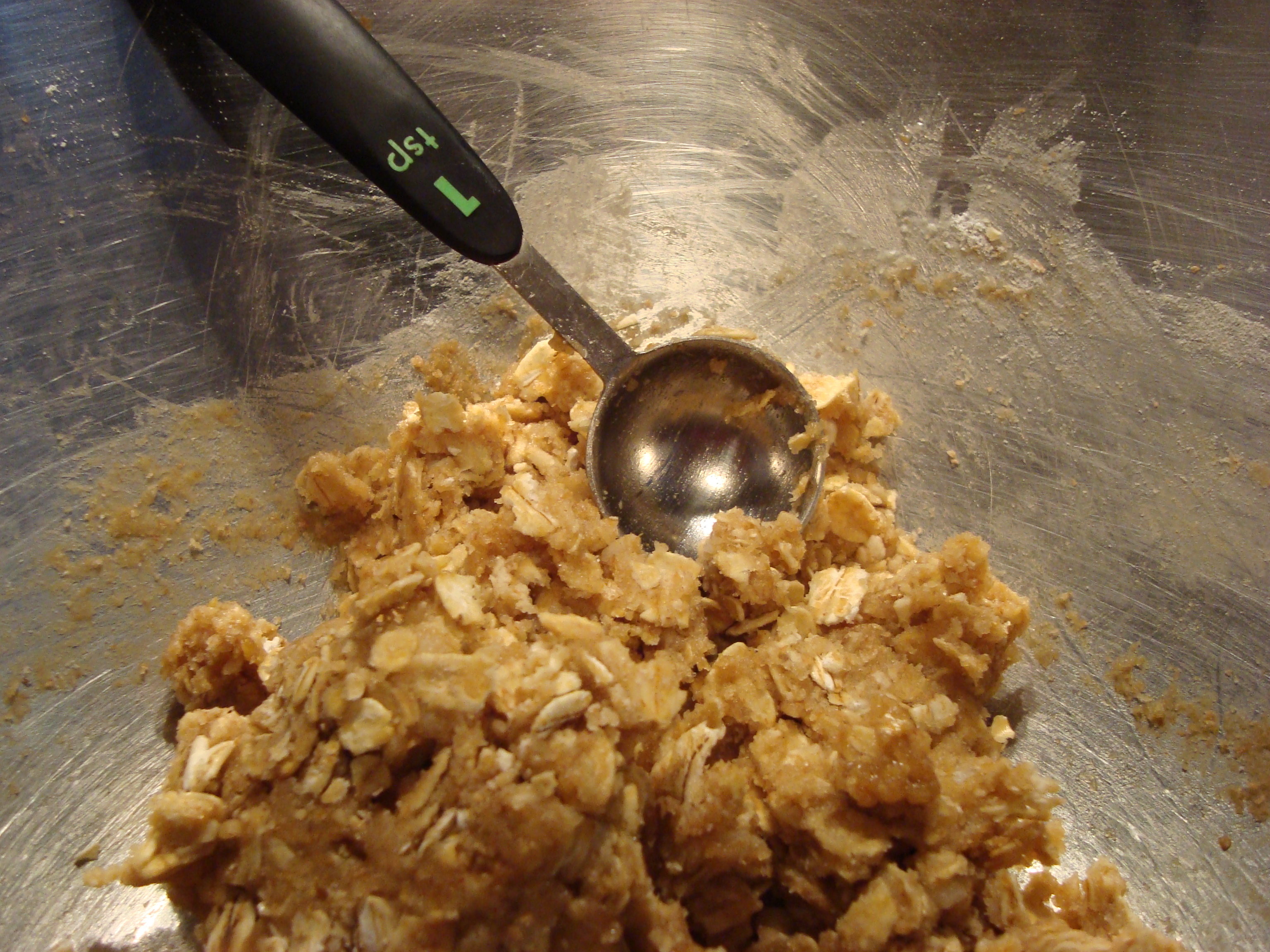
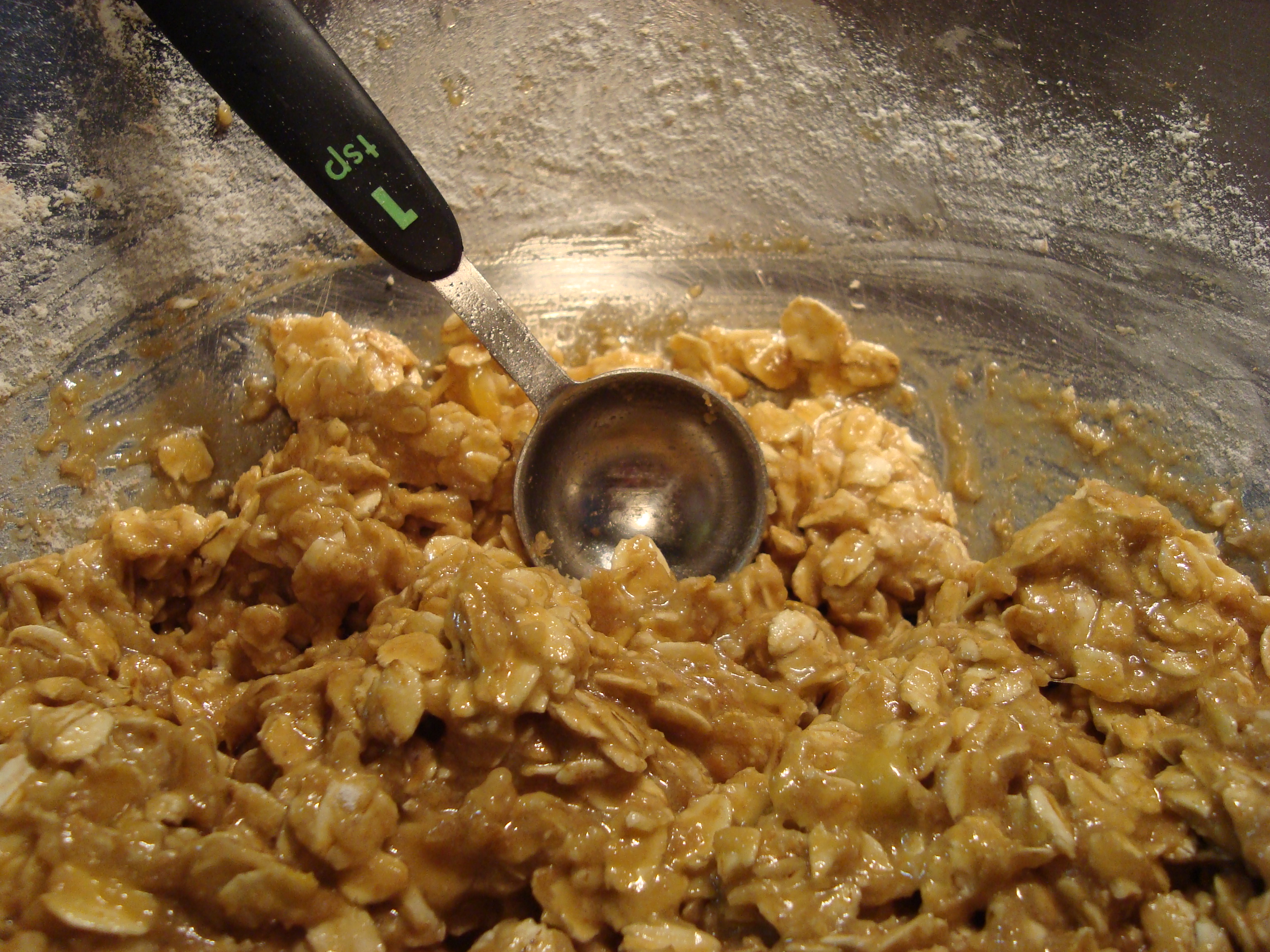
There was a difference in the batters as well as the final cookies when they came out of the oven. The vegan batter was drier than the low-fat batter. If I were to recreate the vegan recipe, I would add more water for a more moist batter and cookie.

Vegan Batter
Vegan Batter
Low-fat Batter
Low-fat Batter

Into the over for a quick 14 minutes and both cookies spread a little while baking. I didn’t adjust cooking times at all from the original recipe.

Vegan Cookie
Vegan Cookie
Low-fat Cookie
Low-fat Cookie

I was a little disappointed in the nutritional changes. The low-fat and vegan cookies both had fewer calories than the original and no trans fat. These are both heart-healthy changes. The vegan cookies had the same about of total fat and a more saturated fat that the origial due to the coconut oil. I still think that’s more heart-healthy than having a cookie with trans fat. The catch is not to eat so many cookies that the fat starts adding up! Finally, the fiber content didn’t increase as much as I’d hoped.

 Per 1 cookie Original Low-Fat Vegan
Calories 70 60 50
Fat 2.6 1.5 2.5
Saturated Fat 0.6 0.5 2
Trans Fat 0.3 0 0
Cholesterol 2.6 4.5 0
Sodium 11 11 8
Carbohydrate 11 11 8.5
Fiber 0.7 1 1
Protein 1.4 1.5 1

The important thing is how they tasted, right? I preferred the vegan cookies because they had a sweet brown sugar flavor, are more oat-ey, and have a nice crispness. The low-fat cookies are softer and moister; but they had a bit of a banana flavor. I don’t know about you; but I’m not looking for banana in my oatmeal cookies! In the future, I’d consider adding dark chocolate chips or walnuts to boost the heart-healthy properties of these cookies.

Whichever cookie you prefer, I hope you now have some strategies for adjusting recipes when baking and that you will enjoy that occasional cookie, even on your heart-healthy diet!

A day's work for an RD
A day’s work for an RD


Kale Rolls with brown rice

We’ve Got Greens!

It’s kale cooking demonstration time! Tis the season to harvest greens and we have a lot of them from our organic Ogier Garden where I work so I decided to do a cooking demonstration showcasing our beautiful greens. Recipes included kale quinoa rolls and autumn vegetable soup.I found both of the recipes I used online (credit given with the recipes below) and I adapted them. Give these a try and let me know what you think!

Organic Greens
Organic Greens

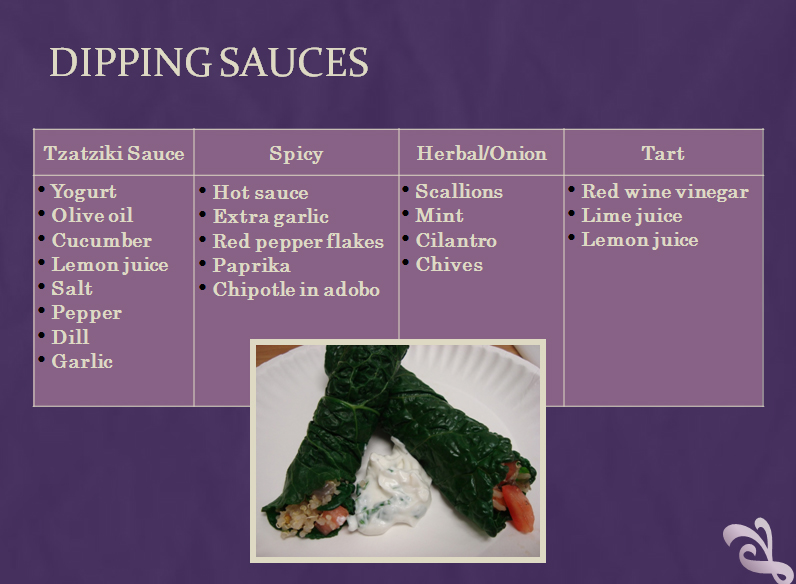
Both of these recipes are vegan. If you are a vegetarian, I do recommend a low-fat Greek yogurt dip for the rolls to increase the protein and calorie content of this meal. Here are some suggestions for flavoring the yogurt to make a yummy dipping sauce. Click to see the image larger in a new window.

Ideas for Greek yogurt dipping sauces

To begin, find some big kale leaves (dinosaur, lacinato or Tuscan varieties) or use collard greens which typically have large leaves. The curly kale will not give you enough leaf to roll with. Here in Jacksonville, Florida, I had no luck at the conventional grocery stores; but found a nice large bunch of organic lacinato kale at Fresh Market for only $2.50!

Preparing the greens is important and for the best results, you’ll want to blanche and devein the leaves. Blanching involves cooking the leaves in boiling water for a very brief time (~2 minutes) and then plunging them into an ice bath. I’ve used both a large bowl and my sink filled with ice-water with success. Blanching will make the leaves flexible enough to roll and brighten up their color. Wait until after blanching to devein the kale so you can preserve as many nutrients as possible, then take a small knife and simply cut out the thick part of the stalk, leaving the top of the leaf intact.

Kale Rolls with brown rice

I will also be packaging the complete cooking demonstration lesson plan, recipes, hand-outs, and evaluation forms into a package that will be available for purchase so you can take the work out of preparing for a cooking demonstration and just do the fun parts! Details will be posted soon.

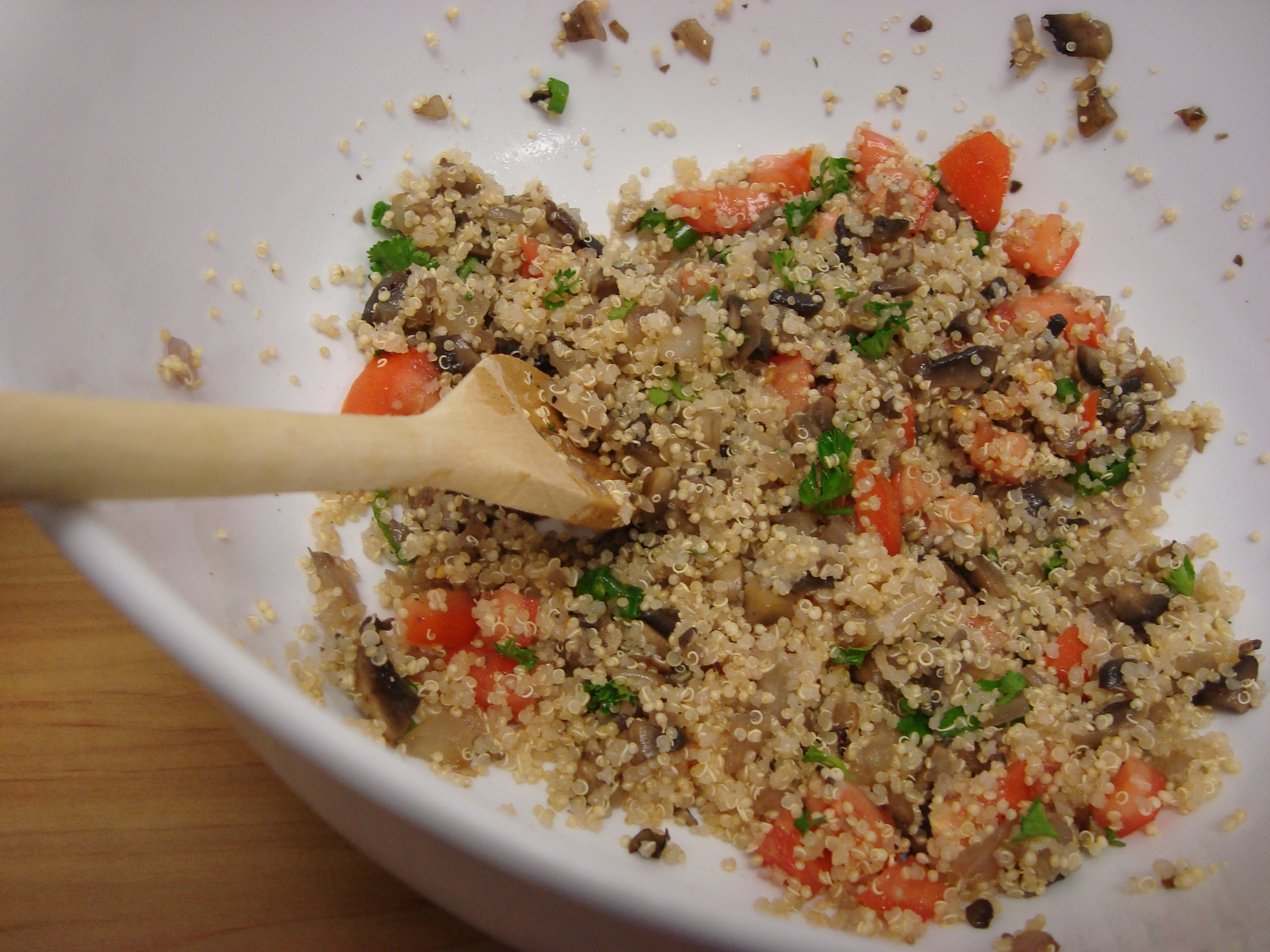
Quinoa Filling
Quinoa Filling

                      Kale Roll Ups

Recipe adapted from Gooseberry Mooseberry

http://www.gooseberrymooseberry.com/2012/07/stuffed-kale-rolls-dolma.html

By Alexia Lewis, RD, Wellness Dietitian

Ingredients

  • 25 kale leaves, preferably dinosaur kale (large leaves)
  • 1 1/2 cup cooked quinoa
  • 1/2 cup red onion, finely chopped
  • 8 oz white button mushrooms, finely chopped
  • 1 tomato, chopped
  • 2 Tbsp parsley, chopped
  • 1 Tbsp chives or scallions, chopped
  • 1 Tbsp lemon juice
  • 2 Tbsp canola oil, divided
  • salt and pepper to taste

Directions

Prepare Kale

  1. Bring a large pot of water to a boil
  2. Wash kale leaves thoroughly
  3. Add leaves to boiling water and blanch until softened and flexible, about 2 minutes
  4. Drain and rinse under cold water and pat dry
  5. Remove about 2-3 inches of the thick middle stem from each leaf

This step can be done ahead of time. If not using kale immediately, after cooking, pat leaves dry to remove excess water, wrap all leaves gently in a paper towel, and seal in a plastic bag with air squeezed out in the refrigerator for up to 3 days.

 Prepare Stuffing

  1. Heat 1 tbsp canola oil in pan over medium heat
  2. Add onion and cook, stirring frequently, 2-3 minutes
  3. Add mushrooms and cook about 8 minutes, until the water the mushrooms give off has evaporated
  4. Remove pan from heat and let cool
  5. In a large bowl, combine cooked quinoa, cooled mushroom mixture, tomato, parsley, chives, lemon juice, and the remaining 1 tbsp canola oil. Season to taste with salt and pepper.
  6. Cover and set aside

This step can also be done ahead of time. Store covered in refrigerator for up to 3 days.

Make Rolls

  1. Place one kale leaf vein-side down and put 1-2 level tablespoons of the filling in middle of leaf
  2. Fold the leaf from the bottom over the filling
  3. Tuck one side of the leaf over (the other side will remain open)
  4. Roll the leaf into a tight roll and place on plate/platter with edge of the leaf under the roll to keep roll from unrolling
  5. Repeat with remaining rolls

These can be served warm or chilled and can be kept up to 3 days in the refrigerator. If any of the previous steps were done ahead of time, subtract the number of days those ingredients were already stored from the number of storage days.

Makes approximately 20 servings (1 roll per serving): 47 calories, 1.8 g fat (0.1 g sat, 0 g trans, 0.5 g poly, 0.9 g mono), 0 g cholesterol, 15 mg sodium, 202 mg potassium, 6.5 g carbohydrate, 1 g fiber, 2 g protein.

                      Autumn Vegetable Soup

Recipe adapted from Clean Eating Magazine

http://www.cleaneatingmag.com/Recipes/Recipe/Black-Eyed-Pea-Stew-with-Collard-Greens-Potatoes.aspx

By Alexia Lewis, RD, Wellness Dietitian

 Ingredients

  • 6 cups low-sodium vegetable broth
  • 6 cups water
  • 8 cups kale or other greens, chopped
  • 3 large tomatoes, beefsteak or vine, diced
  • 1 medium butternut squash, diced
  • 1 can black-eyed peas, low sodium, rinsed
  • Salt and pepper to taste

Directions:

  1. Bring broth and water to boil in large pan over high heat
  2. Add kale, reduce heat, cover and simmer for 10-15 minutes
  3. Add tomatoes and butternut squash, cover and simmer until squash is tender, about 15 minutes
  4. Stir in black-eyed peas, cover and simmer about 2 minutes
  5. Season with salt and pepper to taste

Makes approximately 20 servings (1 cup per serving): 70 calories, 0.5 g fat, 0 g cholesterol, 220 mg sodium, 373 mg potassium, 15 g carbohydrate, 3 g fiber, 3 g protein