Tag Archives: healthy meal

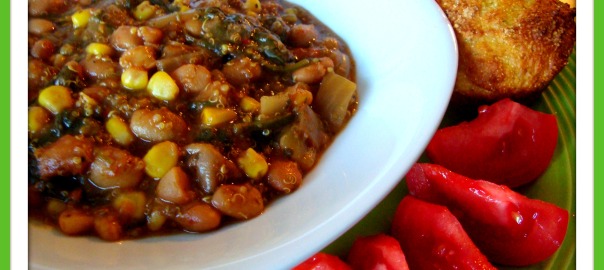
Delicious, Easy, and Healthy Vegan CrockPot Quinoa Chili

Eat More Beans! Crockpot Quinoa Chili Recipe (Vegan)

Imagine this. You are in the grocery store and you need to buy some beans. In one hand, you hold a can of beans. In the other hand, you hold a bag of dried beans. Which one do you buy?

You probably consider a few things before you decide.

The first consideration may be convenience. The canned beans are ready to go. You can throw those in the microwave and have hot, cooked beans in just a couple of minutes. The dried beans will take much more time because you have to soak them for many hours and then cook them for another couple of hours. Do you have time for this? Do you know how to cook dried beans? Will you forget and then have to come up with a Plan B dinner?

The second consideration may be nutrition. Beans are a nutrition-packed food! If you cook dried beans, then in 1/2 cup of black beans you get 7 grams of protein, 20 grams of carbohydrates, 14 grams of fiber, and 10% daily value of iron with only 115 calories, 1/2 gram of fat, and no cholesterol or sodium! If you choose the canned beans, much of this stays the same; but you get more sodium. If you choose regular black beans, that 1/2 cup can have 500 milligrams of sodium and reduced sodium black beans can have 240 milligrams of sodium. Some canned products are also packaged in cans that have BPA.

Many people don’t consider cost because those other two things are more important. A 15 ounce can of beans gives you approximately 1 3/4 cups of beans for $1.00 to $3.00. A 16 ounce bag of dried beans contains 3 1/4 cups of dried beans which gives you about 9 cups of cooked beans for about  $1.00 to $2.00. If you do the work of cooking dried beans, you get about five times a much for your money!

I used dried beans most of the time and save canned beans for when I don’t want to rely on myself to remember to cook dried beans the day before I need them or I decided on having beans for dinner on the day I grocery shop. I went in search of dried bean recipes that eliminated the need to cook the beans the day before. After reviewing a few recipes for cooking times and methods and a few trial runs, here is what I ended up with.

Crockpot Quinoa Chili

Makes 9 cups cooked chili

Prep time: 15 minutes, Cook time: 6 hours 15 minutes

Skill level: low

Ingredients

1 1/2 cups dried pinto beans

1/2 cup uncooked quinoa, rinsed

1 teaspoon or 2 cloves minced garlic

2 cups frozen corn

1 package (10 ounces) spinach

2 cups low-sodium salsa

1/2 large red onion, chopped

5 cups water

1/2 teaspoon each: Hot Shot (red/black pepper blend) and red pepper flakes

1/4 teaspoon of each ground spice: turmeric, paprika, cayenne pepper, cumin, and chipotle chile pepper
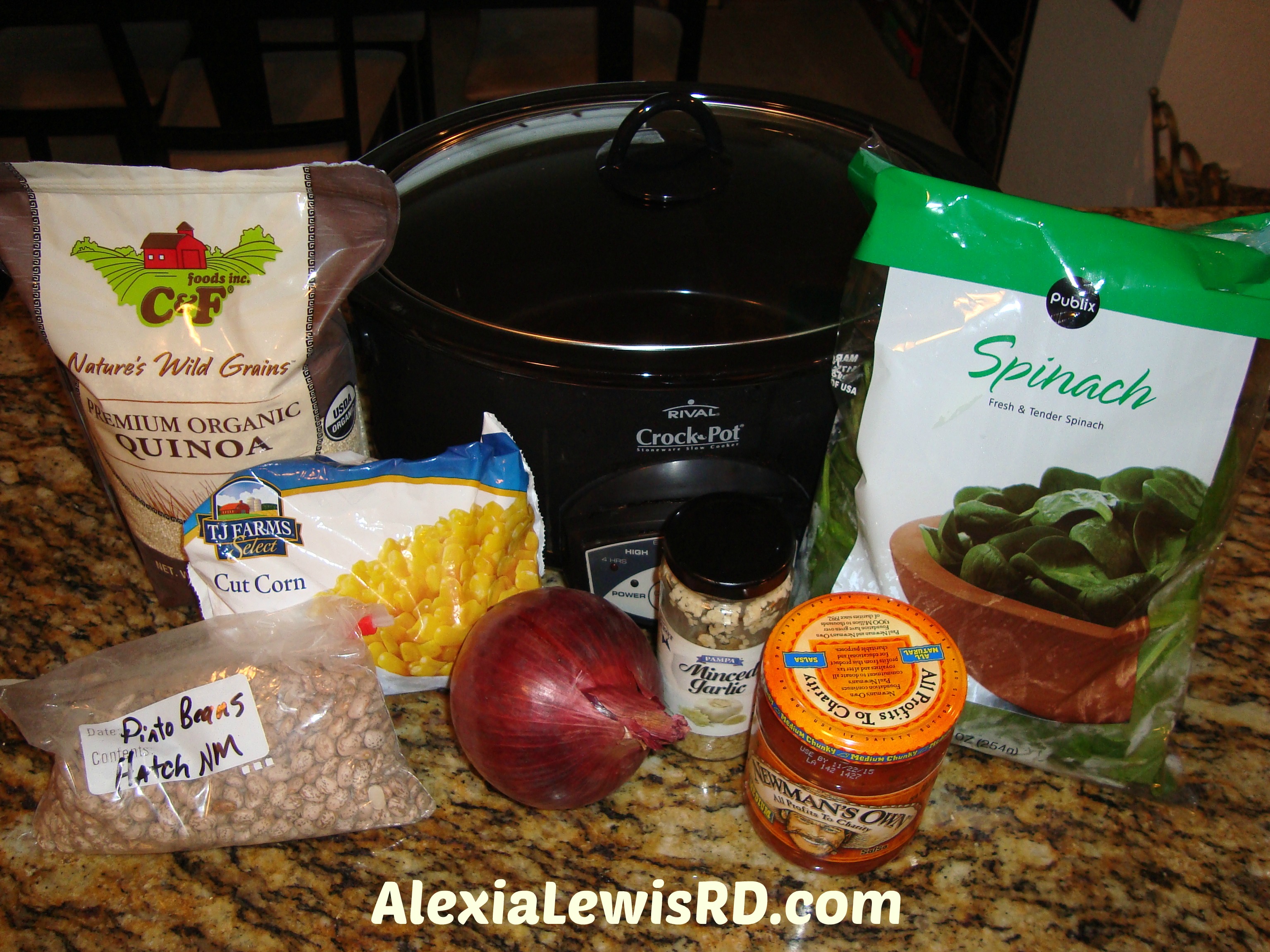
Quinoa Chili Ingredients
Ingredients – Yes, those are pinto beans from Hatch, New Mexico courtesy of a great neighbor!

Directions

1. Layer all ingredients except spices in crockpot in order listed above.

2. Cook on high heat for one hour and then reduce to low heat for five hours. If home, stir occasionally making sure beans and quinoa stay covered by liquid.

3. Add spices and stir before serving.

Quinoa Chili Start
How it starts…

Nutrition Information per 1-cup serving: 138 calories, 1 gram fat (0 saturated, 0 trans), 0 milligrams cholesterol,  225 milligrams sodium, 34 grams carbohydrate, 13 grams fiber, 8 grams protein.

Serving suggestion: Stir in plain Greek yogurt (not vegan!) to cool it down or top with chopped chipotle peppers and hot sauce to kick it up a notch! I added homemade cornbread muffins on the side (also not vegan) following this recipe and sliced tomatoes.

Delicious, Easy, and Healthy Vegan CrockPot Quinoa Chili


Dinner is served!

Weekly Meal Plan: Baked Panko Shrimp and Pineapple Fried Rice

One thing you didn’t know about me until now is that my second job was in a Japanese Steak House where I worked as a hostess. I was young and what I remember most about that job is how difficult it is to dress in a kimono. Below is an old polaroid and the only picture I have from that time… long ago…

Alexia in Kimono 1986

The other things I came away from that job with were a love of sushi and the knowledge that cooked rice should be refrigerated before it is turned into fried rice. With this knowledge, I scoffed at the feedback on the Pineapple Fried Rice recipe, knowing that my fried rice would not be mushy since I knew this trick!

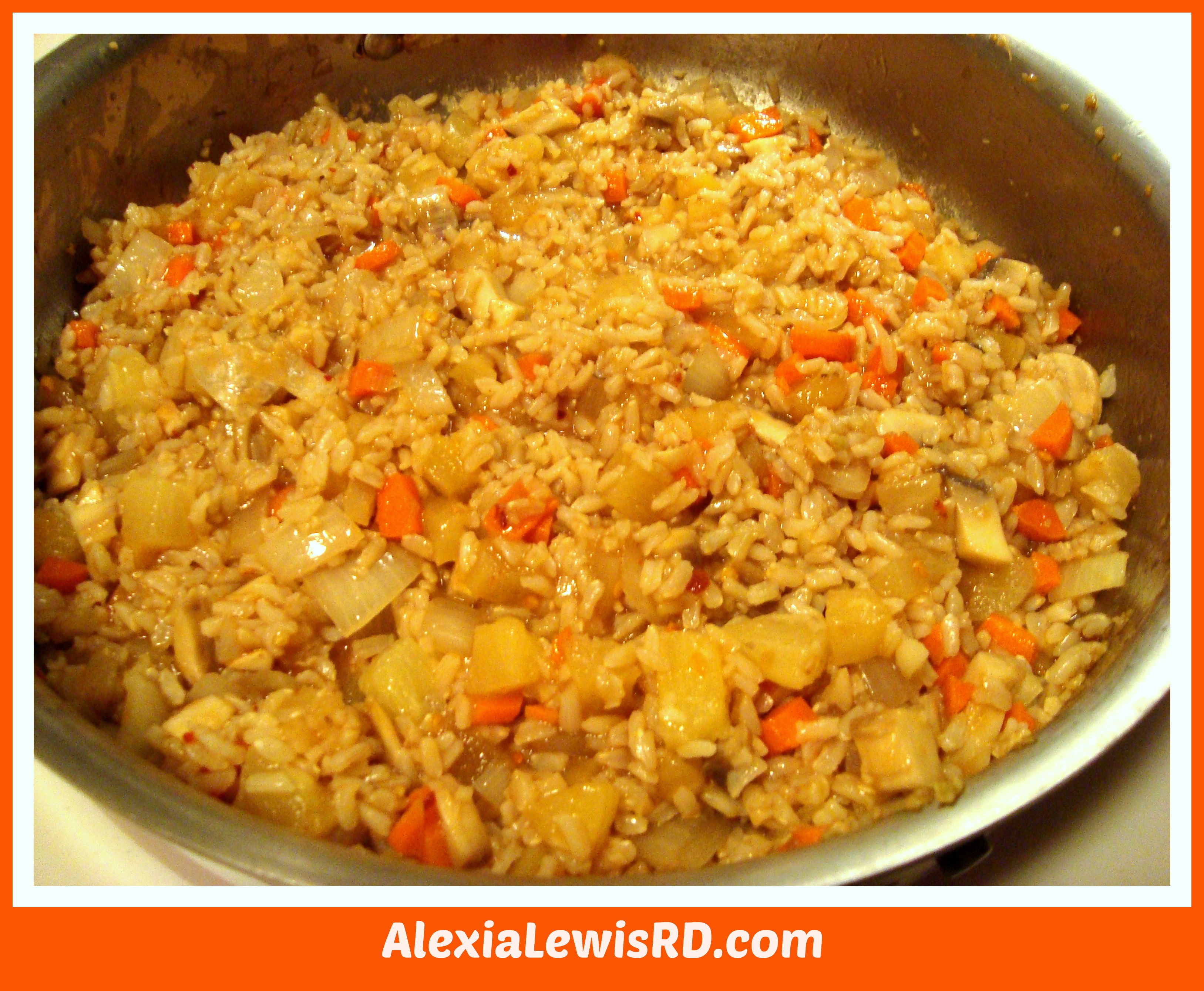
I didn’t measure for this recipe and I used mushrooms instead of the red pepper. The sauce (pineapple, soy sauce, red pepper flakes) is absolutely delicious and I will use this for other recipes. The rice was also really tasty; but unfortunately, it was mushy!

Pineapple Fried Rice

I figured next time, I would also rinse off the rice before putting it in the fridge to wash some of the sticky starch off the rice… however, next time (yes, I already made it again and added diced chicken and broccoli), I used steamed white rice picked up from the local Chinese restaurant. I find that a worthwhile expense because it made a much less sticky rice dish.

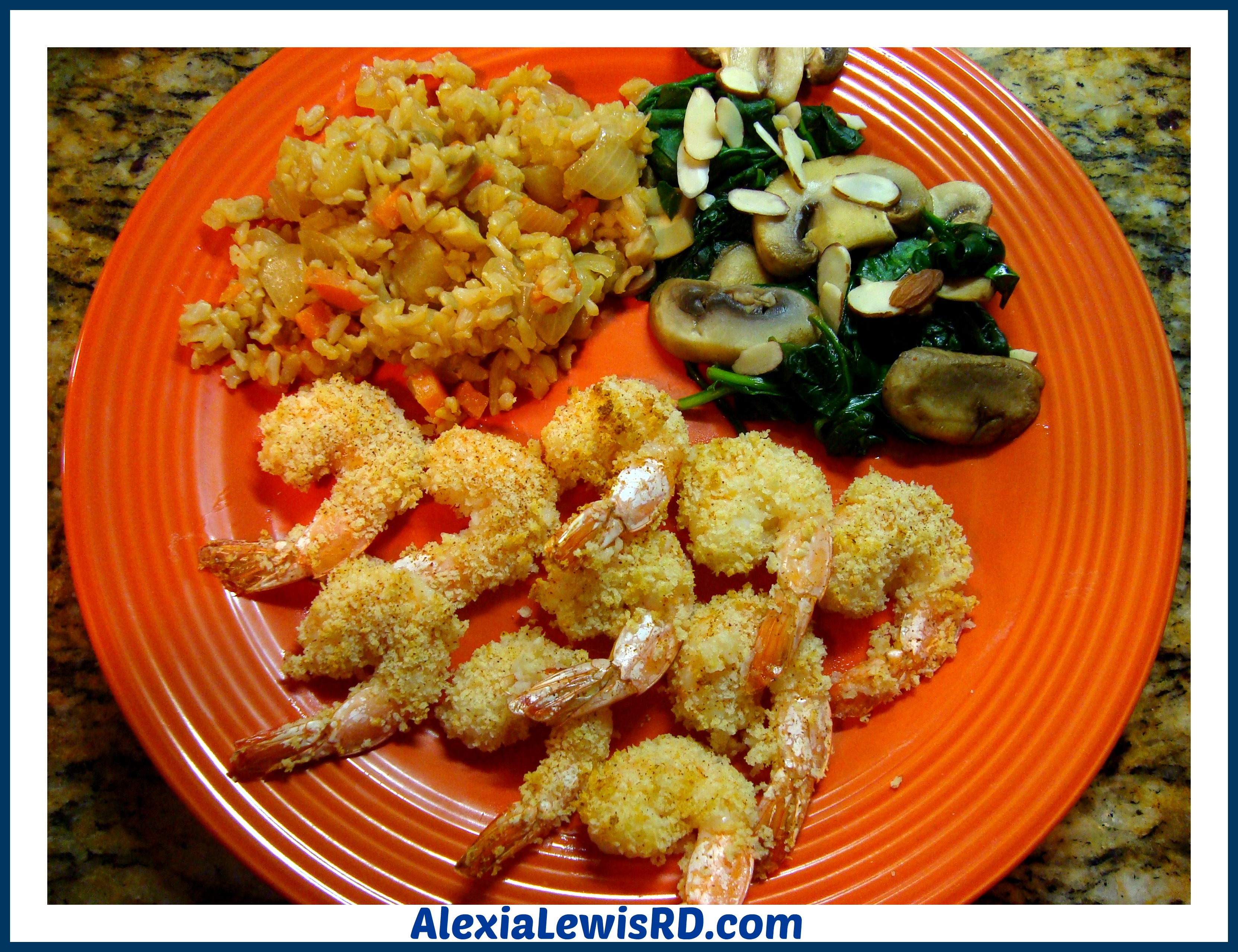
For the Baked Panko Shrimp, I simply combined panko and cayenne pepper, then dipped raw shrimp into egg whites and then the panko mixture. I laid them out on a baking sheet covered with tin foil. I suggest spraying this with cooking spray, a step I did not do and I lost half the panko breading on the foil! These were baked at 475 for about 20 minutes.
Baked Panko Shrimp
Baked Panko Shrimp

I served these with sauteed spinach and mushrooms with sliced almonds. YUM!
Dinner is served!
Dinner is served!

Prepping for the Tart

Weekly Meal Plan: Puff Pastry Tart & Cottage Cheese Enchilada

This is the first in a new recurring post. My plan is to do my personal meal planning for the week and then share the recipes and tips from the week with you. My hope is that you will try something new and be inspired with your own weekly meal planning.

One of my recipes this week was based on the foods I had that needed to be used, specifically a big bag of spinach and thawed puff pastry. I found a recipe for a Sweet Potato, Spinach, and Caramelized Onion Tart with Balsamic Reduction that sounded delicious and I had every single ingredient on hand. I reduced the amount of oil from 3 Tbsp to 1/2 Tbsp only used when caramelizing the onions; but that can even be swapped out for starting the onions with cooking spray. If you are trying to improve your cholesterol numbers, use the olive oil and if you are trying to reduce calories, use the cooking spray. I also replaced the honey with agave syrup (what I had) and used about 1/2 Tbsp for the balsamic reduction, which thickened up beautifully!

Prepping for the Tart

I found this to be scrumptious… but… the toppings were too thick. If you make this, I’d recommend using half the spinach and onions (or make two tarts). I piled it up anyway and I think this contributed to the pastry being a bit doughy in the middle (or it could have been that I should have cooked it a little bit longer). I also recommend you serve this on a day that you’ve had enough protein (meat, dairy foods, eggs, beans, nuts, etc.) since it is low in protein. I served this with grape tomatoes that I halved and roasted with mozzarella cheese on top. One tart serves 2-4 people depending on their appetites and what else you serve it with.

Tart Ready for the Oven

My other new recipe this week was enchiladas. I’ve been playing with using cottage cheese in cooking. While I love cottage cheese on its own; I’m kind of enthralled with cooking with it right now. Last week, I made lasagna rolls and they were delicious. I’ll be tweaking that recipe and posting it here in the future. I found myself with 1-cup of cottage cheese and I found a Cottage Cheese Enchiladas recipe. I’m not a huge fan of corn tortillas so I had to purchase those and I need your advice on these (see below).

Of course, I modified this recipe as well. We were out of cheddar cheese so I used shredded mozzarella as the only cheese, I omitted the chives and lime wedge, and I made the enchilada sauce. The sauce was simple, I used diced tomatoes (what I had) and pureed those in the food processor, then added chipotle powder, cumin, garlic powder, red pepper flakes, cayenne pepper and a touch of Splenda. Perfection! To the filling, I added some boiled chicken I had since my dog is currently not feeling well and is on a chicken and rice diet. Omit the chicken to keep this vegetarian.

Enchilada Filling
Enchilada Filling

These were INCREDIBLE in terms of flavor; but they completely fell apart. So, readers, if you know how to handle corn tortillas so they don’t fall apart, please comment on this post – I need your help since I will be making this dish again. I served this with chips and salsa and a side salad of halved grape tomatoes, diced avocado, and lime juice. As you can see, it makes a hefty portion!

A Whole Lotta Enchilada

I do apologize for the quality of the photographs. My wonderful husband got me a Galaxy Tablet for the holiday and I am still learning how to best use the camera… and to be honest, hunger was a factor in not having the patience to get that perfect picture!

Yummy Southern Shrimp Scampi

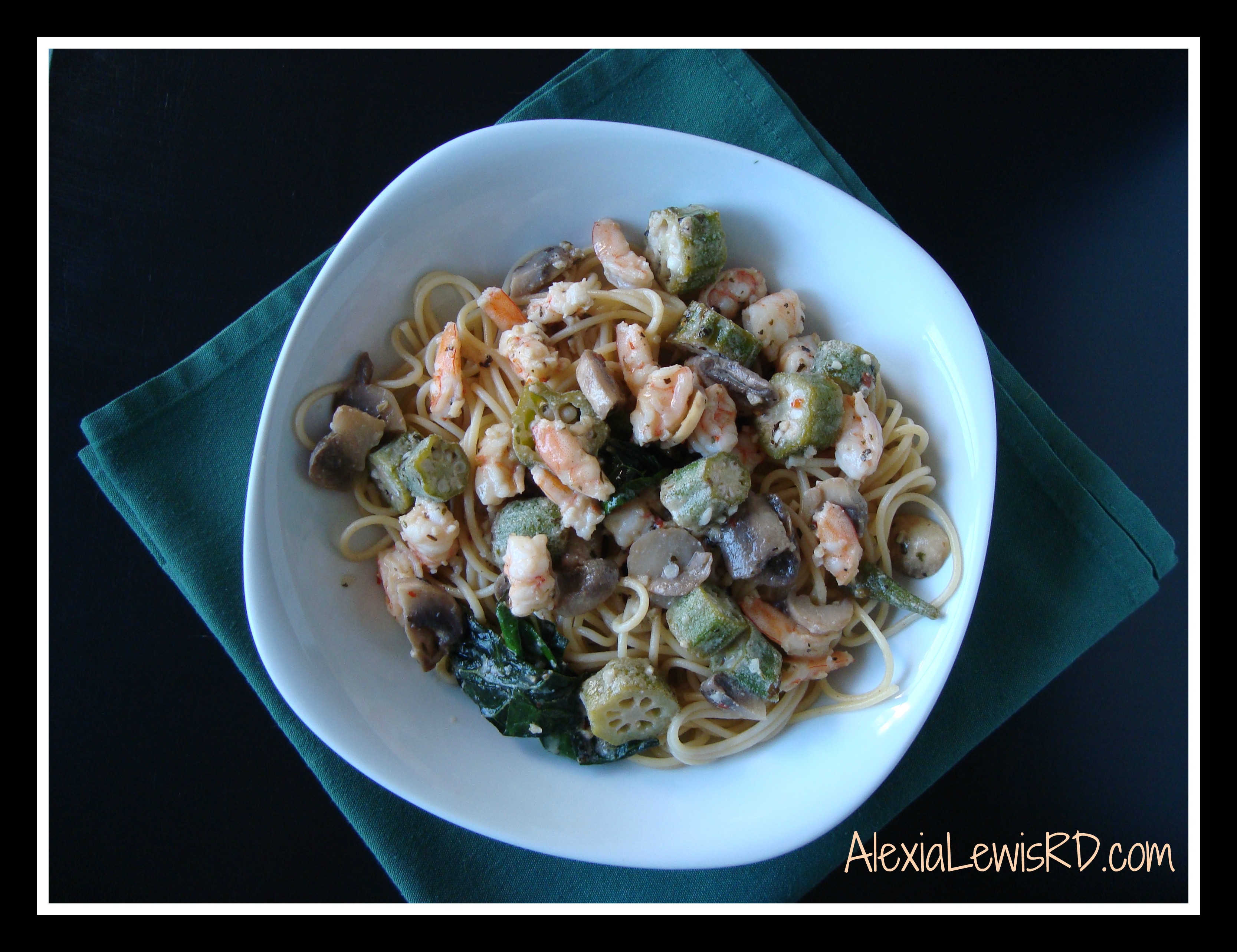
Southern Shrimp Scampi

Yes, shrimp scampi can be heart healthy! With a few adjustments, this dish becomes low in saturated fat, cholesterol, and sodium and yet is still chock full of flavor.

I believe a traditional scampi would include lemon and butter; but I used what I had on hand from the wonderful UNF Ogier Gardens. I ended up with a scampi that has okra and kale. Since these are traditional southern ingredients, I named this southern scampi.

This recipe is one the came together as I cooked it and so the ingredients are estimations. I did not measure ahead of time and I ended up with 3 servings (an odd number for a recipe, I  know!) and leftover spaghetti. If you want more or less of an ingredient or don’t think the consistency is right (too watery or too dry), please make adjustments to the amounts listed.

Yummy Southern Shrimp Scampi

Southern Shrimp Scampi

(Makes 3 servings)

Ingredients

  •  1/2 package of spaghetti (I used Dreamfields but recommend whole wheat)
  • 1 Tablespoon olive oil
  • 1 1/2 Tablespoons minced garlic
  • 6 okra pods, chopped into 1-inch pieces
  • 1 cup low-sodium vegetable broth, divided
  • 1/2 cup white wine, divided
  • 3 large Dino (lacinato) kale leaves, stems removed, cut into 1-inch square pieces
  • 3 button mushrooms, sliced
  • 15 medium raw shrimp, peeled, deveined, each one cut into 3 pieces
  • Garlic powder, to taste
  • Italian seasoning, to taste
  • Pecorino-Romano cheese, grated, to taste

Directions:

  1. Begin spaghetti by boiling water. Add spaghetti and cook to desired tenderness. Drain and set aside until sauce is prepared.
  2. While pasta water is coming to a boil, begin sauce by heating oil in saucepan. When heated, add garlic and sauté 1 minute – do not let it brown.
  3. Add okra and cook, stirring frequently for about 2 minutes. Add half of vegetable broth and white wine and simmer, stirring frequently until okra begins to soften, about 5 minutes.
  4. Add kale and mushrooms and cook until kale begins to wilt.
  5. Add shrimp and the remaining vegetable broth and white wine. Simmer and stir frequently until shrimp is pink and cooked through.
  6. Sprinkle liberally with garlic powder, Italian seasoning and stir to combine.

To serve: top 3/4 cup of spaghetti with 1/3 of southern shrimp scampi sauce, sprinkle with a small amount of  pecorino-romano cheese. Serve hot.

Per Serving: 310 calories, 7 grams fat, 2 grams saturated fat, 0 grams trans fat, 4 milligrams cholesterol, 290 milligrams sodium, 38 grams carbohydrates, 3 grams fiber, 14 grams protein

Let me know what you think. I’d love to hear about any adjustments you make!

Huevos Delicioso

Five Food Group Friday: Huevos Delicioso

Planning a heart-healthy balanced meal can be a challenge. To help with the concept of balance, I bring you a Five Food Group (FFG) Friday meal.

I’ve based these FFG meals on the Choose My Plate model, which is the US Government’s initiative to promote healthy eating habits. MyPlate is an easy-to-understand visual of a healthy plate of food incorporating the five food groups: protein, grains, fruit, vegetables, and dairy.

Choose My Plate
Add balance to your meals with Choose My Plate

The rationale behind including all five food groups on the plate is that each food group provides different nutrients, all of which our body needs in order for us to be at our best. This is a very heart-healthy way of eating since it includes a nice amount of fiber by incorporating three food groups with fiber (fruits, vegetables, and grains). Making heart-smart choices for protein and dairy by choosing lean or reduced fat foods and including heart-healthy unsaturated fats kick the heart-healthiness of MyPlate up a notch.

It is not, however, always easy to get all five of those food groups on every plate. I counsel my clients to eat the food groups they miss at their main meals as their snacks. For example, if they have cereal with a banana for breakfast (grains, dairy, fruit), then to include a protein and vegetable snack (celery with peanut butter). That way, over the course of the day, all food groups end up in balance.

I am bringing you FFG Fridays to help with the difficult challenge of building a plate with all the food groups.

Introducing the FFG Omelet Sandwich – Huevos Delicioso!

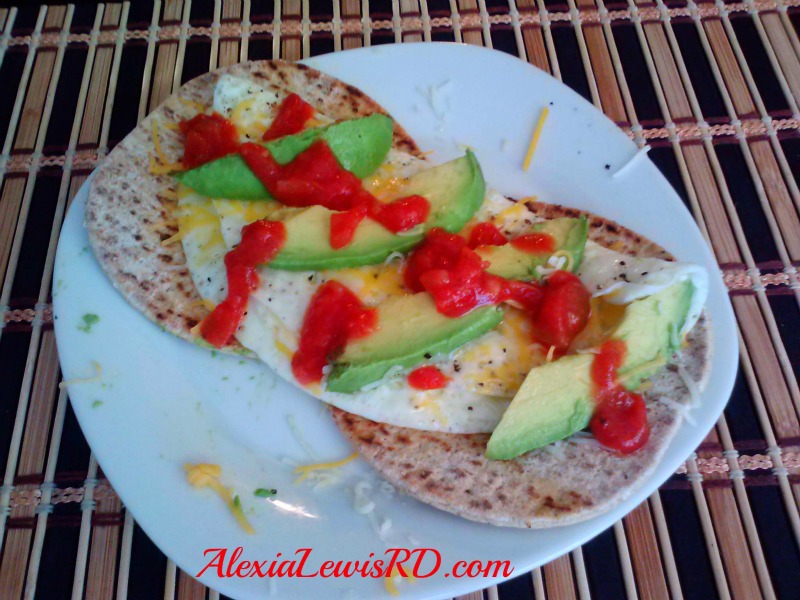
Huevos Delicioso
Huevos Delicioso – A Five Food Group Friday Meal

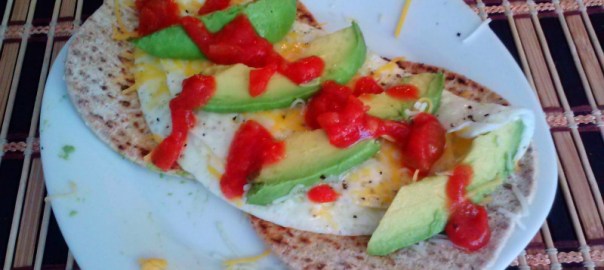
This hearty breakfast is made from egg whites (protein), mushrooms, onions, salsa (vegetables), reduced fat cheddar cheese (dairy), a Flat Out fold-it (grain), and avocado (fruit).

Using egg whites and reduced fat cheddar make the dish more heart healthy by reducing the amount of saturated fat and cholesterol, while the avocado adds a nice amount of heart-healthy monounsaturated fats.

To make this yummy dish, use a non-stick pan to sauté 2-3 medium mushrooms and a thin slice of onion (both chopped) in a spritz of canola oil until soft then remove from pan. Add another spritz of canola oil and slowly pour in 1/2 cup of egg whites – if you pour down the side of the pan, you will reduce the places were the egg sticks. Once the egg starts to cook and set, add the cooked mushrooms and onions and sprinkle 1/8 cup shredded cheddar on one half of the egg only. I also add some ground pepper and garlic powder at this point. Use a spatula to loosen one edge and flip one half of the egg on top of the other to make the omelet. Slide out of the pan onto your Flat Out and top with 2 Tbsp salsa and 1/4 sliced avocado.

Per serving: 320 calories, 12 g fat, 3 g saturated fat, 0 g trans fat, 10 mg cholesterol, 835 mg sodium, 35 g carbohydrate, 10 g fiber, 26 g protein.

Suggestion: This dish may be a little high in sodium for some people due to the salsa. To reduce the sodium, use sliced tomatoes instead of salsa.

Mangia!

The Vegan Experiment – Day Four: All Protein Powder is Not Created Equal

I made two breakfasts on Day Four. It is rare that I make something that is inedible. Even my most crazy flavor combinations result in edible, even if unusual, dishes. This was not the case on this day. I had to toss my first breakfast. It was truly that bad. Most protein powders that I’ve used have anywhere from 16-22 grams of protein in a scoop. Since plants do not contain as much protein as the other foods used to make protein powders (whey, soy, etc.), the amount of powder that has to be used to get to 21 grams of protein is huge. It completely overpowered my usually-delicious pumpkin pie oatmeal. I couldn’t eat it. I almost forced myself since I dread throwing away food; but I just couldn’t make myself eat it.

So, here we go – food pictures!

Breakfast #1: Pumpkin Pie Oatmeal – adapted from Clean Eating Magazine. I’m sharing the recipe because if you make this with vanilla whey protein powder, it is very yummy!

First, start your oatmeal on the stove by boiling 2 parts water, adding 1 part whole oats (example: 2/3 cup water and 1/3 cup oats), and then simmering until the desired consitency. While simmering, mix one scoop protein powder with a tiny bit of water and stir into a paste. You can see the plant protein powder took up half the bowl!

Nearly half a bowl-full of plant protein powder to get 21 grams of protein

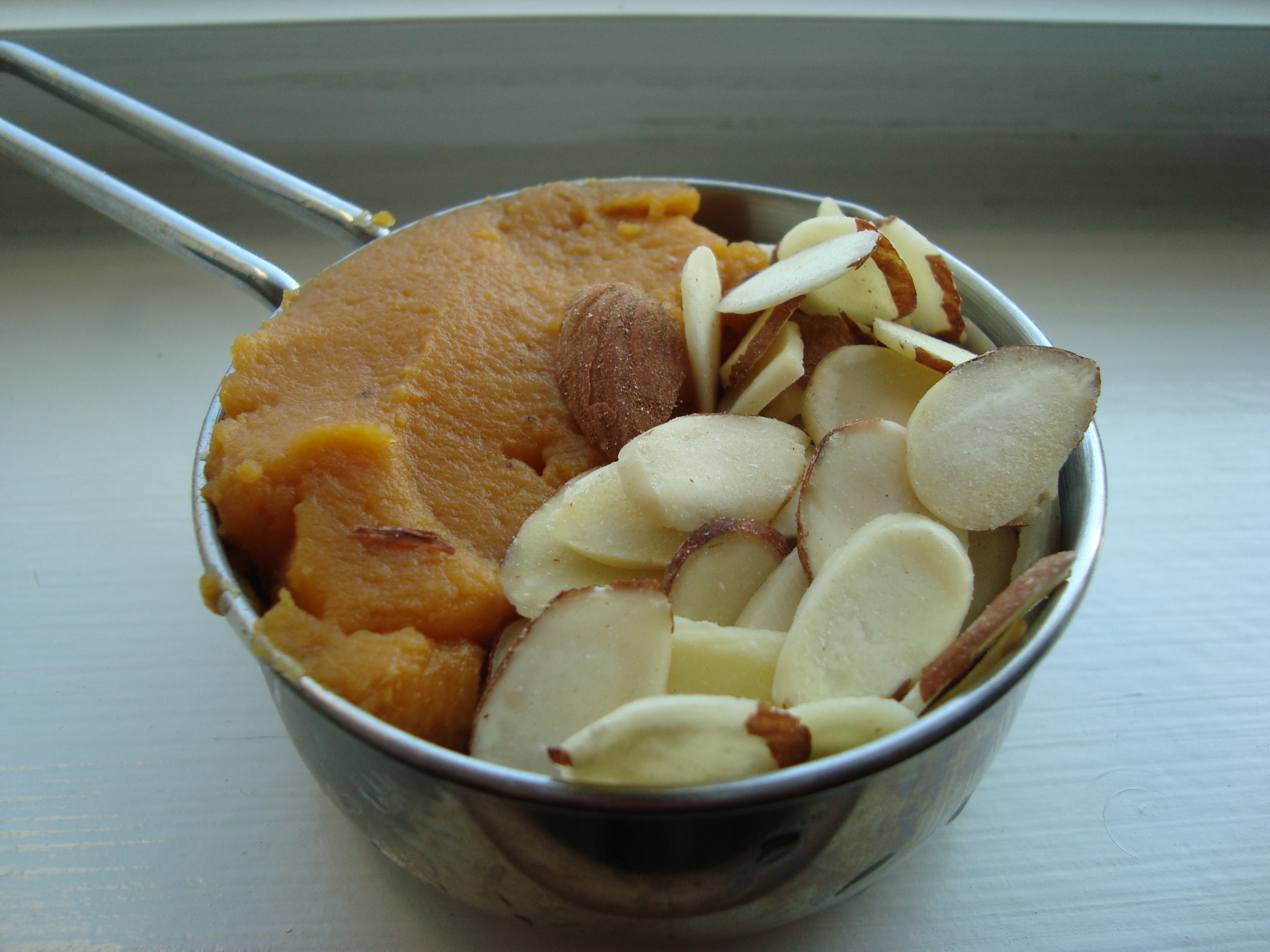
Next take the same measuring cup you just used for measuring your oatmeal and water, and fill it half with pumpkin puree (no salt) and half with sliced almonds. If you use the same measuring cup, then you can easily adjust this recipe for any amount of oatmeal without having to do any food math!

Pumpkin puree and sliced almonds

Once the oats are cooked, simply add them to the bowl with the protein powder and stir in the pumpkin and almonds. Top this with a dash of cinnamon, nutmeg, and ginger.

Pumpkin Pie Oatmeal
Pumpkin Pie Oatmeal

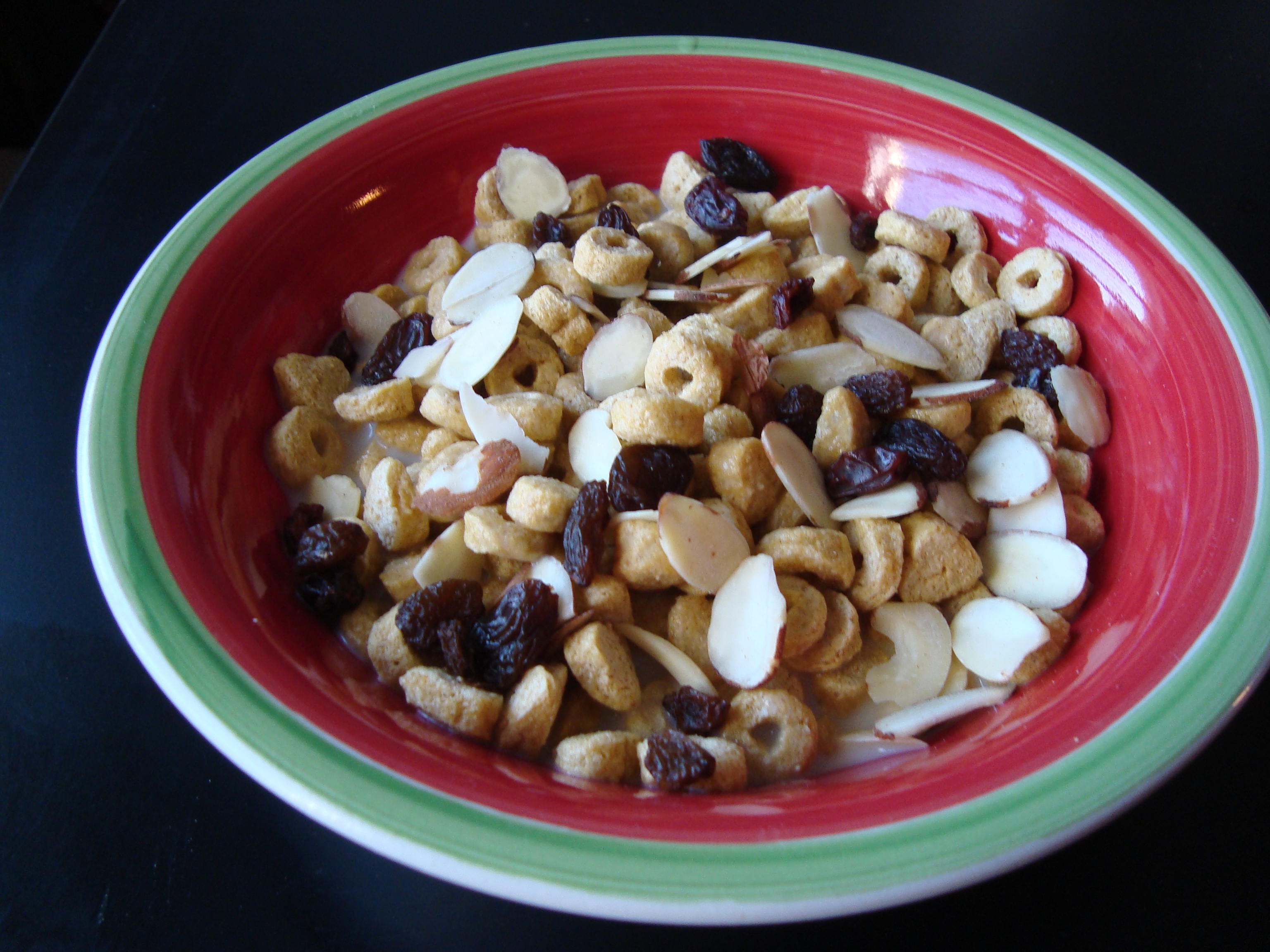
Breakfast #2:  Kashi Heart to Heart Honey Toasted Oats cereal with almond milk, sliced almonds, and raisins. Coffee with almond milk and splenda. Thank you to Jason McDonald for commenting on my blog post to add nuts to cereal because it made me realize I can add some protein and fun to a basic cereal!

Pumped up cereal
Pumped up cereal

Post-workout Snack: Smoothie made with banana, pineapple, peanut butter, and flaxseed. Blend with as much ice and water as it takes to get the volume and consistency that you like.

Smoothie in progress
Smoothie completed!
Smoothie completed!

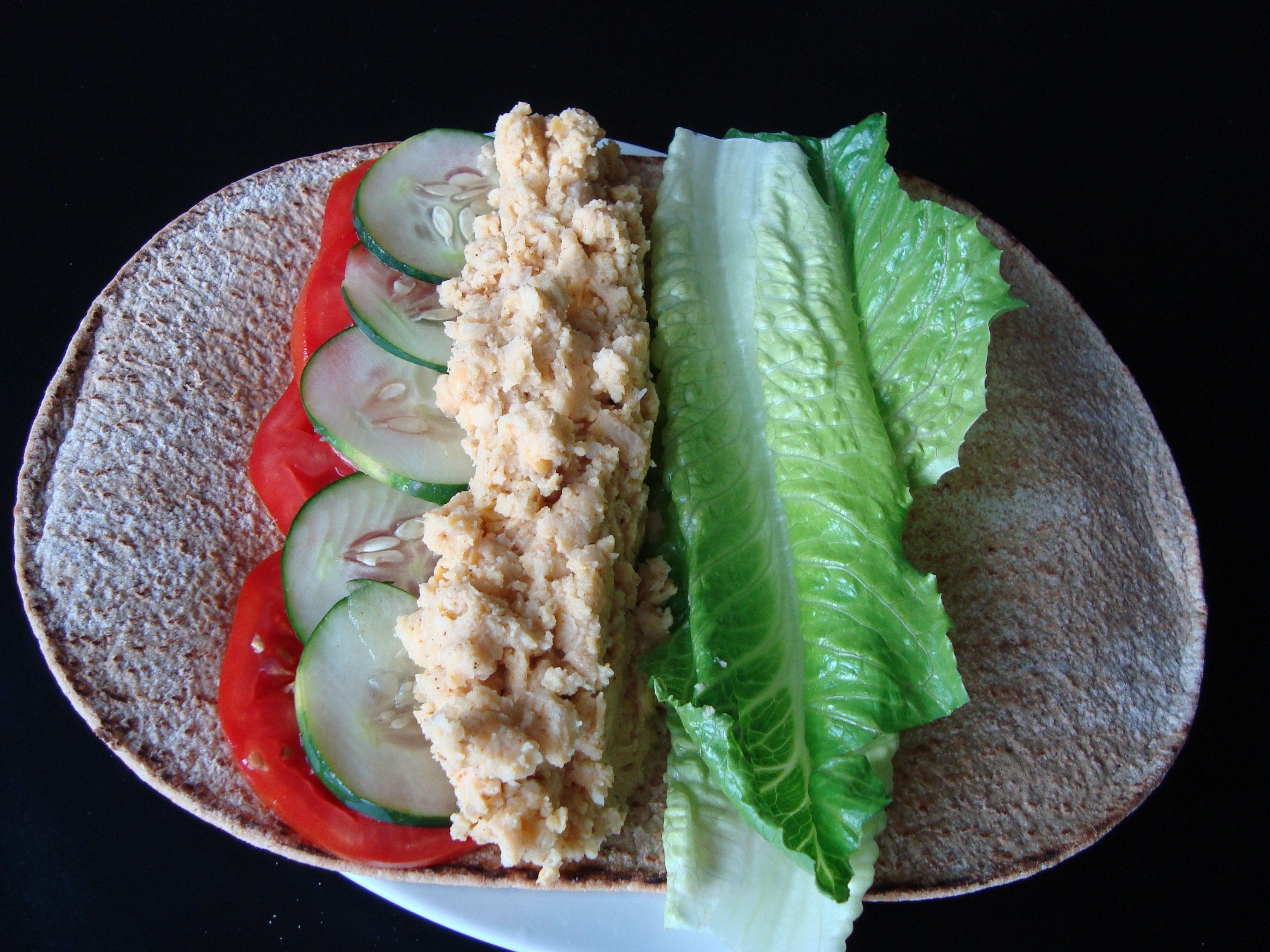
Lunch: Hummus wrap (homemade with chickpeas, olive oil, garlic, curry powder, and salt) with lettuce, tomato, and cucumber served with pretzel sticks.

The insides of the hummus wrap

Snack #2: almonds

Dinner: Whole wheat spaghetti with homemade sauce of onions, tomatoes, garlic, silken tofu, marinara sauce, garlic powder, Italian seasoning, red pepper flakes, and fresh basil served with sandwich thin garlic toast (olive oil, garlic powder, and Italian seasoning). For this, I first sauted the onions then added the chopped garlic and chopped tomatoes and let those cook just a little. Then I added the marinara sauce and tofu and cooked to heat through. Last step was seasoning with the spices. It looks a little weird as a sauce due to how the tofu stirred in to the sauce in a chunky way. If I make this again, I’ll blend the sauce as a last step to make it smooth. Regardless of what it looked like, it was good! I think this was extra yummy due to the organic onions and basil from the university’s garden!

Pretty tomatoes, onions, and garlic
Vegan spaghetti
Vegan spaghetti
Mangia!
Mangia!

One victory for today is the realization that my usual urge to (over)-snack on the days that I work from home is greatly diminished following this plan. That’s usually a huge struggle for me and I give in to the temptation to graze all day even thought I’m not hungry. Today, I had that urge for a minute and I was able to overcome it. Overall, I’m feeling good and strong; still gassy but my body is (finally!) adjusting to the extra fiber it’s starting to get a little better! My energy levels are normal for me and I can still think clearly and have strength for
yoga class.

In case you are wondering, I did live the vegan lifestyle for five days in a row. I’m just not the fastest blogger. It’s something I’m working on.

Nutrition information: 1415 calories, 235 grams carbohydrates, 46 grams fiber, 395 grams fat, 2 grams saturated fat, 0 trans fat, 0 cholesterol, 55 grams protein, and 1360 milligrams sodium. For the daily values, my numbers were 54% calcium, 77% iron, 30% vitamin D, 36% zinc, and 250% vitamin B12.

Once again, all images are my personal pictures. You may use them as long as you credit me (my name and a link back to my Web site).

A beautiful vegan salad

Vegan Experiment – Day Three: Taking It to the Office

This was the first day that I was following my vegan diet at work. This added just a little more of a challenge since I had to prepare my lunch and snacks in the morning. I also forgot to photograph my meals while at work, even though I did remember to bring my camera.

Breakfast: Same as previous two days and I’m getting bored with it – Kashi Cinnamon Harvest cereal with almond milk, coffee with almond milk and splenda.

Post-workout Snack: Smoothie with banana, pineapple, and ice/water.

Lunch: Peanut butter and banana sandwich on a sandwich thin.

Snack: Snack: Roasted spicy chickpeas.

Snack: Vegetables from veggie tray (grape tomatoes, baby carrots, snap peas, broccoli).

Dinner: Huge salad with romaine lettuce, broccoli, celery, carrots, mushrooms, snap peas, grape tomatoes, avocado, raisins, roasted chickpeas, sliced almonds, and balsamic vinegar served with triscuits.

A beautiful vegan salad

Overall, I have been feeling fine; but I was a little low on energy on this afternoon. I came home and found myself wishing I didn’t have a meal to prepare for dinner, especially a salad – so much chopping! I also am still ridiculously gassy! I ran this morning and was happy to find that I am still properly fueled to enjoy my morning workouts.

My biggest struggle so far has been my ability to meet what I’ve deemed my nutrient goals for some nutrients.

Nutrition information: 1430 calories, 249 grams carbohydrates, 48 grams fiber, 37 grams fat, 4 grams saturated fat, 0 trans fat, 0 cholesterol, 51 grams protein, and 670 milligrams sodium. For the daily values, my numbers were 67% calcium, 65 iron, 33% vitamin D, 12% zinc, and 0 vitamin B12.

Overall, the quality of my diet is good in many ways following a vegan diet; but there are some concerns. I am concerned with my low protein intake (I am for about 55 grams/day minimum) and I haven’t been able to find soy protein in the conventional grocery stores. I went to a supplement store and purchased a plant protein powder. It was expensive and I’m realizing that it may not be possible to easily stick with non-specialty foods and get enough protein as a vegan. Today I was closest to my minimum protein goal (4 grams under). While it sounds weird to say, I think I may not be getting enough sodium either (ranging from 670-890 mg/day); but from what I can find there is no set minimum requirement. The previous two days, it has been difficult to get enough calories; but today I was right where I like to be on workout days!

I’m learning how to better work with this type of diet and my goals.

This has gotten me thinking… My goal was to do this without any specialty products; but perhaps vegans do need to use the specialty products (protein powder, aminos, TVP, etc.) to meet their body’s needs. At least, it would make it much easier to meet the body’s needs. While my food costs for this week were low (before the protein powder purchase); I think if I followed this as a permanent lifestyle, my food budget might increase to account for these products.

As a final thought, I want to hit on one of the miconceptions about veganism. I’m a talker; I talk to anyone and everyone. I stopped by the dollar store to pick up more spices and pretzels and was chatting with the cashier and mentioned that I was doing this vegan challenge. People have such misguided notions about food and nutrition… he asked me how my immunity was, since I wasn’t eating meat, wasn’t I more likely to get sick? Ummm, no. I have learned not to go to deep into nutrition unless people ask, so I just told him I was feeling fine. 🙂 And in case you are wondering, no, a vegan diet does not make anyone who is generally healthy already more likely to get sick.

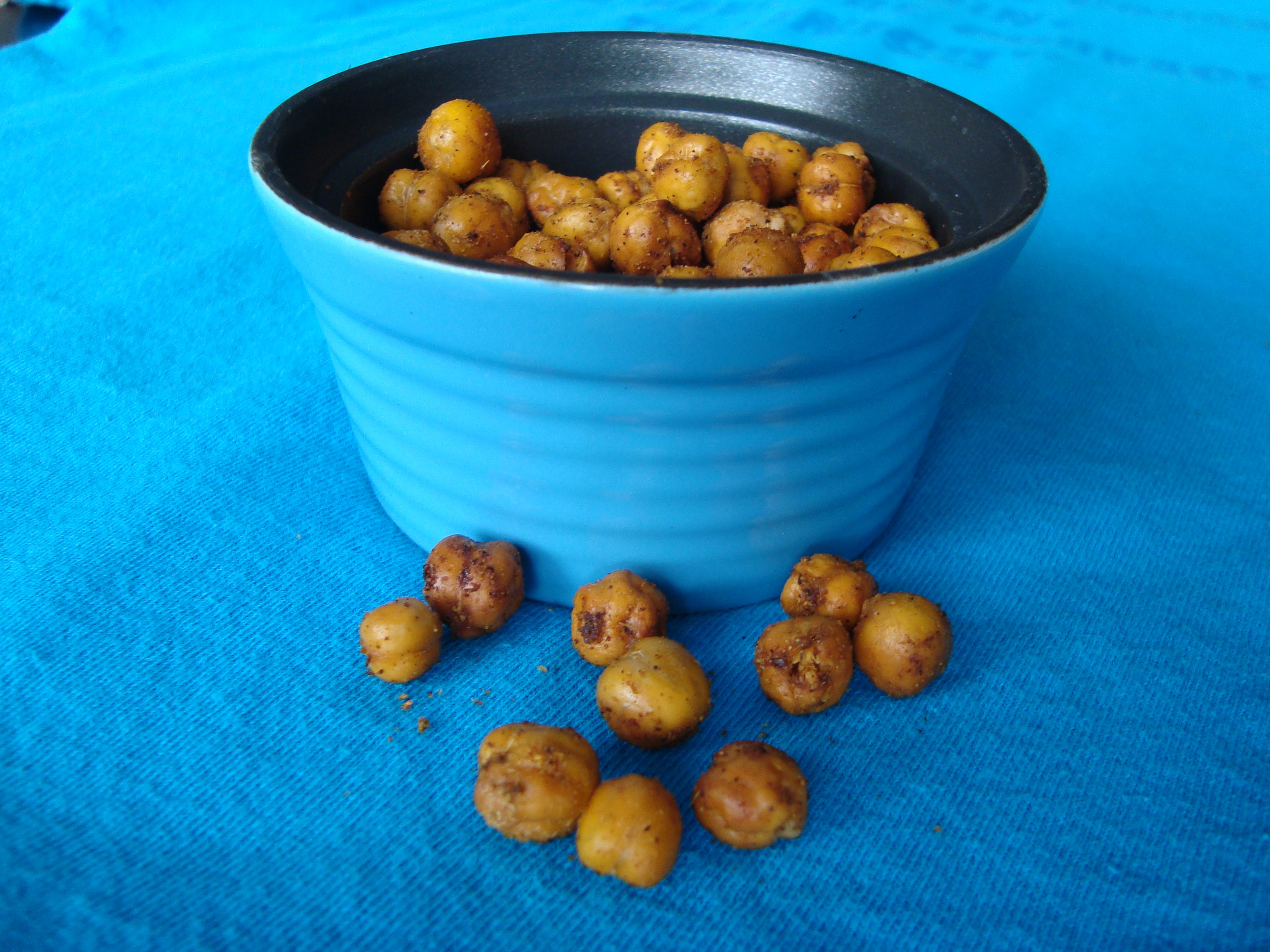
Roasted Spicy Chickpeas

Vegan Experiment – Day Two: Ranch Dressing!

Today, I realized that there is more to think about when following a vegan lifestyle than just meat and dairy foods. I have to admit to an unintentional slip today – ranch dressing! But I’ll get to that as I go through my meals in pictures.

Breakfast: Kashi Cinnamon Harvest cereal with almond milk, coffee with almond milk and splenda.

An easy vegan breakfast

Snack: Roasted spicy chickpeas.

Roasted Spicy Chickpeas

This was a time-consuming recipe; but I’m working on stretching my food dollars so it was worth the effort. I started with a bag of dried garbanzo beans (chickpeas) and soaked and cooked them one day. The next day, I tossed the half of the cooked beans with a tablespoon of canola oil, a pinch of salt, and a fair amount of paprika, cumin, and a touch of cayenne pepper. Then I cooked them in the oven at 400 degrees for about an hour on a baking sheet lined with tin foil and sprayed with canola oil cooking spray. Cook the beans in one layer because the goal is to dry them out until they are a crispy crunchy treat. If you don’t cook them long enough, they will be mealy. I know this from my first attempt at this recipe! Per 1/2-cup serving: 135 calories and 7 grams of protein.

Post-workout snack: granny smith apple courtesy of my gym’s member appreciation day offerings.

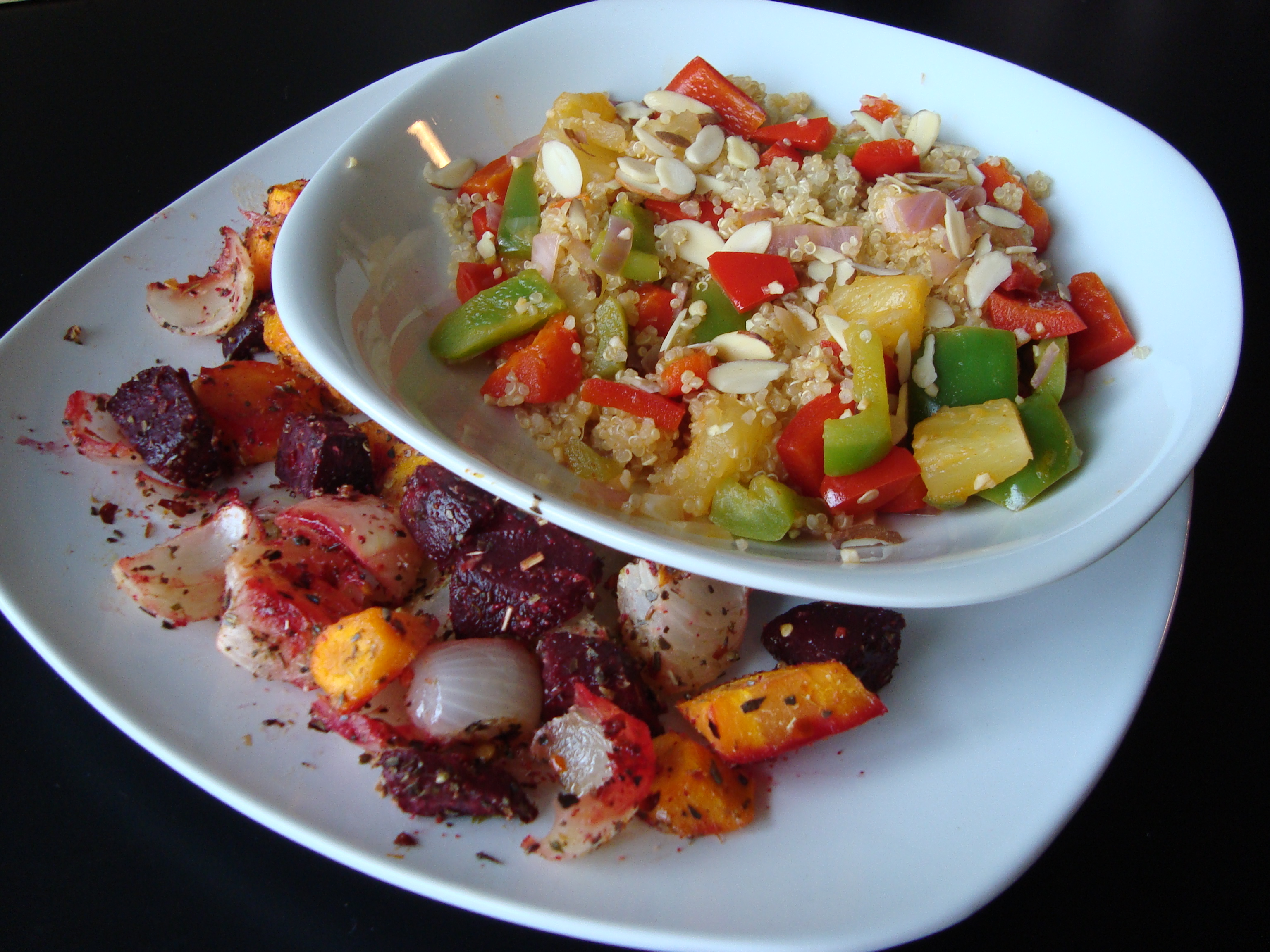
Lunch: Last night’s dinner leftovers: Quinoa with red/green bell peppers, red onions, garlic, pineapple, sliced almonds, and a dash of sriracha sauce served with a side of roasted vegetables (beets, carrots, onions) seasoned with canola oil, garlic powder, oregano, and red pepper flakes.

Quinoa bowl and roasted garden vegetables

Snack: Sweet Peanut Butter Smoothie!

I typically make my smoothies with either milk, yogurt, or almond milk depending on what I have on hand and how much protein and calories I would like to have. This time, I used water and ice instead of a milk or yogurt. I blended banana, pineapple chunks, and peanut butter with water and ice (adjusting to fill my cup and be the consistency and I wanted).

Snack: Celery and snap peas.

This is where I inadvertenly fell off the vegan wagon. I had an evening meeting to attend. The good news is that I brought the snacks and so could bring vegan alternatives. One thing I brought was a veggie tray with ranch dressing. I grabbed a celery stick and dipped it in the ranch dressing and as I was chewing, it hit me that the dressing was probably not vegan! I checked and I was correct – buttermilk is the second ingredient. This made me realize that there are more foods to limit that I realized. I wanted the convenience of the pre-made veggie tray… If only the grocery stores packaged veggie trays with hummus instead of dressing.

Dinner: Portobella mushroom sandwiches (mushroom, lettuce, avocado, mustard on sandwich thin) and Alexia sweet potato fries with ketchup.

Portobella sandwich with sweet potato fries

When making the Portobello sandwich, I was reaching for the mayonnaise when I realized that was also not vegan! This is more difficult than a vegetarian diet.

So, how am I feeling? Gassy! There is so much fiber in my diet now!

Otherwise, I’m feeling good and have energy for working out. I’m getting plenty of carbohydrates and calories; but I am still lacking in protein. I love how incredibly low my saturated fat, cholesterol, and sodium intake is following a vegan diet. Even with my one unintentional slip, I’m still going strong and feeling good about sticking with this challenge!

Nutrition information: 1360 calories, 204 grams carbohydrates, 43 grams fiber, 35 grams fat, 3 grams saturated fat, 0 trans fat, 0 cholesterol, 43 grams protein, and 725 milligrams sodium. For the daily values, my numbers were 60% calcium, 63% iron, 25% vitamin D, 8% zinc, and 0 vitamin B12.

All images are personal photographs. You may use them as long as you credit me (my name and a link back to my Web site).

Mash beans, avocado, and salsa together

My First Day Being a Vegan

Yesterday, I started the Vegan Experiment Challenge.

The day started off with a true challenge. The breakfast I had planned was mock scrambled eggs made with tofu. Unfortunately, I didn’t research any recipes before I shopped and I got the wrong consistency of tofu. This threw off my plan for my very first meal! Even with a bumpy start, my husband and I perservered and  were 100% vegan on the first day of the challenge!

I felt tired; but I don’t think that was related to diet (more a poor night’s sleep and a busy day!). I felt like I ate a lot of vegetables and the 51 grams of fiber indicates I did indeed eat many vegetables yesterday. I hit my calorie range; but was low on protein. Meal details and nutrition information follow with all the numbers at the end of this post.

Breakfast: Kashi Cinnamon Harvest cereal with almond milk, coffee with almond milk and splenda

An easy vegan breakfast

Morning snack: almonds and raisins

Easy homemade snack
Easy homemade snack

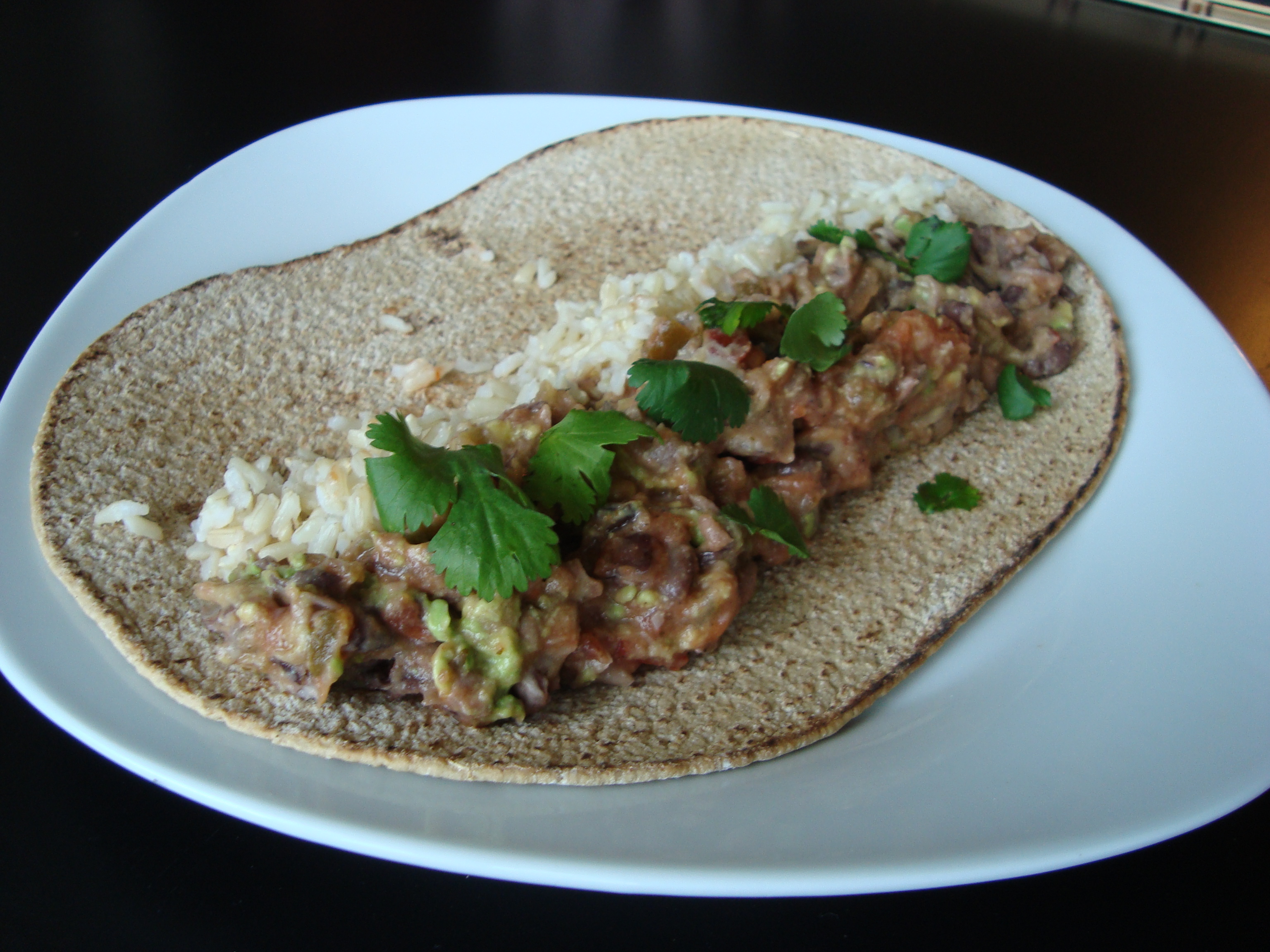
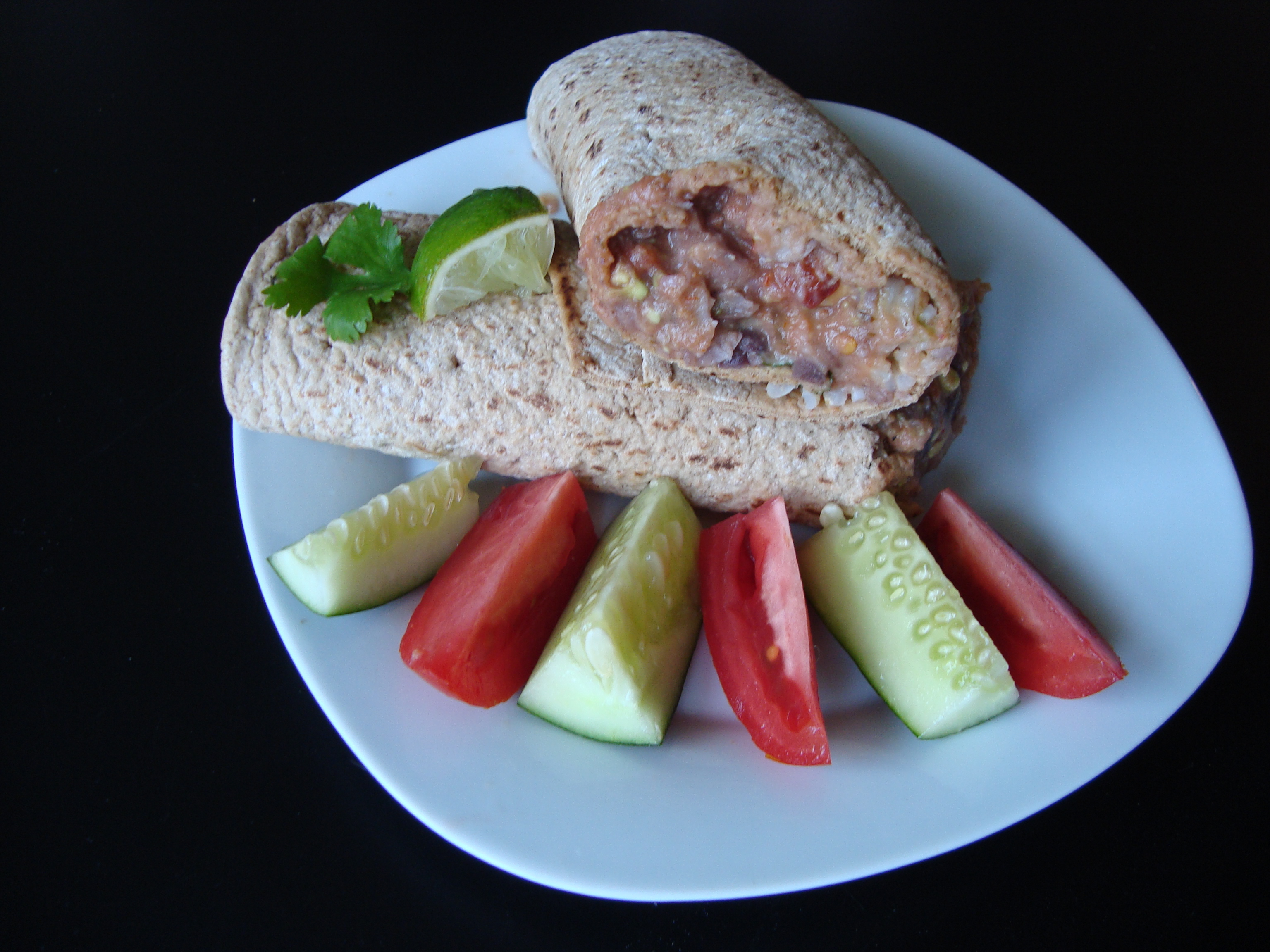
Lunch: bean burrito made from a Flatout wrap, mashed black/pinto beans, salsa, avocado, rice, cilantro,  and lime juice served with tomato and cumumber slices on the side

Mash beans, avocado, and salsa together
Put mixture, rice, cilantro, and lime juice on wrap
Vegan Bean Burrito
Vegan Bean Burrito

Afternoon snack: while I hesitate to call it a snack, I must confess to having 2 beers while relaxing on the beach in the afternoon…

Dinner: Quinoa with red/green bell peppers, red onions, garlic, pineapple, sliced almonds, and a dash of sriracha sauce served with a side of roasted vegetables (beets, carrots, onions) seasoned with canola oil, garlic powder, oregano, and red pepper flakes

Quinoa bowl and roasted garden vegetables

For those of you out there who like the numbers, here you go!

1560 calories, 209 grams carbohydrates, 51 grams fiber, 37 grams fat, 3 grams saturated fat, 0 trans fat, 0 cholesterol, 47 grams protein, and 890 milligrams sodium. For the daily values, my numbers were 73% calcium, 71% iron, 31% vitamin D, 13% zinc, and 0 vitamin B12.

All images are personal photographs. You may use them as long as you credit (my name and a link back to my Web site).

no meats

Planning for Vegan Eating

I’ve been planning meals for my Vegan Experiment. As I mentioned in my last post, there are certain nutrients that vegetarians (and vegans) tend to eat in lower than recommended amounts.This may lead you to ask two questions. One – What exactly are nutrients? Two – Who makes these recommendations?

Nutrients are the nutritional substances we get from foods: carbohydrates, proteins, fats, vitamins and minerals, and even phytochemicals (or plant nutrients like resveratrol in wine/grapes).

The recommendations are made by the Food and Nutrition Board of the Institute of Medicine of the National Academy of Sciences. They are based on years of population studies and research. They have drafted the DRIs (dietary reference intakes), which include the RDAs (recommended daily amounts), AI (adequate intake) and TULs (tolerable upper limits) for specific nutrients.

In plain language, these all tell the general population (or health professionals who translate it!) how much of the nutrient meets the needs of the 98% of the healthy population over age 2 in order to prevent deficiencies. For certain nutrients, there is also an upper level to prevent toxicity. Personally, preventing deficiency and toxicity sound good to me. Remember though, if you are under two (and you’re reading this, I’m impressed!) or have any health condition, these recommendations may not apply to you. There’s some good information on the USDA’s Food and Nutrition Information Center. If you want to know the recommendations specifically for you, there’s an interactive tool; but I wouldn’t get too caught up in all those numbers if I were you!

Any person who cuts out entire food groups is going to be lacking in certain nutrients. There is a reason there are food groups as the basis of the ChooseMyPlate method of eating. It’s because different food groups provide different nutrients and our bodies function best when we eat all of them. Whether it’s grains (breads and other carbohydrate foods), proteins (meats), fruits and vegetables, or dairy (milk, cheese, and yogurt), cutting out a food group cuts out specific nutrients. Those who cut out meats are taking away a large chunk of the foods in the protein group and most of the sources of complete proteins (proteins that have all the amino acids our body needs and cannot make on its own).

Image from ChooseMyPlate.gov

Finally, on to my point!

For optimal health, I recommend that over the course of the day, vegetarians include foods that, when put together, make complete proteins and plan to eat enough foods that provide iron, calcium, zinc, omega-3’s, and vitamins D and B12. Iodine may also be a concern if iodized salt is not used in cooking or flavoring foods.

How to do this?

Complete proteins: Examples of foods that make complete proteins include: tofu and rice, corn and beans, rice and beans/peas, peanut butter and whole wheat bread, granola and soy milk, or a green salad with garbanzo beans and sunflower seeds. The idea is to match grains/seeds/nuts with beans/peas or to match vegetables with  both grains/seeds/nuts and beans/peas. Simple enough! And to make it even easier, soy and quinoa are already complete proteins.

For the other nutrients listed, here are some examples of where a vegan can find these nutrients to include in their meals.

Iron: Beans (pair with vitamin C foods and avoid pairing with calcium foods to absorb more iron!) Examples might be: beans and rice with lime (vitamin C), cilantro, and salsa or a “loaded bowl” (see image below) with quinoa and black beans and vegetables including tomatoes (vitamin C).

Calcium: Fortified imitation milks (almond milk, soy milk, etc.) or dark leafy green vegetables (althought we don’t absorb as much from the vegetables!).

Zinc: Beans, peas, and nuts (I’m personally a huge almond fan and usually have a handful a day as a snack).

Omega-3’s: Walnuts and ground flaxseed. Add ground flaxseed to to smoothies, sauces, or sprinkle on salads – just watch out because it gets gummy when mixed with liquids, which is why it’s a great vegan egg replacement in baking.

Vitamin D: Sunshine! Fortified foods (milk imitators).

Vitamin B12: Fortified foods.

Iodine: Iodized table salt.

Quinoa Loaded Bowl
Quinoa Loaded Bowl

I also recommend that someone who is following a vegetarian or vegan lifestyle, ask their physician to pull a “vitamin panel” to check their levels of vitamin D and B12 (and others) every now and again just to make sure that deficiencies are being kept at bay!

I hope you found this helpful. If you have other ideas or ways to incorporate these important nutrients, please post your thoughts, meal ideas, and recipes!

Images from: ChooseMyPlate.gov, Microsoft Free Images, and personal photographs.