
Today, my mission was to rework an oatmeal cookie recipe to be more heart-healthy and vegan. Oats are already a heart-healthy food so I didn’t have much work to do there; but I have not done much vegan baking. This was going to be a challenge! I ended up making two batches of oatmeal cookies. One is low-fat and the other is vegan. You decide which one fits into your healthy eating goals better.
I started with a basic oatmeal cookie recipe and focused on the ingredients that needed to be swapped out.

First up, vegetable shortening. Great for flakiness and flavor in baking; but it contains trans fat which is about as far away from heart-heatlhy as you can go. For the low-fat recipe, I swapped 3/4 cup vegetable shortening with 1/4 cup butter and 1/2 cup mashed banana to retain moistness and flavor. In my experience, when I replace more than half the fat in a recipe with a fruit puree, the final product loses some “yummy.” This wouldn’t do for the vegan version however since butter is a dairy/animal product, so I chose refined coconut oil. The refining removes some of the coconut flavor and leaves you with a solid fat that is good for baking. This swap removes the trans fat; but it adds some saturated fat. I think I could find a better option; but this is at least a baby-step towards heart-healthier.
Next replacement was the egg for the vegan version. Mixing 1 tablespoon ground flaxseed with 3 tablespoons of water makes for a nice egg replacement. If you buy flaxseed from the bulk bins, it is much cheaper! I was about to spend $4 for a bag of ground flaxseed and ended up spending $0.65 on a small amount of seeds from the bulk bin. Shop smart!


Finally, I wanted to add more fiber. I swapped half the all-purpose flour for whole wheat flour and called it a day.
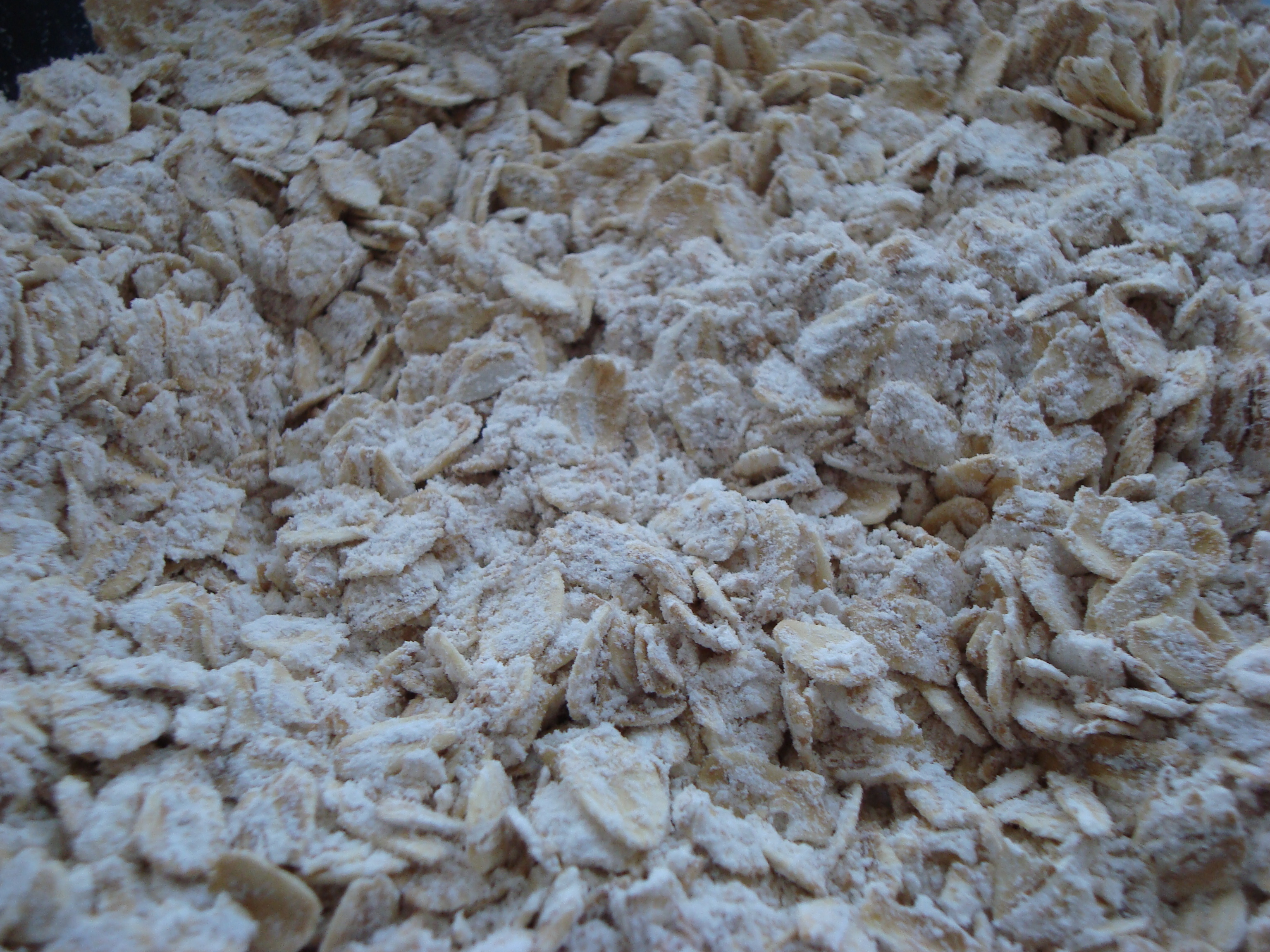
There was a difference in the batters as well as the final cookies when they came out of the oven. The vegan batter was drier than the low-fat batter. If I were to recreate the vegan recipe, I would add more water for a more moist batter and cookie.
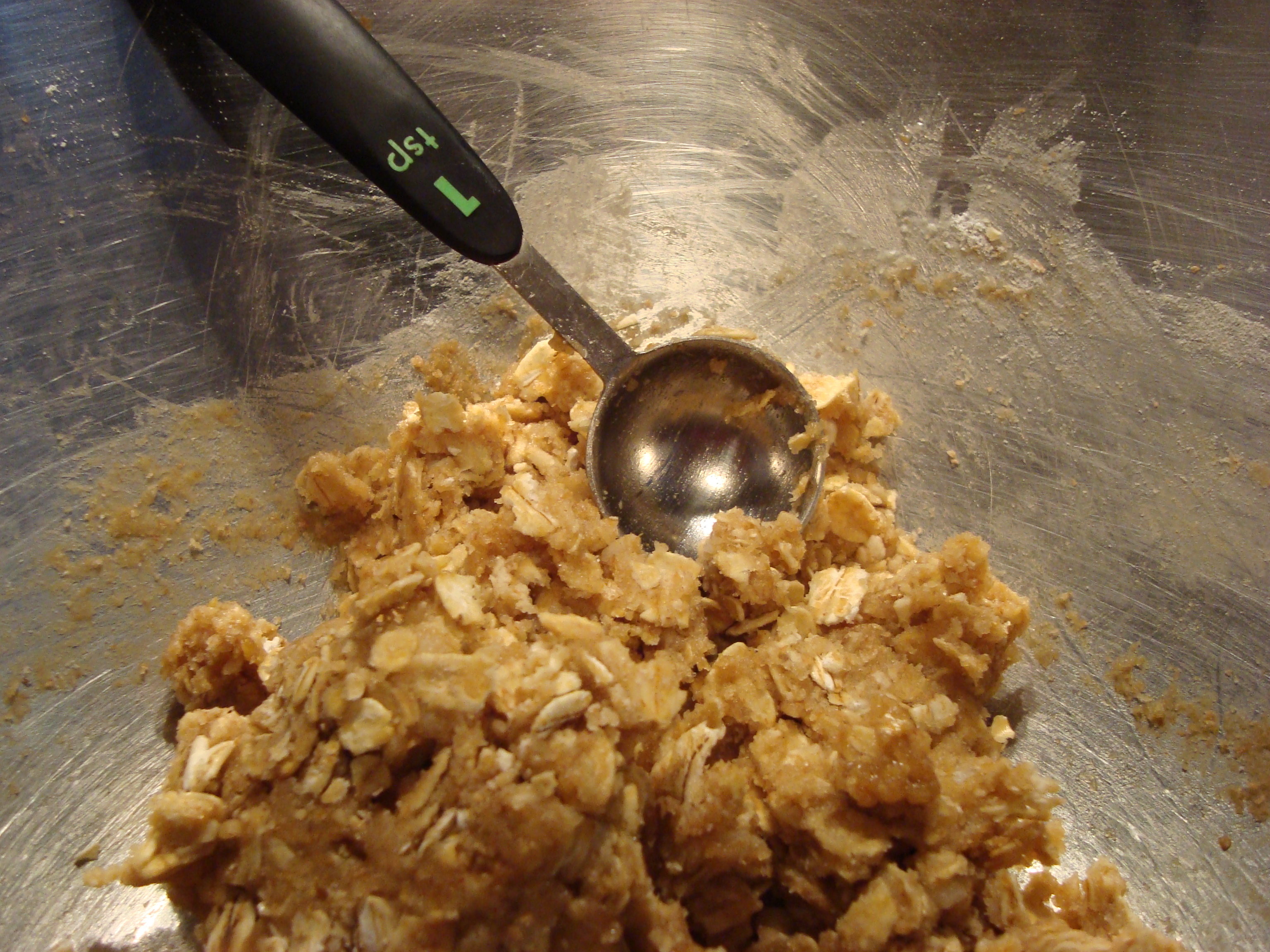
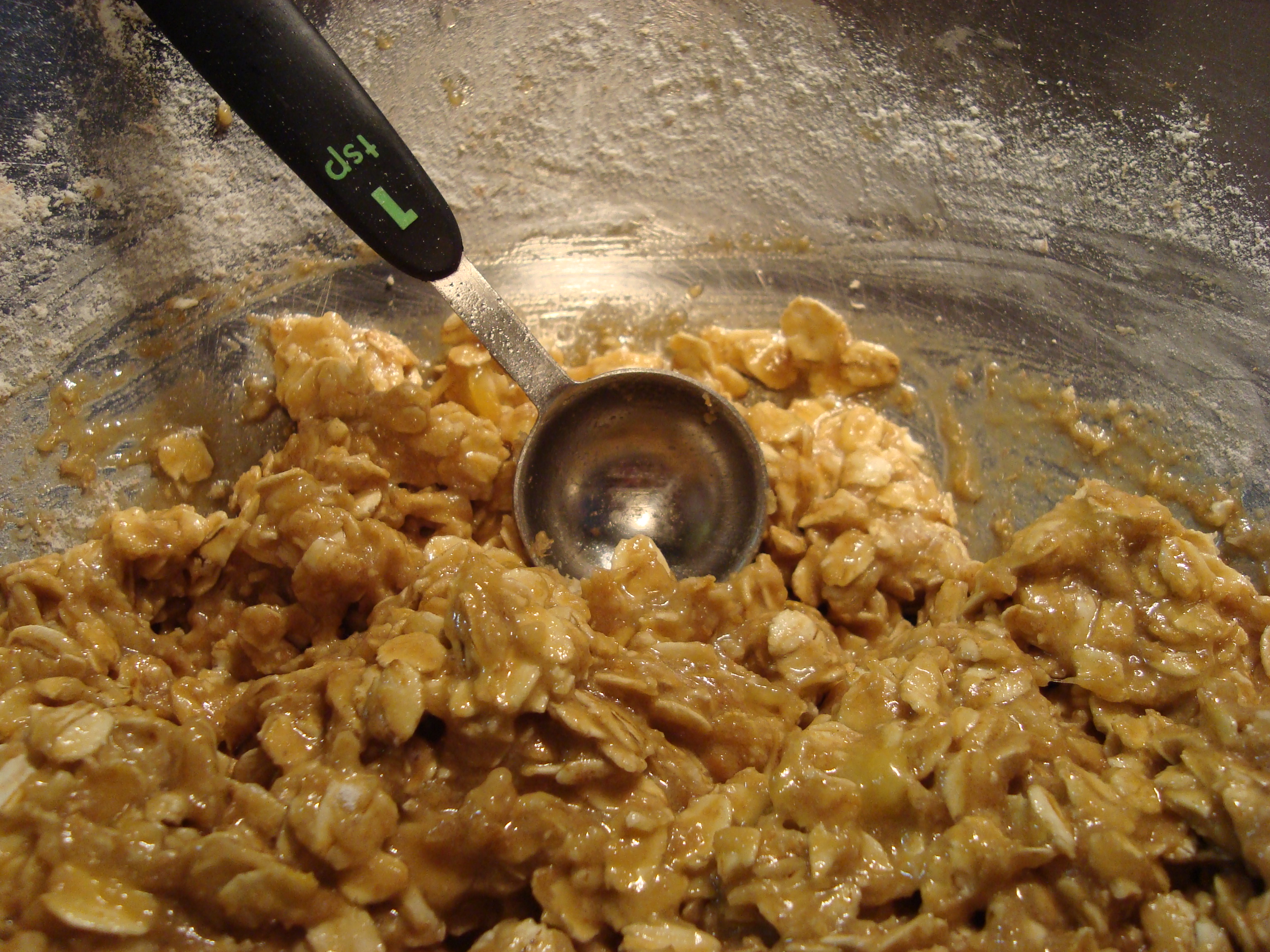
Into the over for a quick 14 minutes and both cookies spread a little while baking. I didn’t adjust cooking times at all from the original recipe.


I was a little disappointed in the nutritional changes. The low-fat and vegan cookies both had fewer calories than the original and no trans fat. These are both heart-healthy changes. The vegan cookies had the same about of total fat and a more saturated fat that the origial due to the coconut oil. I still think that’s more heart-healthy than having a cookie with trans fat. The catch is not to eat so many cookies that the fat starts adding up! Finally, the fiber content didn’t increase as much as I’d hoped.
| Per 1 cookie | Original | Low-Fat | Vegan |
| Calories | 70 | 60 | 50 |
| Fat | 2.6 | 1.5 | 2.5 |
| Saturated Fat | 0.6 | 0.5 | 2 |
| Trans Fat | 0.3 | 0 | 0 |
| Cholesterol | 2.6 | 4.5 | 0 |
| Sodium | 11 | 11 | 8 |
| Carbohydrate | 11 | 11 | 8.5 |
| Fiber | 0.7 | 1 | 1 |
| Protein | 1.4 | 1.5 | 1 |
The important thing is how they tasted, right? I preferred the vegan cookies because they had a sweet brown sugar flavor, are more oat-ey, and have a nice crispness. The low-fat cookies are softer and moister; but they had a bit of a banana flavor. I don’t know about you; but I’m not looking for banana in my oatmeal cookies! In the future, I’d consider adding dark chocolate chips or walnuts to boost the heart-healthy properties of these cookies.
Whichever cookie you prefer, I hope you now have some strategies for adjusting recipes when baking and that you will enjoy that occasional cookie, even on your heart-healthy diet!


You must be logged in to post a comment.