
Updated 03/04/2025. If you need a healthy on-the-go breakfast, you may be wondering… are Kodiak Cups good for a quick breakfast? When I first saw these breakfast cups back in 2020, this kind of convenience food was still fairly new. Add water, microwave, and eat! Why, yes, I think maybe these Kodiak Cups are good for a quick breakfast!
I do want to say thank you to Kodiak Cakes for the RD Kit containing these free products for me to sample. I have not been paid or encouraged to post any kind of information in exchange for these samples. You can see on my disclosure page that I give honest reviews of products and would never let receiving a free product influence my review.

I encourage a balanced breakfast to get the day started – protein, carbs, fats, alla them. But mornings can be hectic. I hear from my patients that fitting in a healthy, balanced breakfast can be a challenge. They don’t have time in the morning to eat breakfast, let alone make one! Life is busy. I get it.
If you like to meal prep, then the problem is solved. But what about those who just aren’t into meal prepping? (No shame!). More and more products like this are hitting the shelves because food manufacturers know we want convenience.
So, let’s put on our nutrition detective hats and explore.
If you have heard of the brand, Kodiak, then you know that higher protein is kinda their jam. And higher protein in grains gets my interest as I’m an occasional macro-tracker. Protein has been having its moment for a long minute now, as it should because protein is important for so many reasons. (Get my take about The Beef on Protein).
Kodiak Oatmeal Cups
I tried the Kodiak oatmeal first and was happy to see they sent the best flavor: maple and brown sugar. (Fight me).
In terms of ease of breakfast, this is a big winner.
I used my electric tea kettle to heat water, added it to the Kodiak Cup, and let it sit covered for the recommended two minutes. You can also add water and microwave. It doesn’t get much easier – or quick – than that.
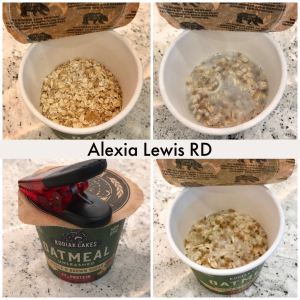
Straight up. I was super concerned about the very small portion, especially since it has about half of the calories of my typical breakfast. But this little cup of oatmeal kept me full until lunchtime. Totally surprised!
This has 230 calories, 14 grams protein, 38 grams carbs, and 3 grams of fat. It has 4 grams of fiber, 12 grams of added sugar, and 200 milligrams of sodium.
I wouldn’t expect a lot of protein from oatmeal and that tracks here. I often recommend adding protein when oats are for breakfast. This can be done with protein powders, as in this product where protein was increased with pea and milk proteins, or with whole foods, such as an egg/egg whites. PS: I have a great pina colada overnight oats recipe.
This also may seem like a lot of carbs to some; but it is oatmeal, soooooo… and 38 grams if completely appropriate for many people. When it comes to grains, always look for a product that has a whole grain as the first ingredient – which this one does.
I’m not one who is afraid of long complicated words on an ingredients list but this one keeps it very simple and I’m sure many “clean eaters” would give this product a thumbs up.
Btw, my definition of clean eating is not eating food that’s fallen on the floor. Just sayin’.

Pros:
- First ingredient is 100% whole grain oats.
- Very low in saturated fat (0.5 grams).
- Super convenient.
- Good flavor and good consistency, and no aftertaste.
- Staying power.
Cons:
- Low in protein (for a meal).
- High in added sugars.
American Heart Association recommendations for added sugars is set at 25 grams for women and 36 grams for men. At 12 grams, this is 1/2 to 1/3 of the total recommended. I like to find ways to make convenient food fit if it can help people eat in a way they want to. So, this absolutely can fit into a heart-healthy diet as long as you are mindful about added sugars for the rest of the day.
And, personal preference here, I’m not a big fan of pea protein due to a not-too-fun experience involving veganism and pea protein in oatmeal. I’m sure it’s come a long way since then.
Overall thoughts?
Two Forks up! This is delicious, filling, and is heart healthy.
Kodiak Flapjack Cups
Next, I tried the Cinnamon Maple Flapjack Kodiak Cup.
This serving size made my eyes much happier as it filled up more of the container. But it wasn’t as filling as the oats. Go figure.
It smells amazing and has a good crumb; but I do recommend a spoon instead of a fork as it ends up getting very crumbly as it is eaten. Per my husband, this tastes like smushed up pancakes (count me in!) and it is true the finished product was a little bit dense.

This has 260 calories, 19 grams protein, 39 grams carbs, and 7 grams of fat. It has 3 grams of fiber, 14 grams of added sugar, and 340 milligrams of sodium.
This one is also lower in calories than my typical breakfast, so I added some butter, which made it taste even better. If you’re looking to add calories, you could also add some syrup (but it totally isn’t needed) or top it with an egg.
As with the oats, this is a bit low in protein and high in carbs and this is to be expected from pancakes. Same advice applies here as did with the oats – more protein!
The ingredients list is longer, and the first two ingredients are whole grains. This would likely pass the “clean eating” test for some.
The pancakes do have eight times as much saturated fat as the oatmeal, coming in at 4 grams. The saturated fat here comes from the palm, palm kernel, and palm oil. My guess is that since unsaturated fats are less stable and go rancid more quickly, they balanced out the need for shelf stability with the desire for a nice nutrition profile and landed on saturated oils instead of others.
American Heart Association recommendations for saturated fats puts the maximum intake at 6% of total calories. Using the reference standard on nutrition facts panels of 2,000 calories a day, that comes to 13 grams a day. That puts this product at 1/3 of your saturated fat for the day.
Just like added sugars (btw this one has more than the oats), this can fit into a heart-healthy diet as long as you are mindful about how you eat the rest of the day. I would encourage plant-based eating to keep saturated fats low. Get my suggestions for three plant-based whole foods to boost the protein in a plant-based diet.

Pros:
- First two ingredients are whole grains.
- Tastes good and has a nice crumb like a pancake should
- Super convenient.
Cons:
- Low in protein.
- Higher in saturated fat and added sugars that I would like.
- Didn’t hold me as long.
Overall thoughts?
One Fork up! Just one because it didn’t hold me until lunchtime.
So, Are Kodiak Cups Good for a Quick Breakfast?
I will also say a big pro for both of these is the portability, which means you can eat them when you first get up or bring them into the office or when you’re out on the go.
Yes, this dietitian Kodiak Cups are good for a quick breakfast! Just add an egg, okay?
Give these a try and let me know what you think!
Medical Nutrition Therapy
Curious about balanced breakfasts that will work for you? Want some help with finding recipes or strategies to meal prep your breakfast? (PS – you don’t have to a whole week at a time!).
Let’s do it!
Click right here to get to Alexia’s provider page with Nourish, choose a date/time and start the scheduling process.
One of the first screens when you start will let you know if your health insurance is accepted by Nourish. Before you finish the booking process, you will enter your insurance information into the Insurance Calculator to get an estimate of the expected costs. If you don’t like the number, just cancel out and you won’t be scheduled.
And, of course, you can reply to this email if you have questions or want to be hooked up with another amazing RD at Nourish. I’m happy to help!
About Alexia Lewis RD
Hi there! I’m Alexia and I believe in science, humor, and delicious food.
Heart health is my jam. I love to write and speak publicly on this topic and all aspects of living a heart-healthy lifestyle.
I believe you shouldn’t sacrifice your mental health in pursuit of better physical health. You deserve to be both happy and healthy. You don’t have to choose just one.
I am a master’s level nutritionist who is also a registered and licensed dietitian in multiple states in the USA, a certified personal trainer, and certified health coach. I also invested in becoming a culinary nutritionist and weight management specialist. In other words, I got you.




You must be logged in to post a comment.