Tag Archives: portions

healthy bread on table

Macronutrients – Those Confusing Carbs!

Carbohydrates

Sources:

Carbohydrates come from plant and animal sources. The food groups that contain carbohydrates include grains, fruits, dairy, and vegetables.

There are two main types of carbohydrates: simple carbohydrates (sugar) and complex carbohydrates (starch and fiber).

Sugar:

There are two types of sugars that people typically think of when talking about sugar in the diet. One type is the natural sugars that are found in foods in their natural and whole state. Examples are fructose and sucrose (in fruits) and lactose (in milk). The other type of sugar is the added sugars that are added to foods during processing or created from refining natural foods, Examples are high fructose corn syrup (in many products) or sucrose (refined into table sugar).

Starch:

Starches are long chains of sugars. Our bodies break down these long chains into simple sugars that our body can absorb to provide us with energy. Many foods that are starchy need to be cooked in order for our bodies to be able to digest them. Examples are potatoes, corn, and grain products such as bread, pasta, and rice.

Fiber:

Fiber is the indigestible part of the plant. Fibers are also long chains of sugars; but the way the chains are held together prevent our bodies from being able to digest them for energy. Fiber is important for health for many reasons. Fiber can be fermented by the bacteria in our gastrointestinal tract which promotes colon health. Insoluble fiber helps promote regularity and prevent constipation. Insoluble fiber includes whole grains (the outer bran layer) and the strings in celery. Soluble fiber can help to lower cholesterol and regular blood glucose levels. Soluble fiber includes oats, beans, and citrus fruits.

Functions:

The functions of carbohydrate include:

– Energy! Carbohydrates currently have a bad reputation; but they are the main and preferred source of energy for the body. Our bodies need carbohydrates to be at our best health.

– Help to lower cholesterol and regulate blood glucose levels (soluble fiber)

– Maintain digestive tract health (fiber)

Recommendations:

For a generally healthy adult, the range for carbohydrate intake is set between 45% and 65% of daily calories. A person consuming a 2,000 calorie diet would have a range of 900 – 1,300 calories. Since 1 gram of carbohydrate has 4 calories, this is a range of 225- 325 grams of carbohydrate per day. The minimum number of carbohydrate grams per day is 130 grams to promote good brain function.

Those trying to build muscle should be sure to consume enough carbohydrates to “spare protein” to be used for muscle growth.

Many people restrict carbohydrates due to the belief that “carbs make you fat.” In healthy individuals, carbohydrates trigger insulin and insulin lets the sugar into our body and cells. People mistakenly believe that this always means weight and fat gain. This is not true!

When we eat the appropriate amount of carbohydrates for our bodies, the sugar is used as a fuel source and burned. It is only when we overeat carbohydrates that weight gain results. Carbohydrates do not make you fat. Carbohydrates are an important part of the diet. Without carbohydrates, the body begins to break down fat storage and then body proteins. In extreme cases, metabolism slows drastically and both health and life can be jeopardized.

People with specific health conditions or concerns may need a different amount of carbohydrate in their daily diet or to time the consumption of carbohydrates throughout their day.

Other guidelines:

Whole grains: Consume whole-grain carbohydrates whenever you can. Recommendations are to make half of your grains whole. Read the food label and be sure the first ingredient is listed as a “whole” grain (example: whole wheat, not wheat flour).

Fiber: For those between 19 and 51 years old, females should consume 25 grams and men should consume 38 grams of fiber a day. Those over 51 should consume 21 grams (women) or 30 grams (men) per day. If you are increasing your fiber intake, do it slowly and drink lots of water or you may end up with a bout of constipation!

Added sugar: Limit the amount of added sugar in your diet. Many health risks are associated with added sugars and in general, Americans consume too much added sugar. The American Heart Association recommends no more than 100 calories (women) or 150 calories (men) of added sugars per day. Most natural sugars are generally not associated with health risks as these are consumed along with fiber which slows down the absorption of sugar and other vitamins, mineral, and phytochemicals which promote optimal health.

Original publication date: October 1, 2012 at http://newmotivationcoaching.blogspot.com.

Reference: Nutrition Concepts and Controveries, 12th ed. by Sizer and Whitney, 2012. ISBN-13: 978-1-1133-62818-7.
ChooseMyPlate.gov Protein Food Group

Macronutrients – The Beef on Protein

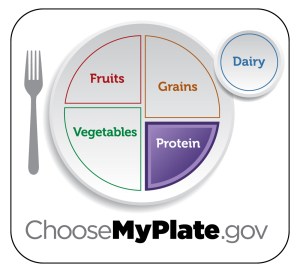
ChooseMyPlate.gov Protein Food Group

Updated 12/03/2024. One of the jobs I have held was as a wellness dietitian for a university. I loved that job. I was working on updating the nutrition info on the website and thought I’d share some of the things I’ve been updating. Enjoy!

I’m working on the macronutrients (aka macros). First up, the *beef* on protein (because I just can’t resist bad wordplay!)

Protein

Sources:

Protein comes from animal sources such as meat, dairy, and eggs and from plant sources such as beans, nuts, seeds, and even some grains.

Even your broccoli has protein, but you would have to eat nearly 3 cups to equal the protein in 1 ounce of meat. I’m stuffed just thinking about it. (And, oh, the gas!).

It is possible to consume enough protein for good health on a vegetarian or vegan diet if you plan your food choices well.

Functions:

Protein is an essential nutrient meaning that we must get it from our food. Proteins break down in our bodies to amino acids. Our bodies cannot make all the amino acids it needs to function and approximately 25% of amino acids are lost to other uses every day, which is why protein is an important part of the daily diet.

Protein has many functions including:

– Provides body structure by building and maintaining muscle, bone, and other body tissue

– Allows for movement (40% of body protein is muscle tissue)

– Regulates gene expression

– Integral part of enzymes, hormones, and neurotransmitters

– Immunity through antibodies

– Transports of vitamins, minerals, oxygen and other substances through the body

– Regulates fluid and electrolyte balance

– Maintains acid-base balance

– Necessary for blood clotting

– Used as fuel when other sources of energy are not available. (Cue the nightmare metabolism images from grad school).

– Protein is satiating – it helps us to feel full and satisfied

Recommendations:

For a generally healthy adult, the recommended daily allowance (RDA) range for protein intake is set between 10% and 35% of daily calories. A person consuming a 2,000 calorie diet would have a range of 200 – 700 calories. Since 1 gram of protein has 4 calories, this is a range of 50- 175 grams of protein per day.

Further, the recommendation for generally healthy adults is 0.8 grams per kilogram (8g/kg) of body weight. To convert pounds to kilograms, divide weight by 2.2. For example, a 150 pound person is (150 divided by 2.2) 68.18 kilograms. This person would consume around 54 grams of protein per day, which is the low end of the above range.

Now, that recommendation is based on nitrogen balance studies from way back when. It is the amount needed to prevent nitrogen deficiency. Those amino acids have a nitrogen molecule on them, which leads to a recommendation.

A recommendation that I think is too low. And I’m not the only one. For example, NASM recommendations go up to 2g/kg based on athletic training needs. And this article in the journal Nutrients questions if it’s time to update the RDA. 

People with specific health conditions or concerns may need a different amount of protein in their daily diet.

And bro, no matter how much protein you eat, you won’t build muscle without some form of resistance training.  

Updated: December 3, 2023. 

Original publication date: September 17, 2012 at http://newmotivationcoaching.blogspot.com.

Reference: Nutrition Concepts and Controveries, 12th ed. by Sizer and Whitney, 2012. ISBN-13: 978-1-1133-62818-7.

Image from: http://www.choosemyplate.gov

How To Be a Healthy Snacker

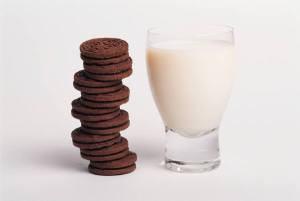
A large snack of cookies and milk
 

I am a snacker.

I typically do not leave the house without two things: a snack and my water bottle. Snacking used to have a bad reputation. The standard American diet consisted of three square meals a day, not snacks. Snacking was linked in people’s minds with overeating and weight gain. It was a bad thing to do.

Oh how things have changed. Snacking is no longer the exception, it is now the norm and it may help people to lose or maintain their weight.

I got to thinking about this because I came across an article entitled “Frequent Snacking Linked to Healthier Diet” (1). This article reports on a five-year study of over 11,000 people aged 20 and over which found that snackers consume more healthy foods such as whole grains, fruits, and milk products and less high-sodium foods. Well, it sounds like snackers do have healthier diets! As one reads on, the study also reported that snackers also consumed more sugar, solid fats, and alcohol along with fewer vegetables. Hmmm. Finally, the article reports on another study in a younger population (teenagers) that found that teen snackers also consumed more fruit and dairy products.
Another study on snacking from the November 2011 issue of the Journal of the American Dietetic Association (2) looked at women in the 30-60 age range and grouped them by BMI. The study found that normal weight women had the highest number of snacks (2.3 snacks/day), followed by those who had lost weight and were maintaining that loss (1.9 snacks/day), followed by those who were overweight (1.5 snacks/day).

This all seems to point to the fact that snacking may actually be beneficial in terms of BMI as long as we choose healthy snacks.

But is there a downside?

Let’s say that we eat a snack that includes carbohydrate-containing foods, such as fruit, milk, or grains. For most people, it takes 1 to 2 hours for all consumed food to move through the stomach and reach the small intestine where nutrients are absorbed. Absorption of glucose (blood sugar) from the carbohydrate-containing foods triggers the hormone insulin, which is needed move glucose into our cells for use.

If we graze all day or have large snacks of carbohydrate-containing foods in between meals, we are asking our bodies to continue to release insulin and our insulin levels do not have time to go back down in between meals. On the flip side, if we eat three big meals a day, we see a big spike of glucose after that big meal and we may overload insulin’s ability to be effective. Both overloading our insulin with high levels of glucose at one time and having constantly elevated insulin levels can lead to insulin resistance and potentially to type 2 diabetes. Insulin also promotes energy storage – in other words, it makes our bodies store fat.

What’s a snacker to do?

It sounds like moderation and balance are the keys. I think we have heard that somewhere before. Here are some guidelines to help you keep your snacking healthy.

1. – Respect your body and eat when you are physically hungry. If your stomach is grumbling and you have been drinking your water, then it is time to eat something.

2. – Pick your snacks wisely. Focus on healthy foods such as fruits and vegetables, low-fat dairy, whole grains, and lean proteins. If you decide to have a “fun food” for a snack, then pay attention to the next point!

3. – Watch your portion size. A snack should not be the same as a meal in size or calories.

As always – enjoy your food!

Original publication date: December 4, 2011 at http://newmotivationcoaching.blogspot.com.

References

1. Frequent Snacking Linked to Healthier Diet. Today Health Web site. Available at: http://today.msnbc.msn.com/id/45307103/ns/today-today_health/t/frequent-snacking-linked-healthier-diet/

2. Bachman et al. Eating Frequency is Higher in Weight Loss Maintainers and Normal-Weight Individuals than in Overweight Individuals. Available at: http://www.adajournal.org/article/S0002-8223(11)01376-9/abstract

3. Image from http://office.microsoft.com/en-us/images.