Tag Archives: oatmeal

Overnight Oats

“Getting what you want is simple, but not easy.” – Mel Robbins.

I believe this is true when applied to nutrition. I think many of us know WHAT to do – nutrition is really simple once you get away from the hype of the media and uneducated bloggers. We just struggle with ACTUALLY DOING IT – it isn’t easy!

To further my mission of “heart healthy nutrition made easy,” I bring you a way to fit a healthy breakfast into your meal planning. I love the ease of the week when I take the time to do meal preparation on the weekends. In fact, my husband and I have only eaten out about 8 times since the year began five months ago. That was not our goal; but is a happy unanticipated consequence of having a plan in place.

One of the best perks of meal prep is having a hot breakfast for very little work. I’ve been accomplishing this with overnight oats and with pre-chopped vegetables for omelets or “scrambles” if I’m in a hurry. Mason jars are AMAZING for keeping my chopped onion and mushrooms (cleaned with a paper towel, not water) fresh through the week!

However, in my work with my patients lately, I have been hard pressed to find an overnight oats recipe online that works for all of my patients – especially those working on blood sugar control. Once you add oats, dairy, and fruit together, you’ve got a small jar carbohydrate delight that is just an overload for the morning meal.

Note – carbohydrates are NOT bad. Carbohydrates are AWESOME! However, many people tend to eat tooooo many of them. So, please DO NOT ban or severely limit carbohydrates; but many of us could do with reigning in our portion sizes a bit.

Without further ado – my basic overnight oats recipe is below. This serving provides 215 calories and 30 grams of carbohydrates per jar. Feel free to add more fruit and nuts and other assorted yumminess to fit your needs and preferences.

Oh and by the way, Mel Robbins 20 minute video is so worth the time!

Click the recipe title for a printer-friendly version!

Simple-Overnight-Oats

Serves one

Ingredients

1/3 cup of old-fashioned or quick cooking plain oats

2/3 cup of unsweetened almond milk

1 tablespoon of chia seeds

1 Tablespoon peanut butter powder (no sugar added)

1 teaspoon of ground cinnamon

1 teaspoon cocoa powder

1 teaspoon vanilla extract

Directions

  1.  Put all ingredients into a Mason jar or other container and stir to combine.
  2. Store in refrigerator at least overnight (can be made up to 5 days in advance and stored in fridge!)

To serve: This can be eaten cold or hot (microwave 1-2 minutes but do NOT microwave in a plastic container).

Nutrition per serving (entire recipe): 215 calories, 8 grams fat, 7 grams unsaturated fats, 1 gram saturated fat, 0 grams trans fat, 0 milligrams cholesterol, 165 milligrams sodium, 30 grams carbohydrates, 10 grams fiber, 8 grams protein.

NOTES:

The chia seeds act as a thickener (in addition to be a great heart healthy food!) but they are expensive so you can try leaving them out or substituting ground flaxseed.

For those counting carbohydrates to manage blood sugar:  Don’t forget to add your carb grams for any fruit or sweeteners you add!

A day's work for an RD

Vegan Oatmeal Cookies

Today, my mission was to rework an oatmeal cookie recipe to be more heart-healthy and vegan. Oats are already a heart-healthy food so I didn’t have much work to do there; but I have not done much vegan baking. This was going to be a challenge! I ended up making two batches of oatmeal cookies. One is low-fat and the other is vegan. You decide which one fits into your healthy eating goals better.

I started with a basic oatmeal cookie recipe and focused on the ingredients that needed to be swapped out.

Ready to make oatmeal cookies!

First up, vegetable shortening. Great for flakiness and flavor in baking; but it contains trans fat which is about as far away from heart-heatlhy as you can go. For the low-fat recipe, I swapped 3/4 cup vegetable shortening with 1/4 cup butter and 1/2 cup mashed banana to retain moistness and flavor. In my experience, when I replace more than half the fat in a recipe with a fruit puree, the final product loses some “yummy.” This wouldn’t do for the vegan version however since butter is a dairy/animal product, so I chose refined coconut oil. The refining removes some of the coconut flavor and leaves you with a solid fat that is good for baking. This swap removes the trans fat; but it adds some saturated fat. I think I could find a better option; but this is at least a baby-step towards heart-healthier.

Next replacement was the egg for the vegan version. Mixing 1 tablespoon ground flaxseed with 3 tablespoons of water makes for a nice egg replacement. If you buy flaxseed from the bulk bins, it is much cheaper! I was about to spend $4 for a bag of ground flaxseed and ended up spending $0.65 on a small amount of seeds from the bulk bin. Shop smart!

Flaxseed - before and after grinding
Flaxseed – before and after grinding
Ground flaxseed mixed with water is a great egg replacer

Finally, I wanted to add more fiber. I swapped half the all-purpose flour for whole wheat flour and called it a day.

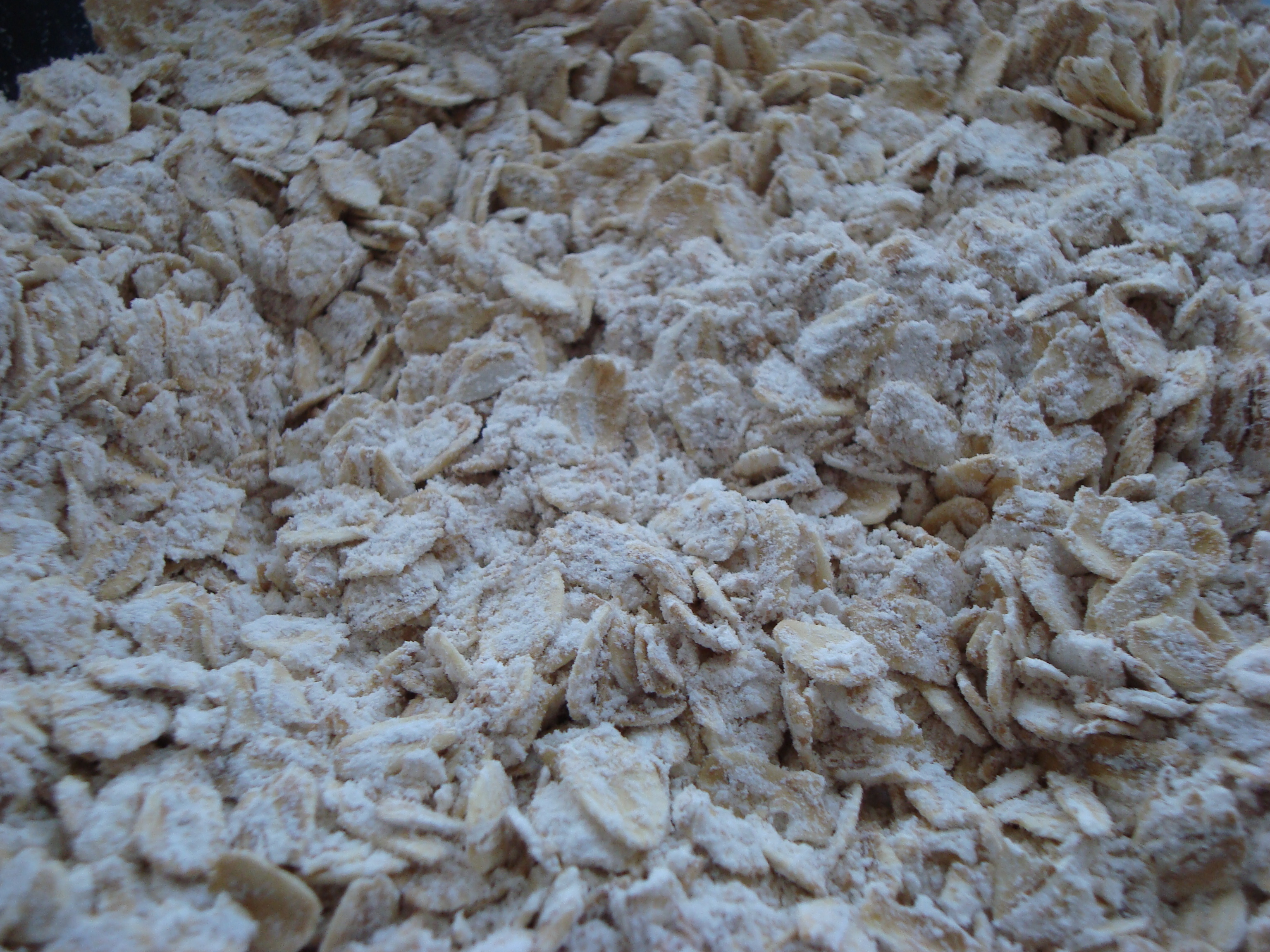
Rolled oats coated with all-purpose and whole wheat flour and baking soda

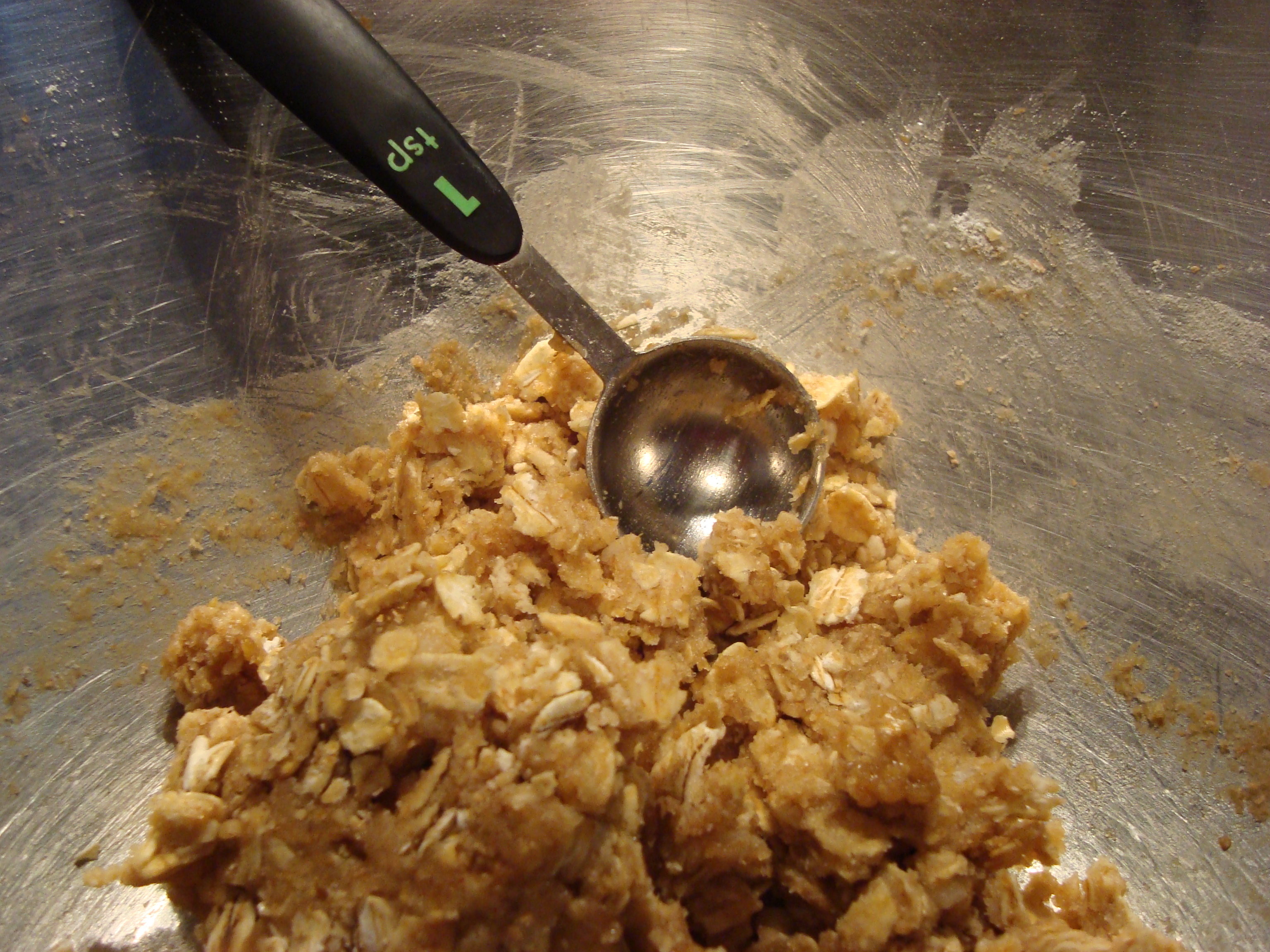
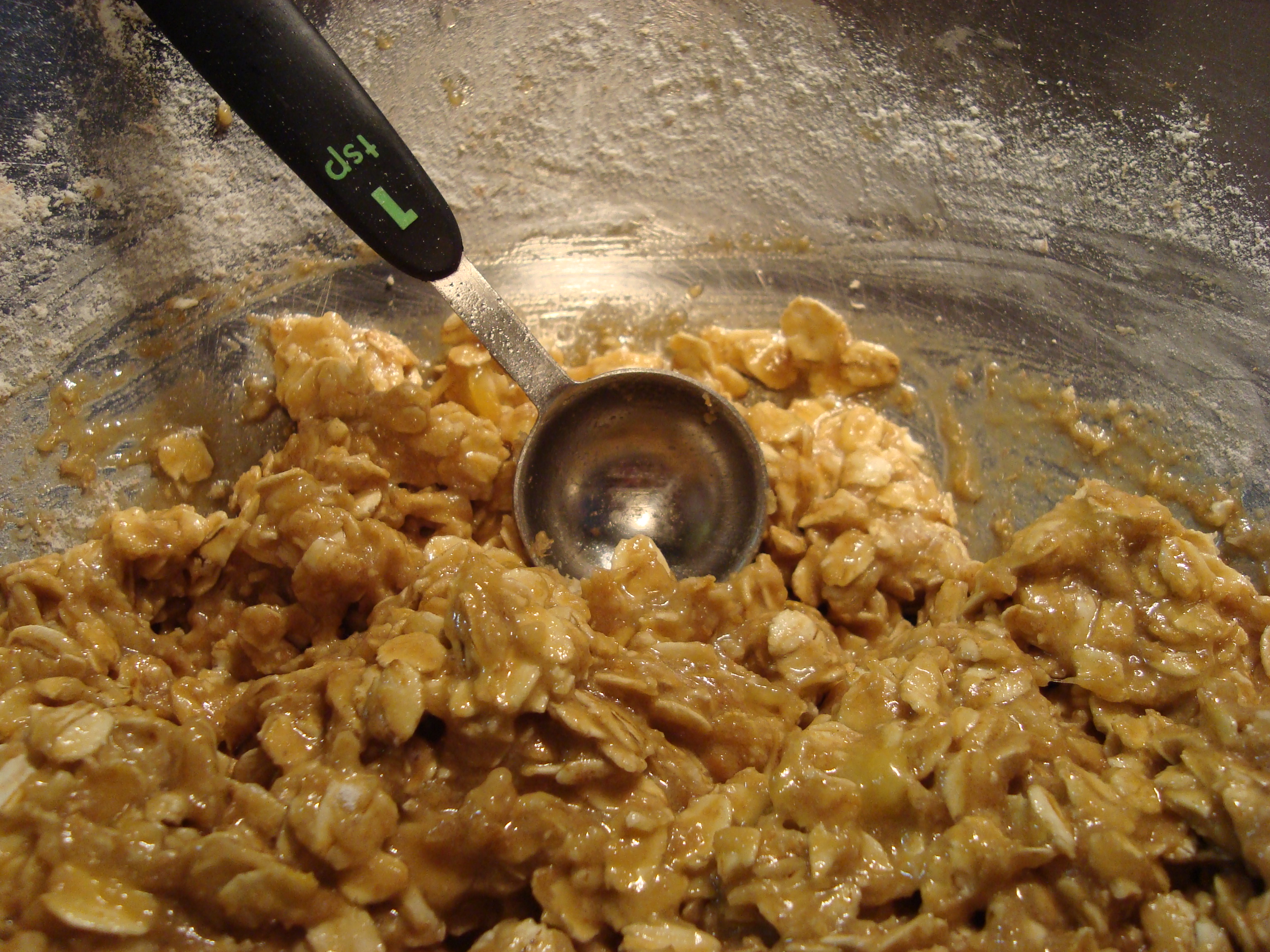
There was a difference in the batters as well as the final cookies when they came out of the oven. The vegan batter was drier than the low-fat batter. If I were to recreate the vegan recipe, I would add more water for a more moist batter and cookie.

Vegan Batter
Vegan Batter
Low-fat Batter
Low-fat Batter

Into the over for a quick 14 minutes and both cookies spread a little while baking. I didn’t adjust cooking times at all from the original recipe.

Vegan Cookie
Vegan Cookie
Low-fat Cookie
Low-fat Cookie

I was a little disappointed in the nutritional changes. The low-fat and vegan cookies both had fewer calories than the original and no trans fat. These are both heart-healthy changes. The vegan cookies had the same about of total fat and a more saturated fat that the origial due to the coconut oil. I still think that’s more heart-healthy than having a cookie with trans fat. The catch is not to eat so many cookies that the fat starts adding up! Finally, the fiber content didn’t increase as much as I’d hoped.

 Per 1 cookie Original Low-Fat Vegan
Calories 70 60 50
Fat 2.6 1.5 2.5
Saturated Fat 0.6 0.5 2
Trans Fat 0.3 0 0
Cholesterol 2.6 4.5 0
Sodium 11 11 8
Carbohydrate 11 11 8.5
Fiber 0.7 1 1
Protein 1.4 1.5 1

The important thing is how they tasted, right? I preferred the vegan cookies because they had a sweet brown sugar flavor, are more oat-ey, and have a nice crispness. The low-fat cookies are softer and moister; but they had a bit of a banana flavor. I don’t know about you; but I’m not looking for banana in my oatmeal cookies! In the future, I’d consider adding dark chocolate chips or walnuts to boost the heart-healthy properties of these cookies.

Whichever cookie you prefer, I hope you now have some strategies for adjusting recipes when baking and that you will enjoy that occasional cookie, even on your heart-healthy diet!

A day's work for an RD
A day’s work for an RD